Why the swearing gets cleaned up in subtitles
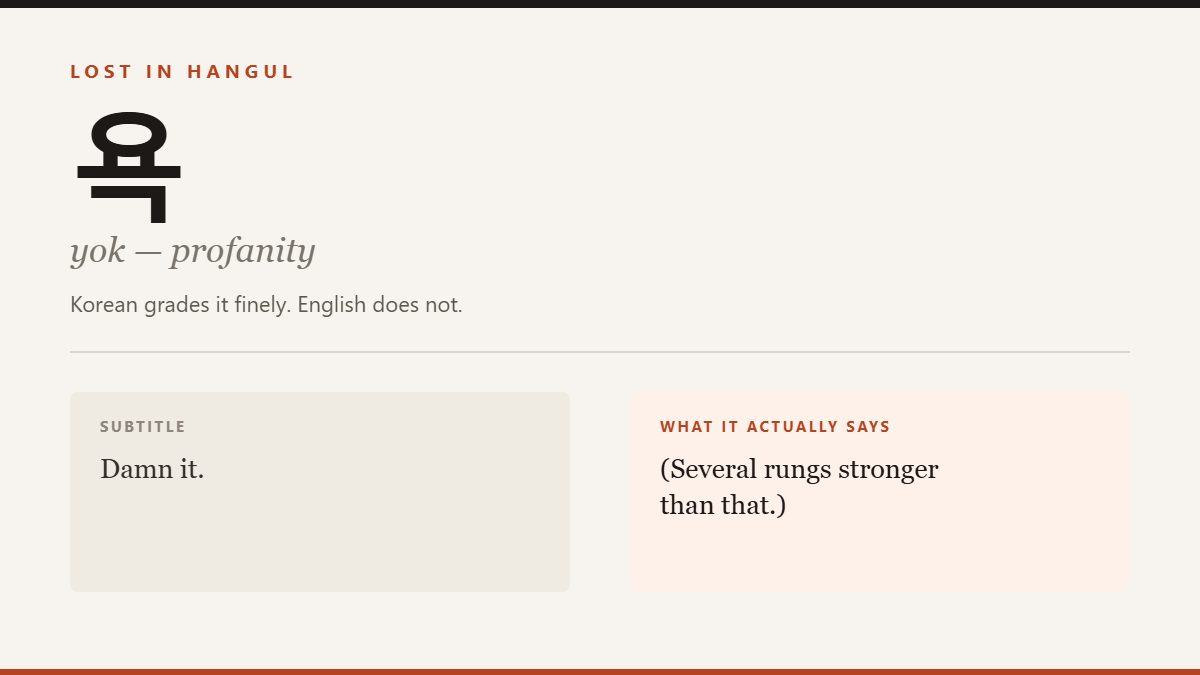
Korean grades profanity finely and English does not. Faced with a rung that has no English equivalent, subtitlers round down — and characterisation goes with it.
Why official subtitles translate the way they do, what they choose to drop, and the constraints translators work under.
Korean grades profanity finely and English does not. Faced with a rung that has no English equivalent, subtitlers round down — and characterisation goes with it.
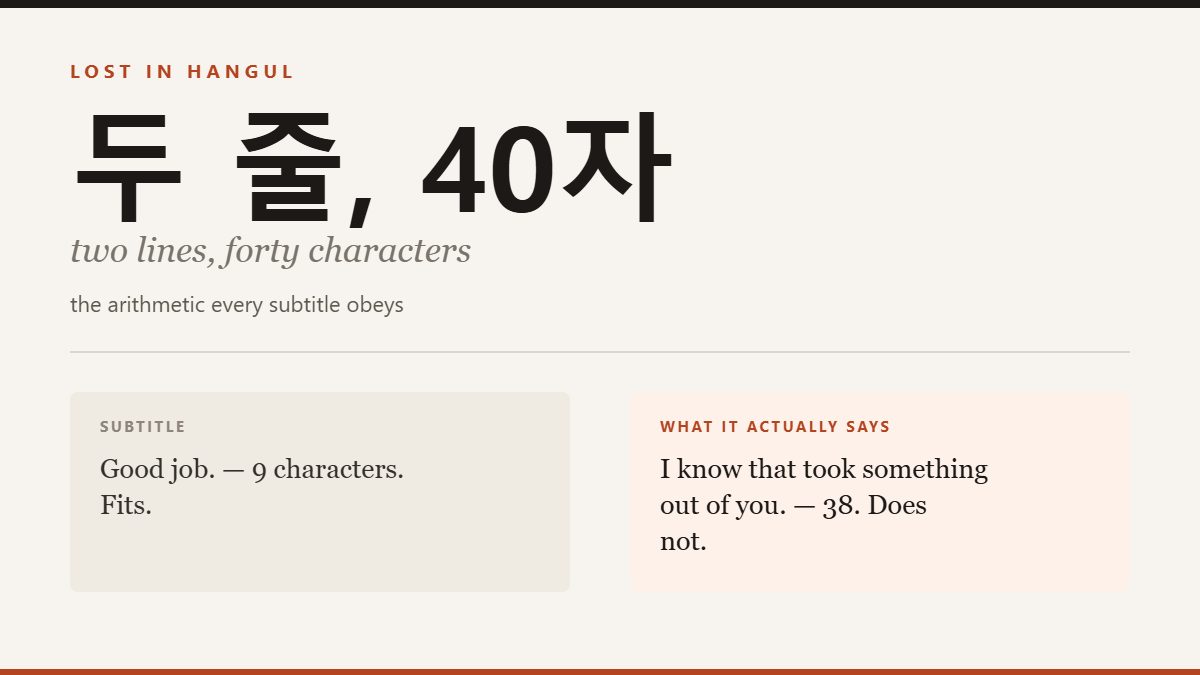
Most of what gets lost between Korean and an English subtitle is lost to arithmetic: two lines, about forty characters each, read at the speed an audience can manage while watching.
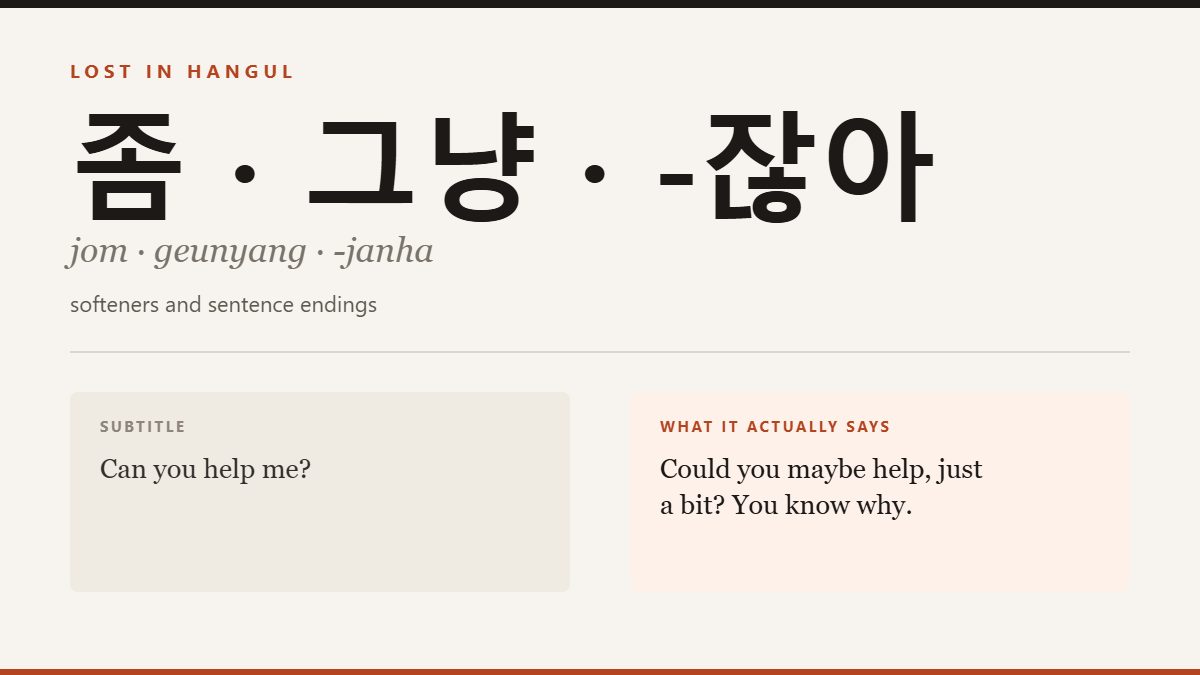
좀, 그냥, 막, -네, -잖아. None of them carry facts, all of them carry tone, and a subtitle rationed by the character cuts them first. That is why subtitled Korean sounds curter than it is.
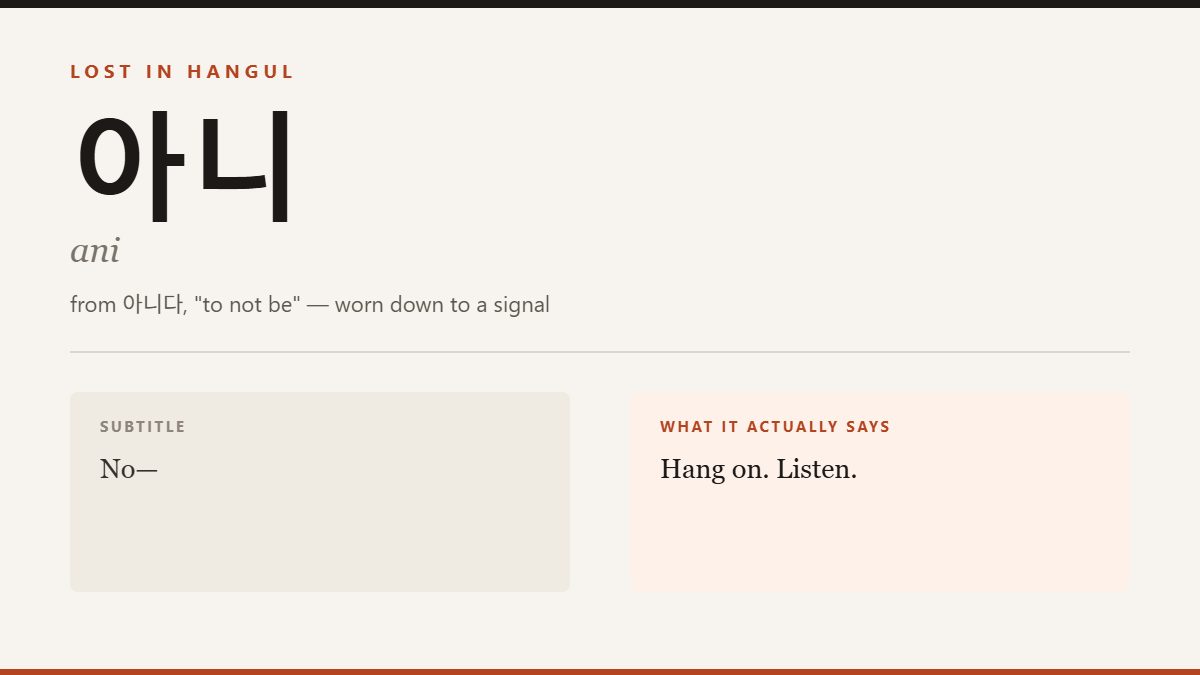
Subtitles print “No—” and then the speaker agrees with everything. The bare 아니 at the front of a sentence is closer to “wait” or “hang on”, and it denies nothing.