The pronouns Korean never said, and English put in anyway
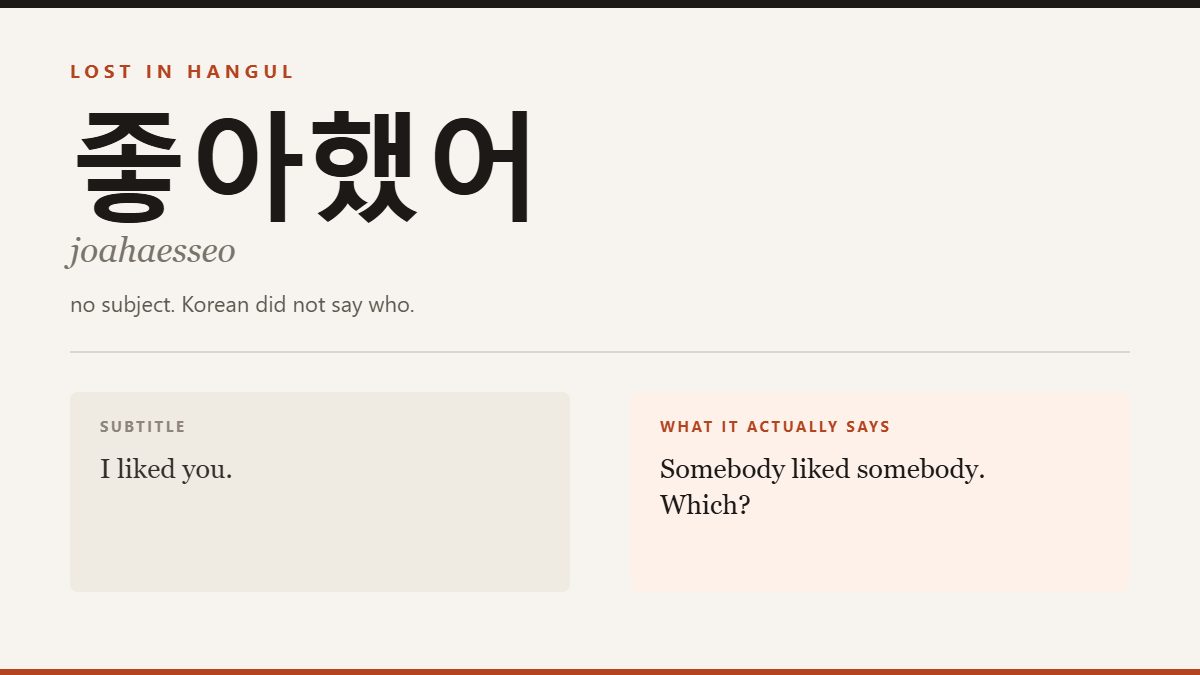
Korean leaves the subject out whenever context covers it. English cannot, so every subtitle contains a decision about who the sentence was about — and sometimes the vagueness was the point.
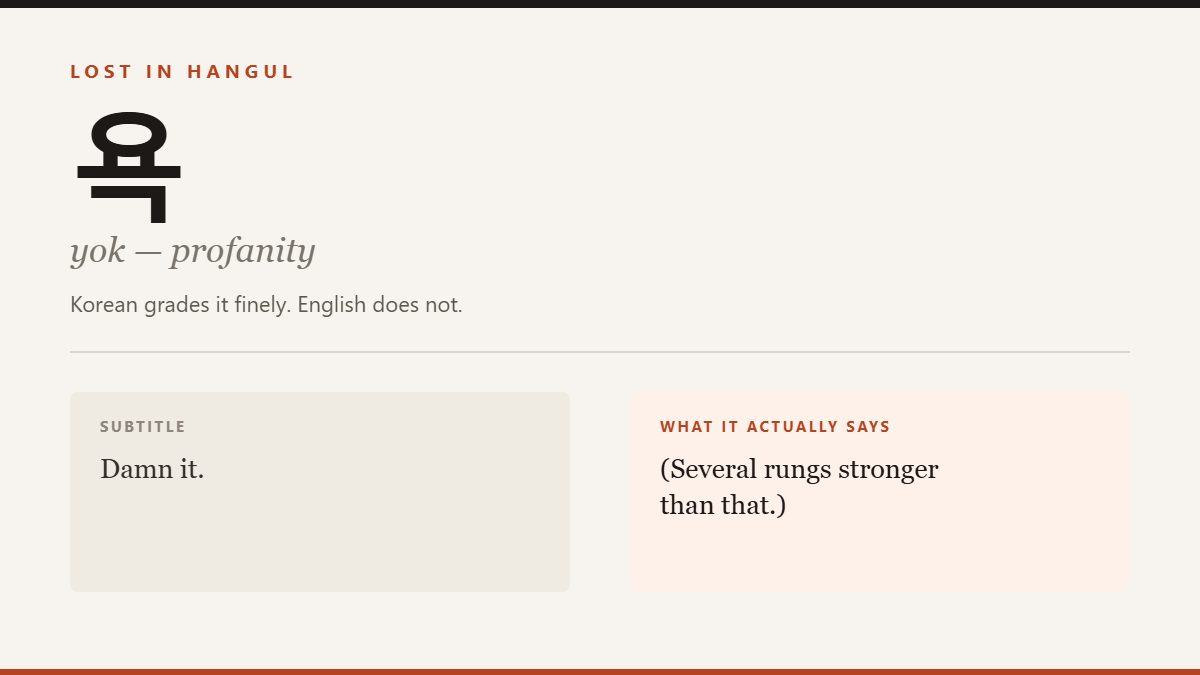
Korean grades profanity finely and English does not. Faced with a rung that has no English equivalent, subtitlers round down — and characterisation goes with it.
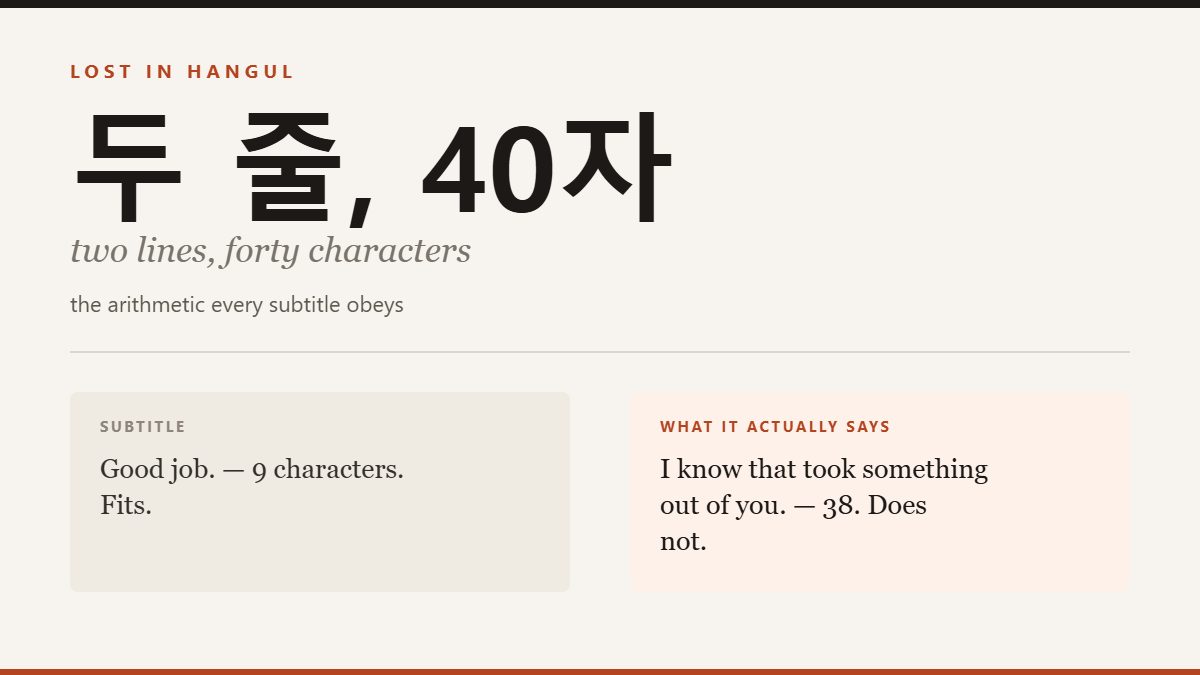
Most of what gets lost between Korean and an English subtitle is lost to arithmetic: two lines, about forty characters each, read at the speed an audience can manage while watching.
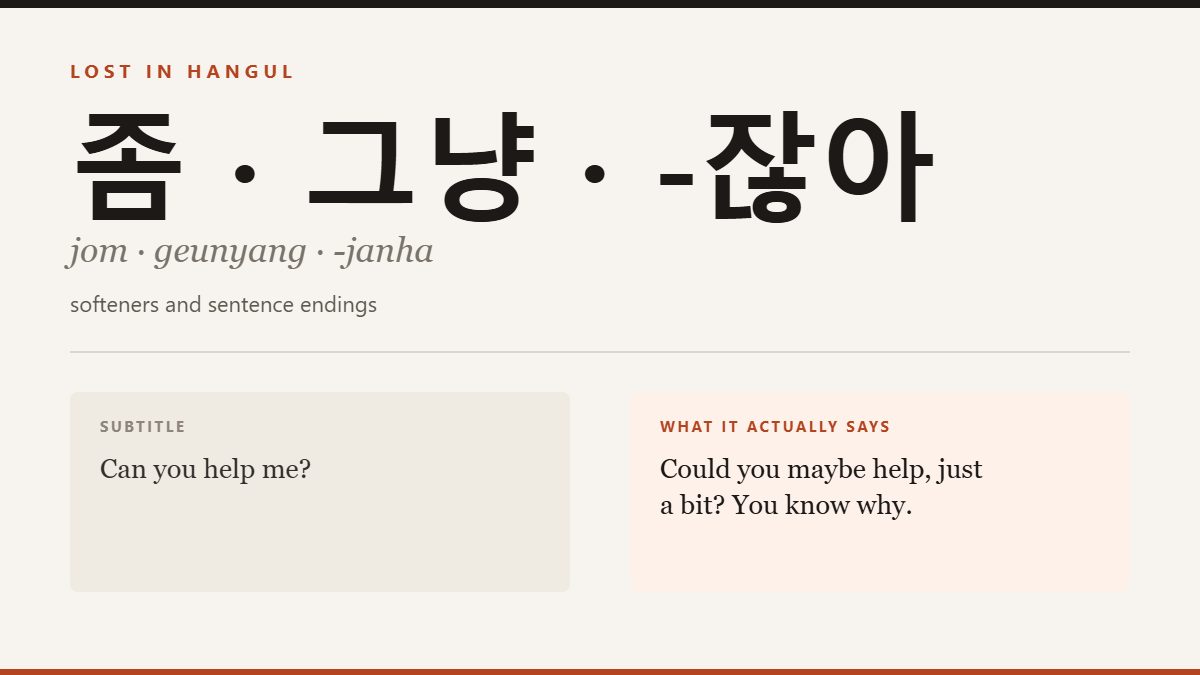
좀, 그냥, 막, -네, -잖아. None of them carry facts, all of them carry tone, and a subtitle rationed by the character cuts them first. That is why subtitled Korean sounds curter than it is.