“Jjajeungna” (짜증나) — annoyed, irritated, and completely over it
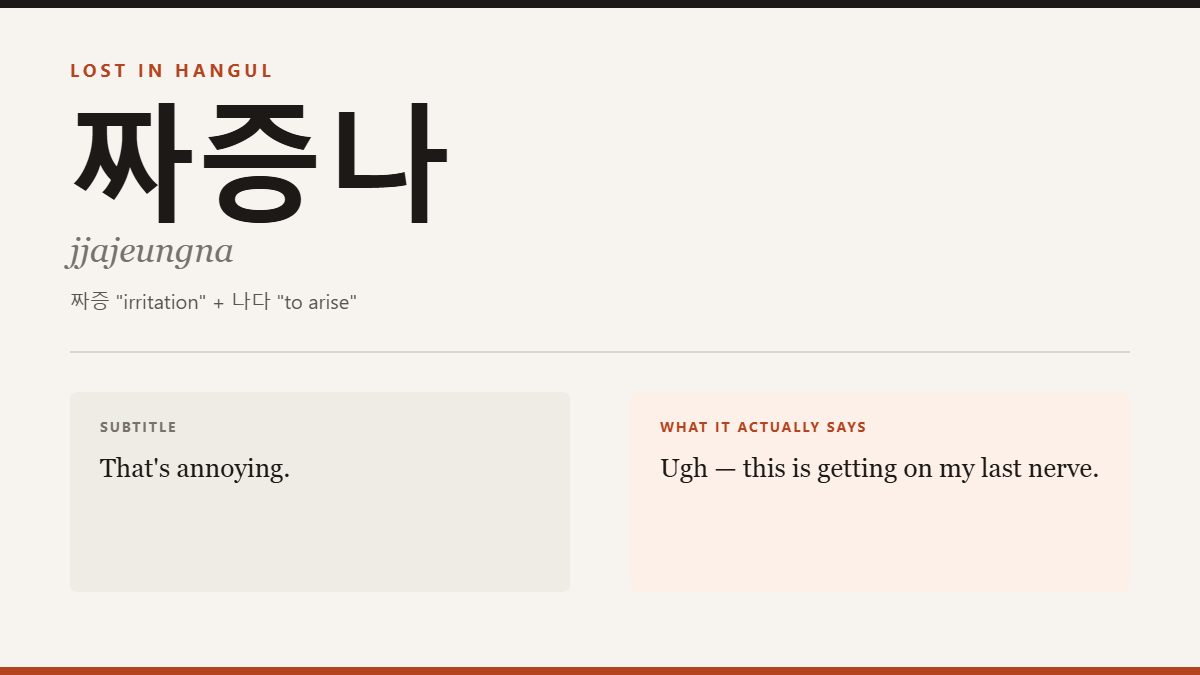
짜증나 — properly spelled 짜증 나 — means “this is so annoying,” the scratchy irritation of small things going wrong. It isn’t the same as anger, 답답해 or 귀찮아.
Korean words with no clean English equivalent — jeong, nunchi, dapdaphae — and what gets lost when a subtitle picks the nearest word.
짜증나 — properly spelled 짜증 나 — means “this is so annoying,” the scratchy irritation of small things going wrong. It isn’t the same as anger, 답답해 or 귀찮아.
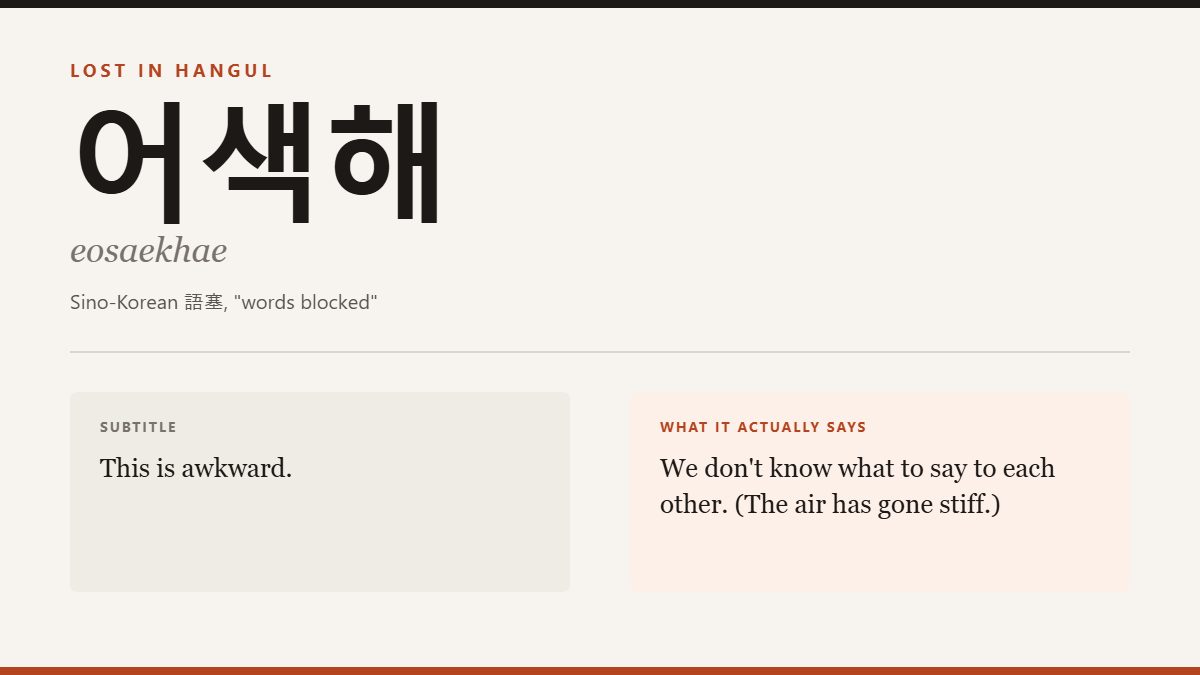
어색해 means awkward — the silence after a first meeting, the stiffness between two people who fell out, a sentence that doesn’t sound right. Korean splits “awkward” into several words, and they aren’t interchangeable.
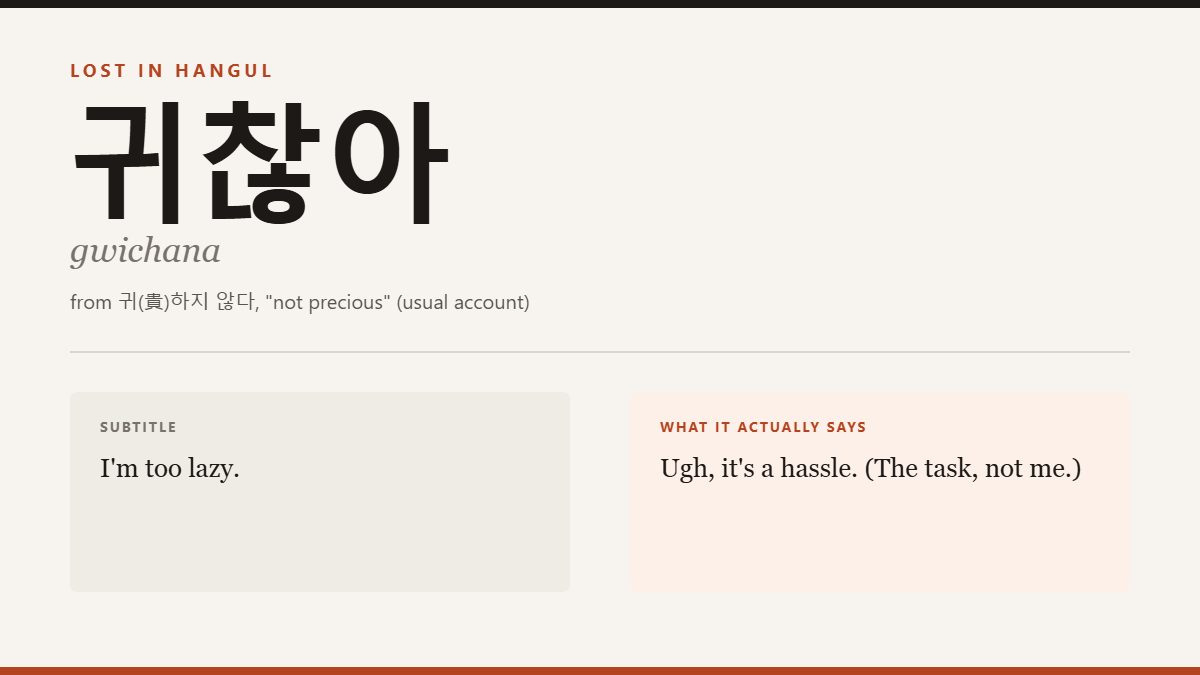
귀찮아 means something is a hassle and you can’t be bothered. It’s about the effort, not about being lazy — but aimed at a person, it can sting. It also gives Korean one of its most useful polite apologies.
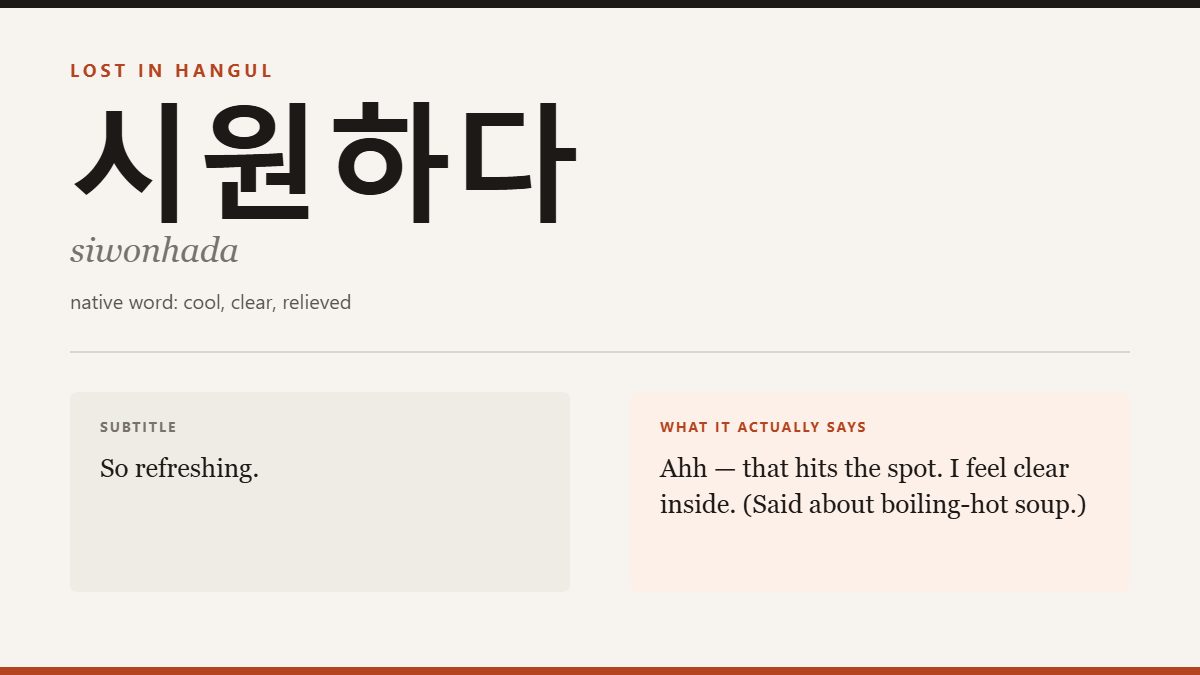
시원하다 means pleasantly cool. It also describes a scalding bowl of soup, a hard massage, a hot bath and a problem finally solved. What ties them together is relief.
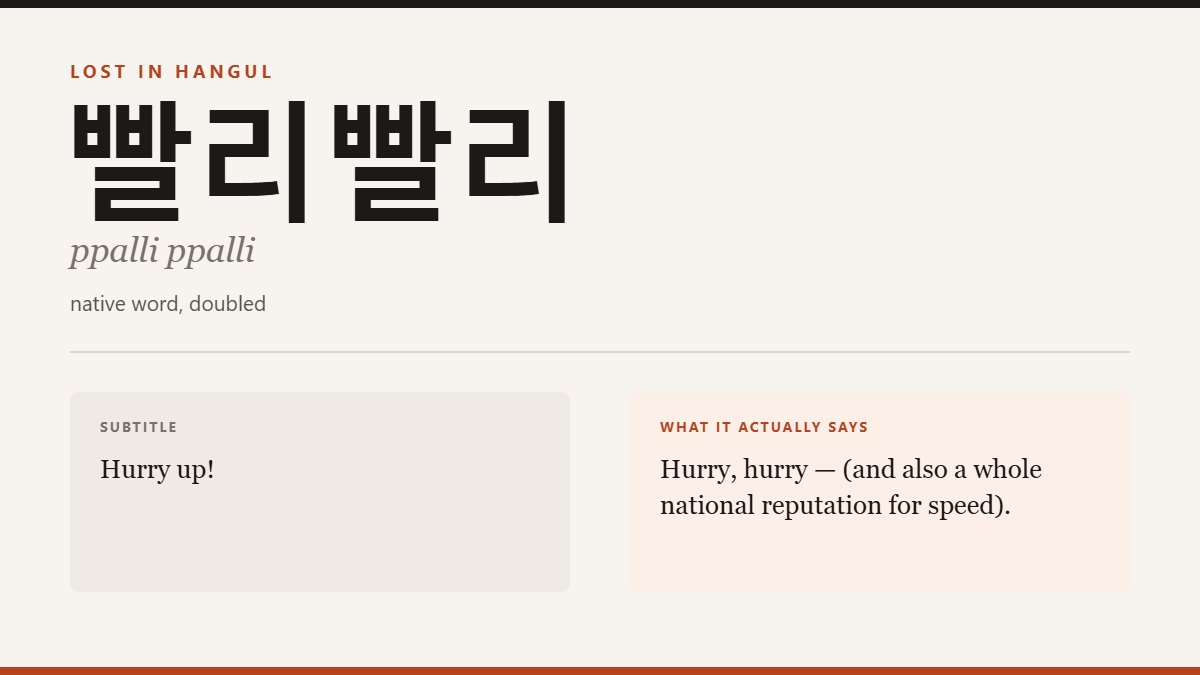
빨리빨리 means “quickly, quickly,” and it’s become shorthand for Korea’s famous speed — delivery in minutes, elevators with worn-out close buttons. Here’s the word, the culture, and the limits of the stereotype.
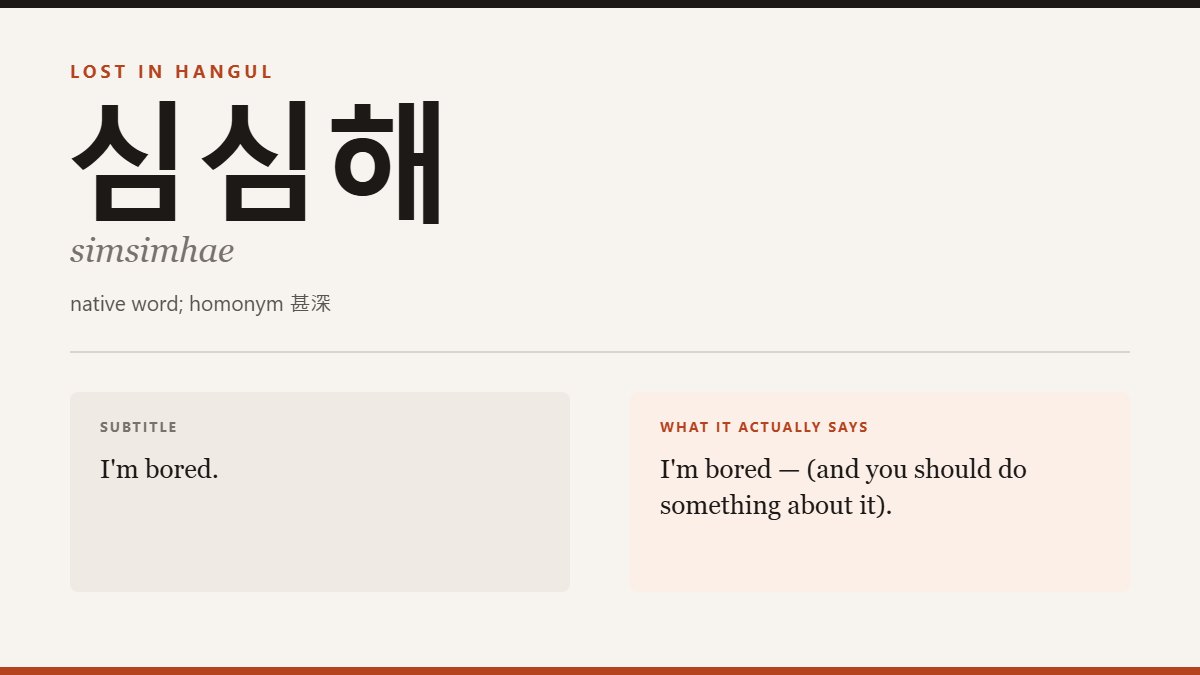
심심해 means “I’m bored.” It also means food is lightly seasoned. And a different, formal 심심하다 means “profound” — which caused a very public misunderstanding.
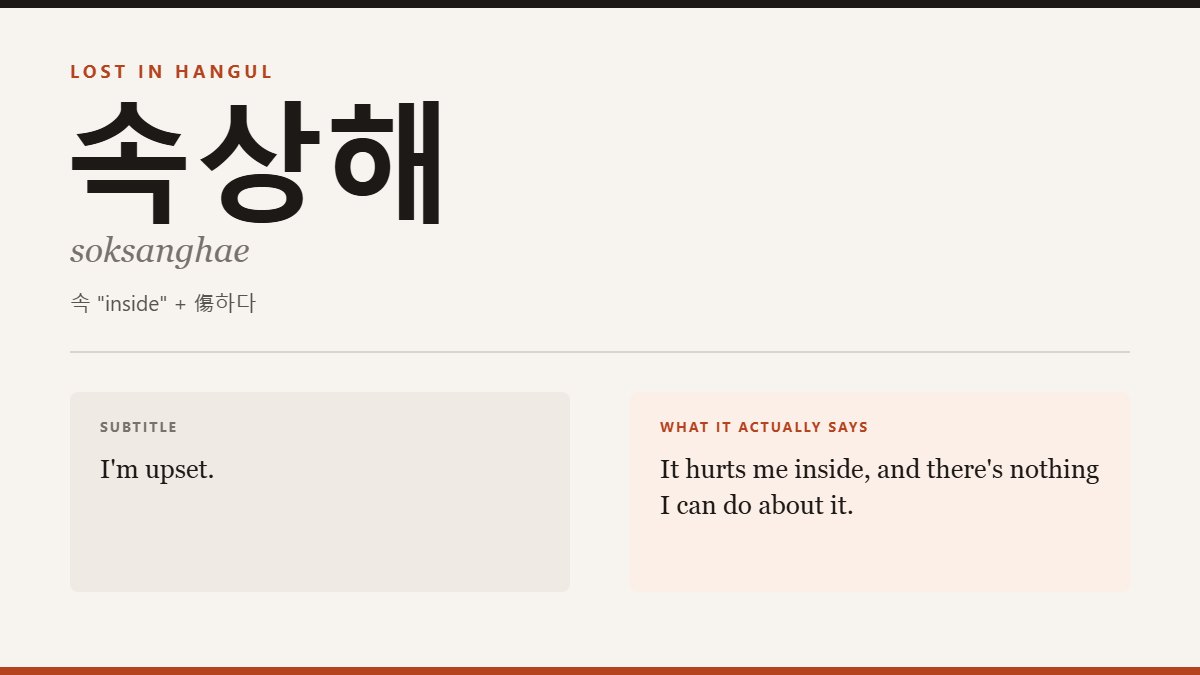
속상해 is being upset in a specific, inward way — hurt and frustrated by something you can’t fix. Parents say it about their children constantly. Here is how it differs from anger and 서운해.
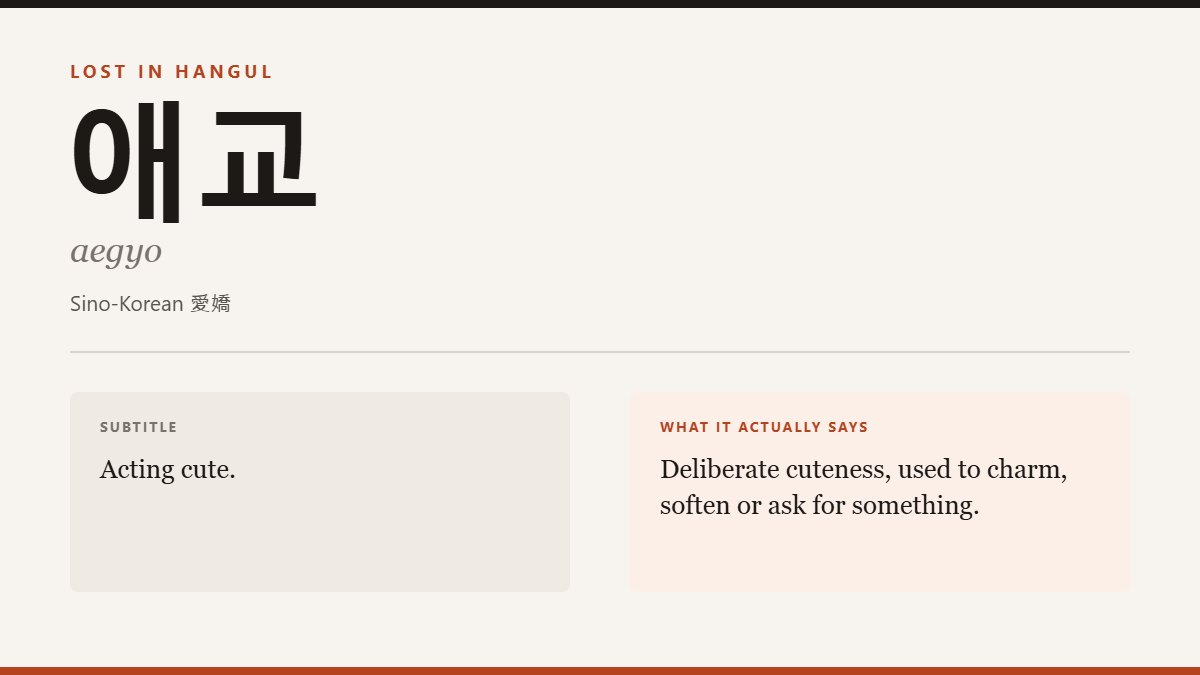
애교 is deliberately cute behaviour: the baby voice, the pout, the drawn-out “oppa~.” It is a social tool as much as a personality trait, and it is not only for women.
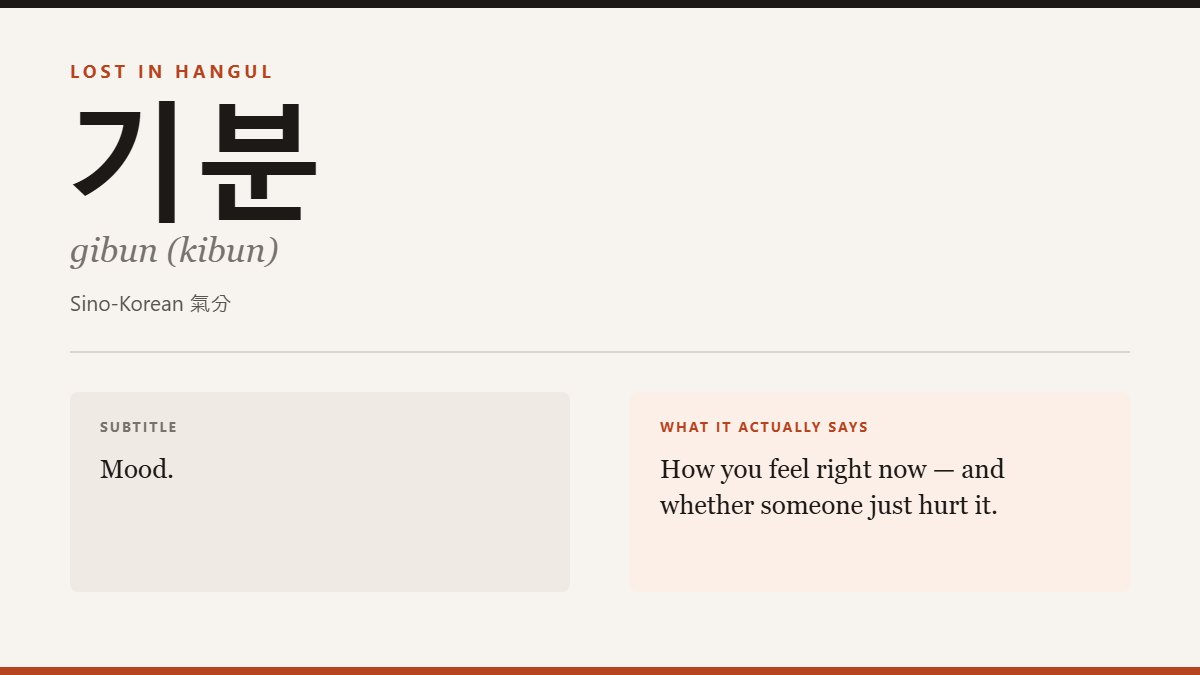
기분 means mood or how you feel right now. Older business guides turned it into a mysterious Korean concept of “face.” The everyday word is simpler and more useful than that.
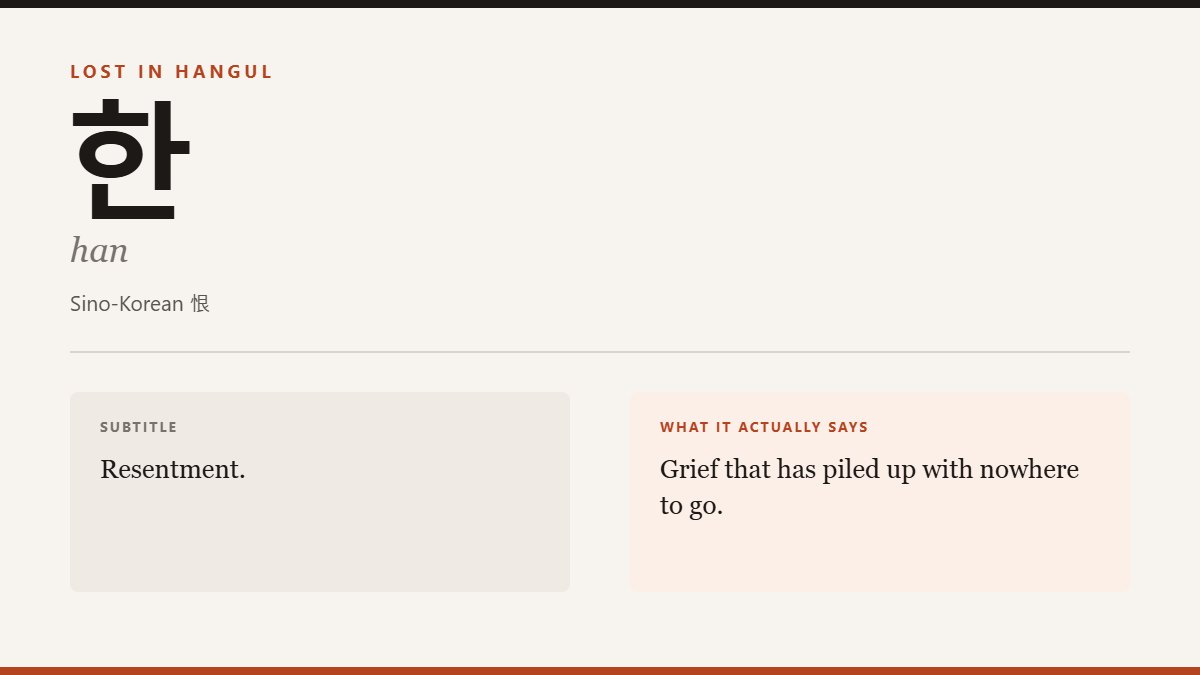
Han is the grief or resentment that builds when a wrong can’t be answered. It is also, in everyday Korean, something you “release” by finally eating the thing you always wanted.
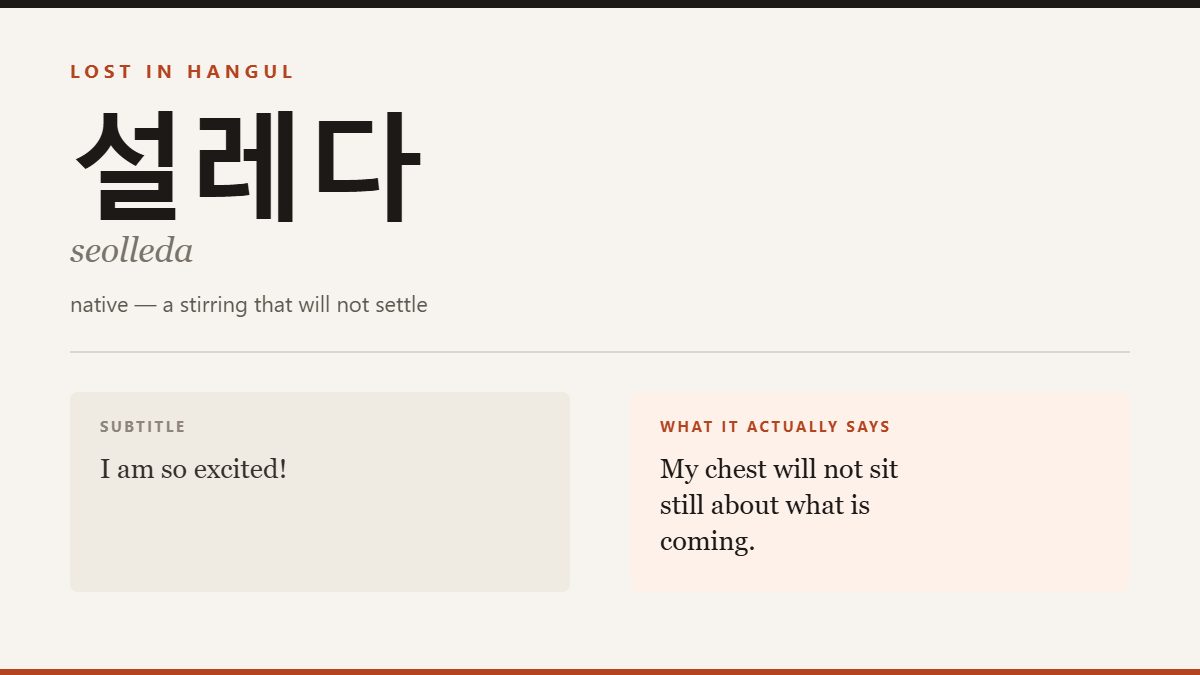
It points forward, always. Once the thing is happening the word stops applying — which is why “I don’t feel it any more” is a complete reason to end a relationship in Korean.
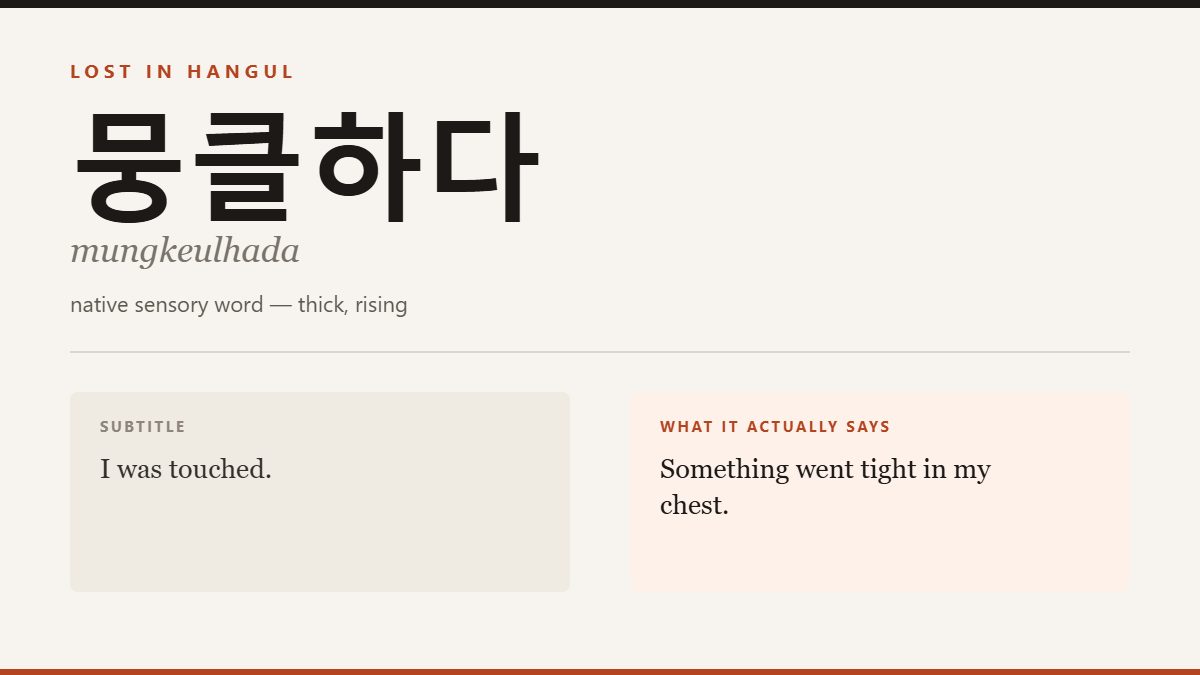
English says “moved” and describes the emotion from outside. Korean names the sensation in the chest and lets you work out the emotion yourself.