“Akkapda” (아깝다) — the pang of something good going to waste
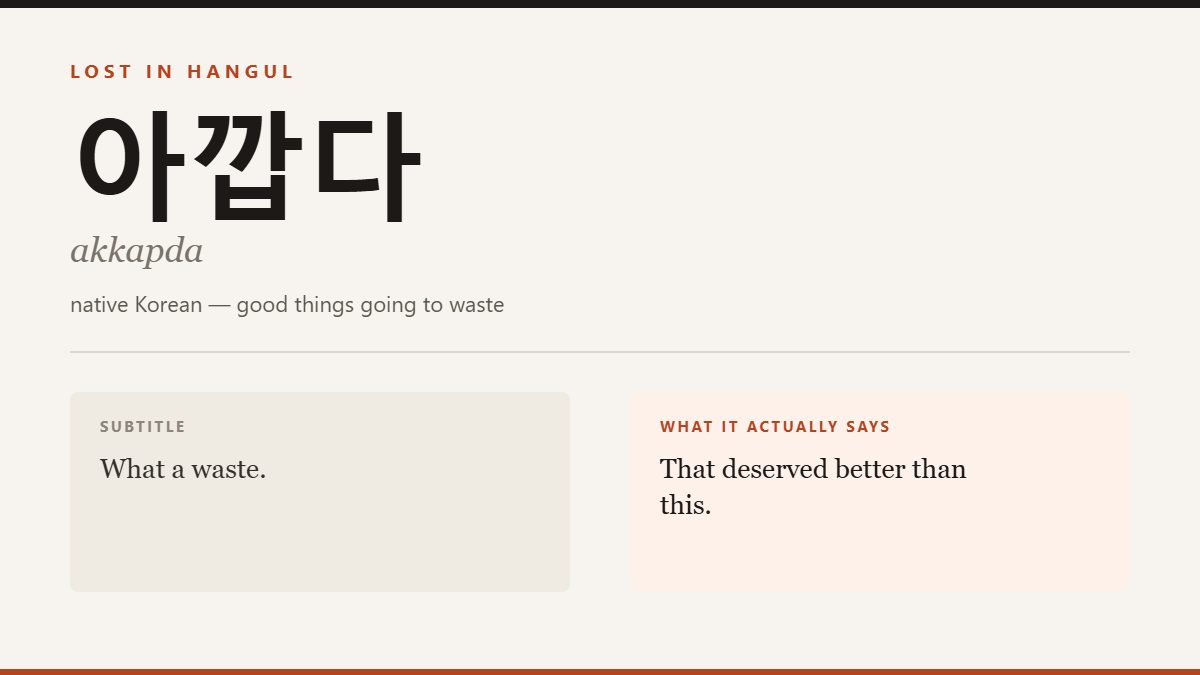
Used about leftover food, misspent money, unused talent and people who died young — all with the same short word, because it is built around value rather than judgment.
Korean words with no clean English equivalent — jeong, nunchi, dapdaphae — and what gets lost when a subtitle picks the nearest word.
Used about leftover food, misspent money, unused talent and people who died young — all with the same short word, because it is built around value rather than judgment.
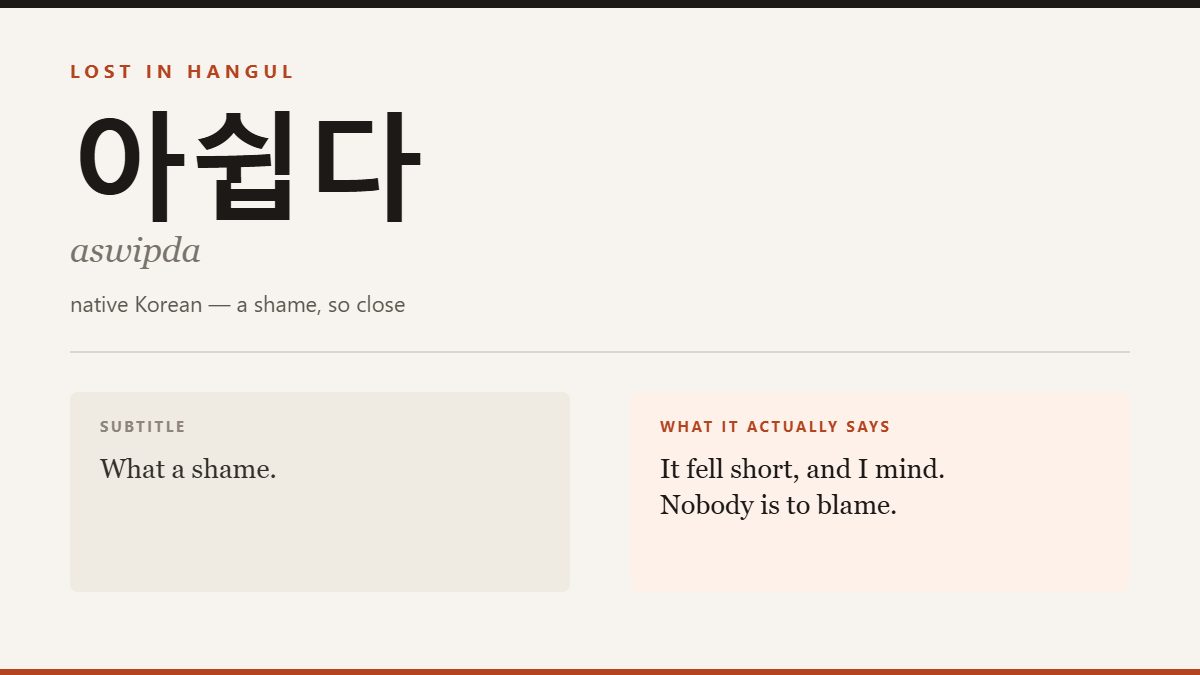
One of these is a warm goodbye and the other is an accusation. In English they both look like mild disappointment, which is how learners end up insulting people they meant to compliment.
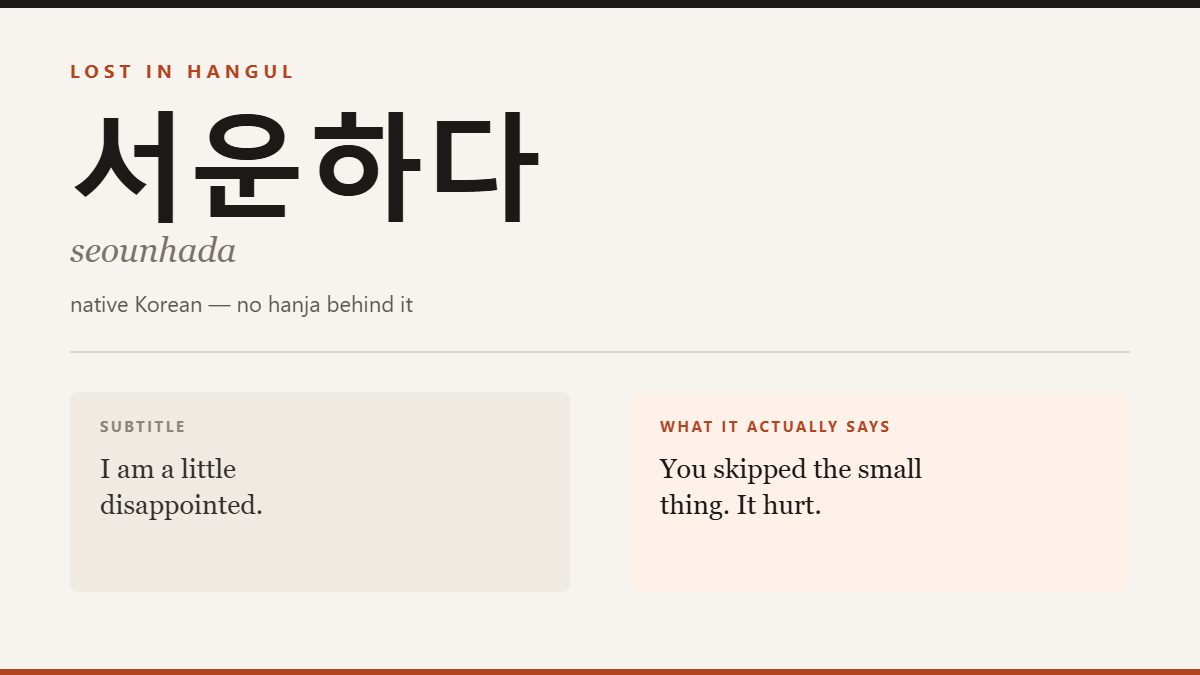
Not anger and not betrayal. The quiet hurt when someone close skipped the small thing, and saying it out loud is itself an admission that they matter.
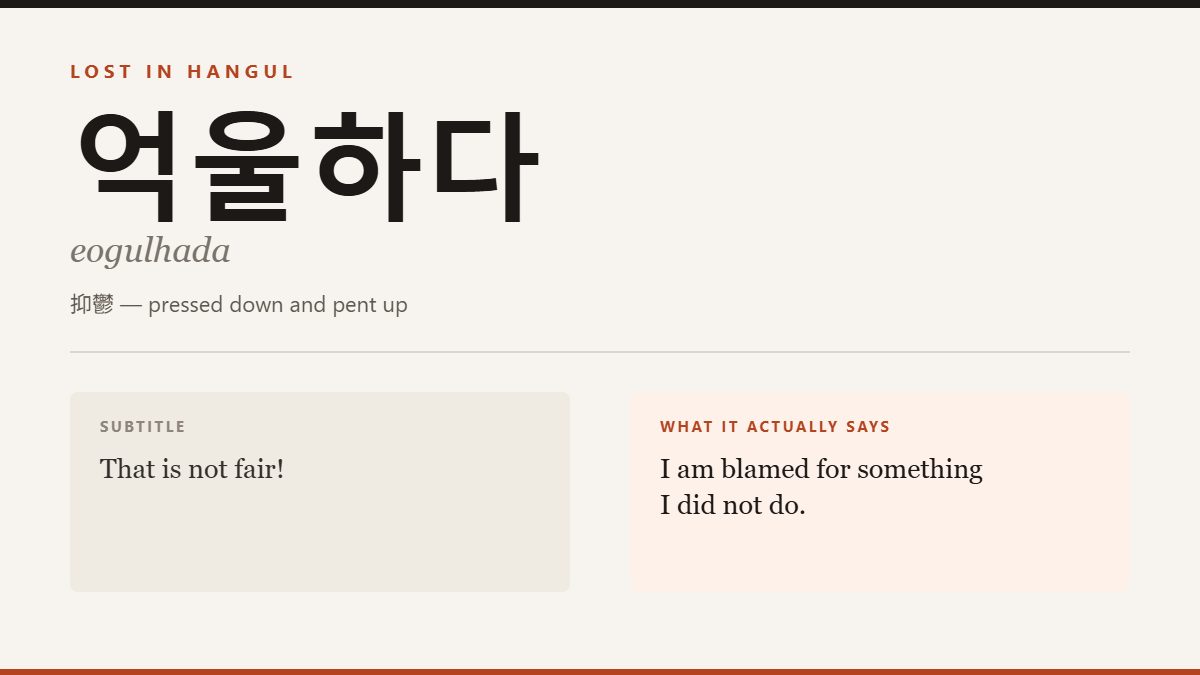
The same two hanja mean “depression” in Chinese and Japanese. Korean sent them somewhere else: the pressure of being blamed for something you did not do, in front of people who believe otherwise.
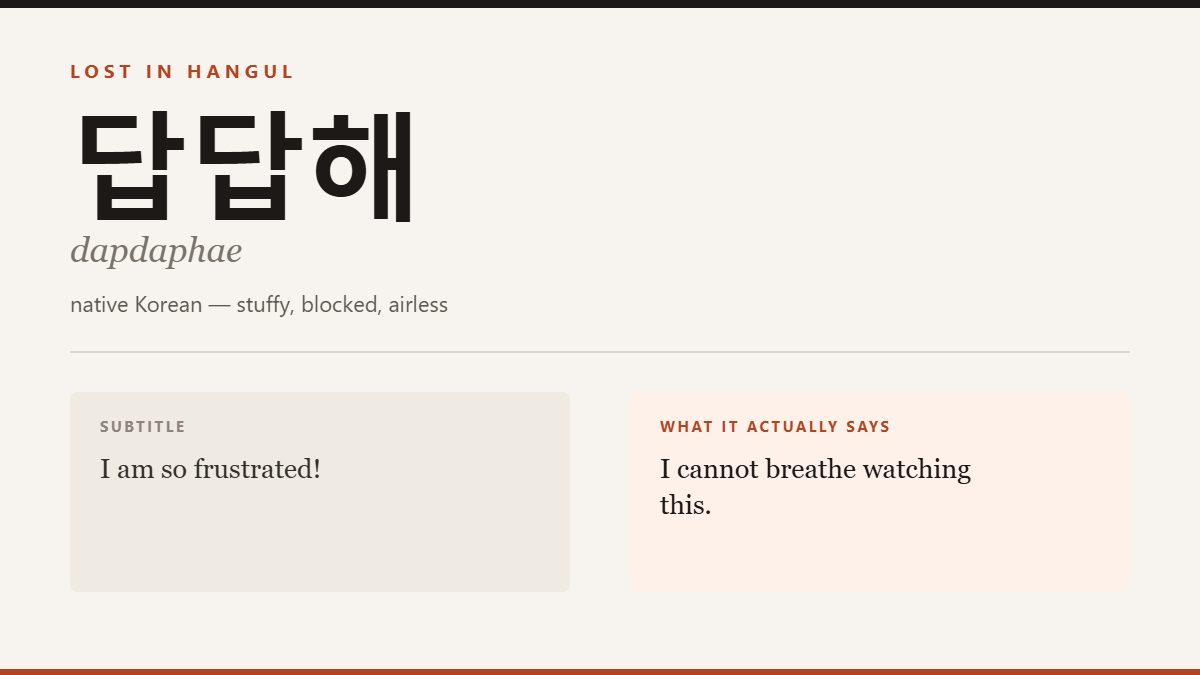
The word starts in the chest, not the mind. It means blocked, airless, unable to breathe — which is also why K-drama fandom talks about sweet potatoes and fizzy drinks.
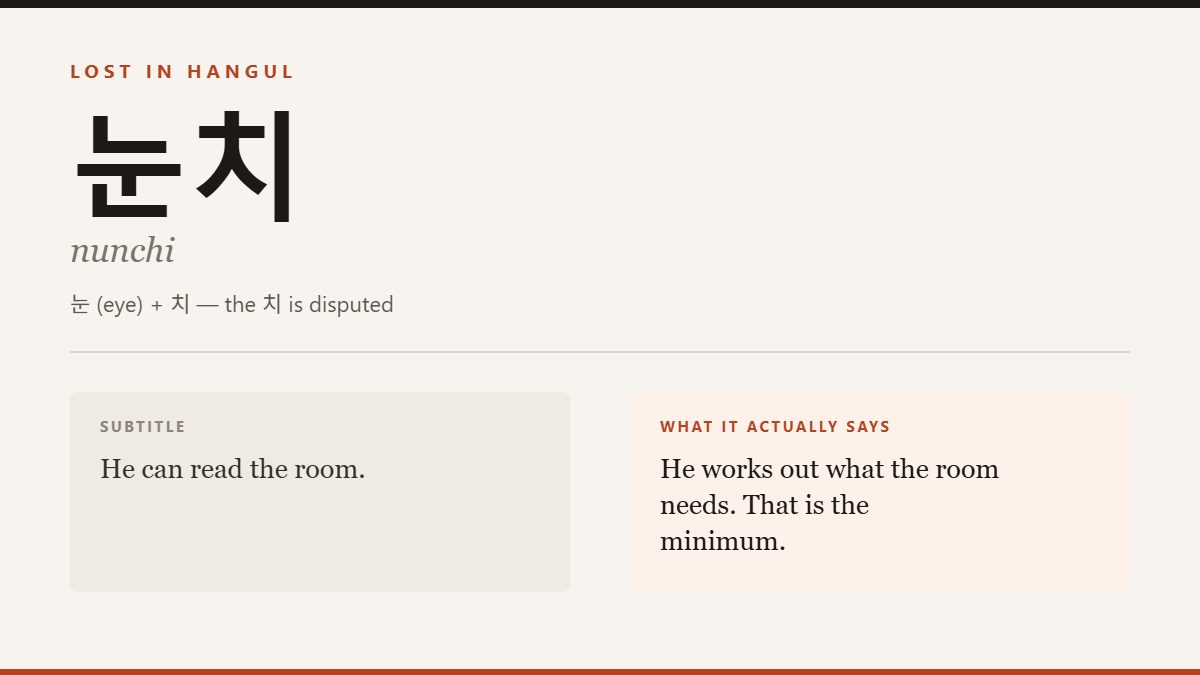
Reading the room is a talent in English. In Korean it is a duty, lacking it is an insult, and the same word also describes the exhaustion of monitoring someone more powerful than you.
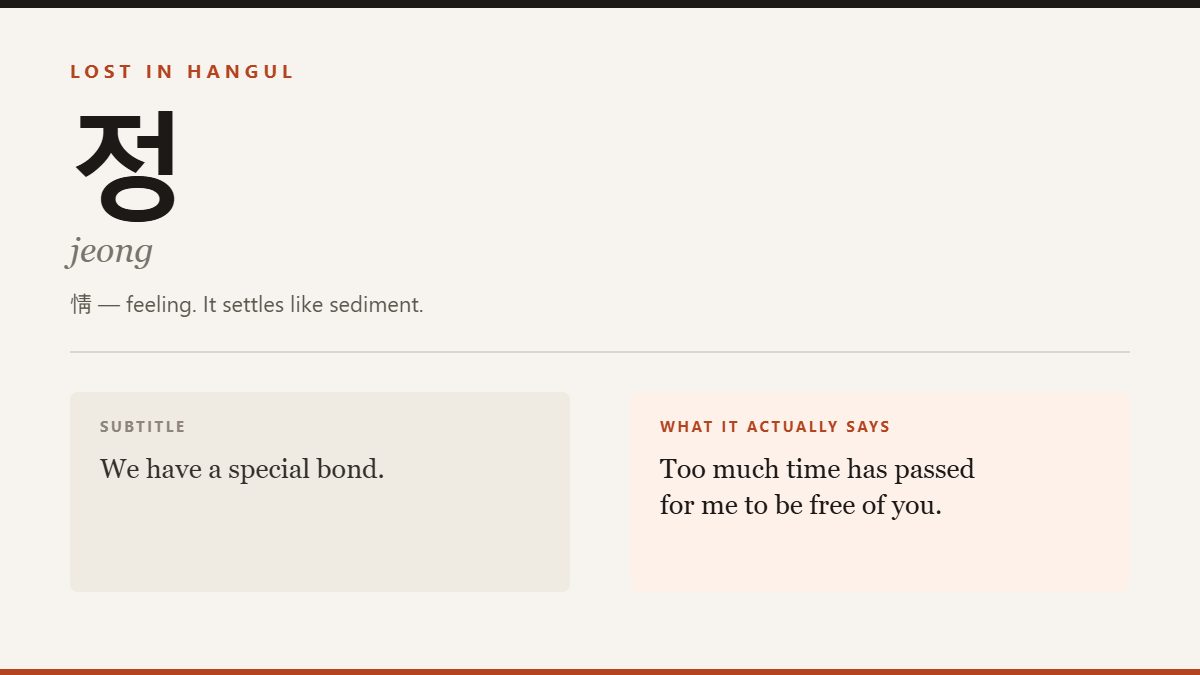
Subtitles call it affection or a special bond. Both add something the Korean word refuses to say: that you like the person. The stock phrase about “ugly jeong” proves it does not.