Skip to content

Lost in Hangul

  • Home
  • Untranslatable Words
  • Honorifics & Titles
  • Things They Say
  • Slang & Internet Korean
  • Subtitle Notes
  • About
  • Contact
  • Privacy Policy

mataXinfo

Native Korean speaker writing about the words, honorifics and lines that English subtitles cannot carry across. Not a professional translator — just someone who knows how these land in a room.

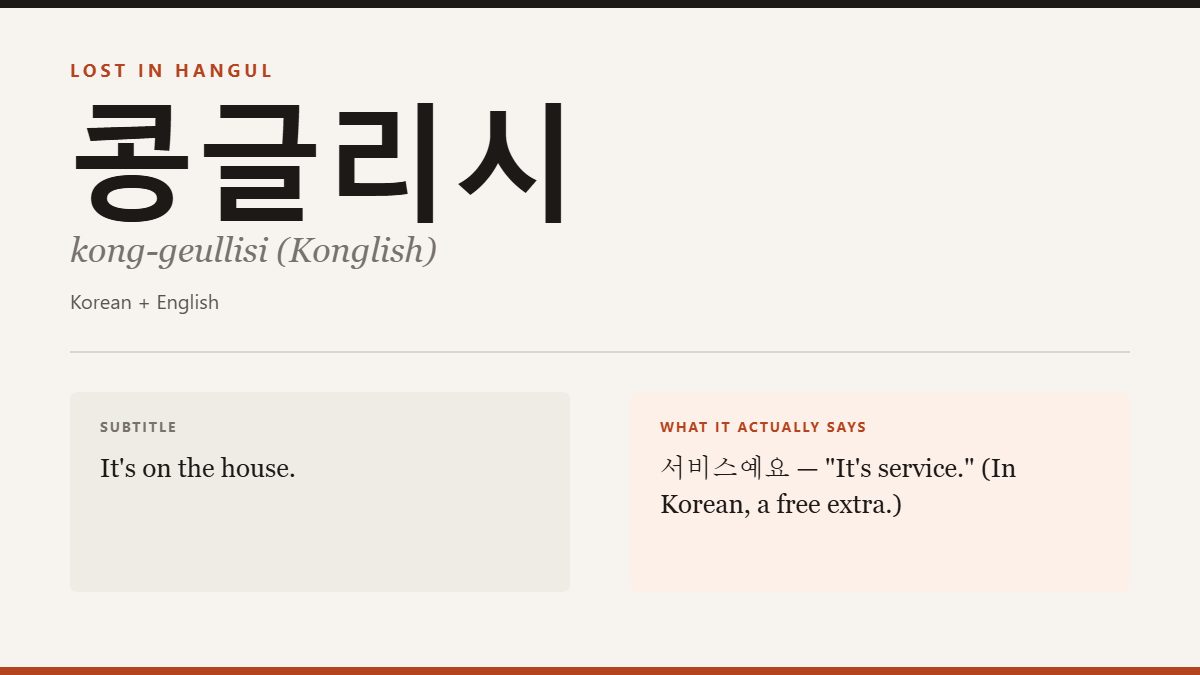
“Konglish” (콩글리시) — the English words that aren’t English, and what subtitles do with them
October 13, 2026 by mataXinfo
콩글리시 (kong-geullisi (Konglish)) word card

핸드폰, 아이쇼핑, 서비스, 스킨십: Korean is full of English-looking words that mean something else. Subtitles quietly translate them back into real English — and lose the joke when a character is showing off.
Categories Subtitle Notes Leave a comment

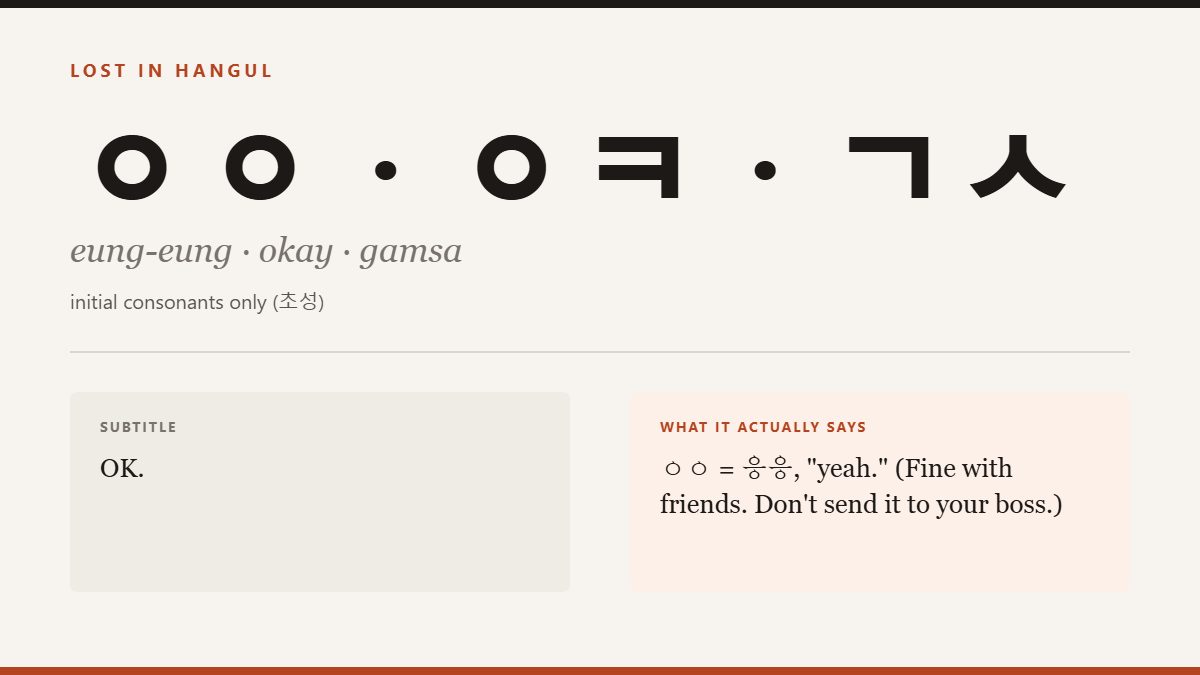
“ㅇㅇ” (eung-eung), “ㅇㅋ” and “ㄱㅅ” — Korean texting shorthand made only of consonants

October 13, 2026 by mataXinfo
ㅇㅇ · ㅇㅋ · ㄱㅅ (eung-eung · okay · gamsa) word card

Korean texts are full of bare consonants: ㅇㅇ (yeah), ㅇㅋ (okay), ㄱㅅ (thanks), ㅈㅅ (sorry), ㄴㄴ (nope). They’re quick and friendly — and a single ㅇ can be as cold as an English “k.”

Categories Slang & Internet Korean Leave a comment

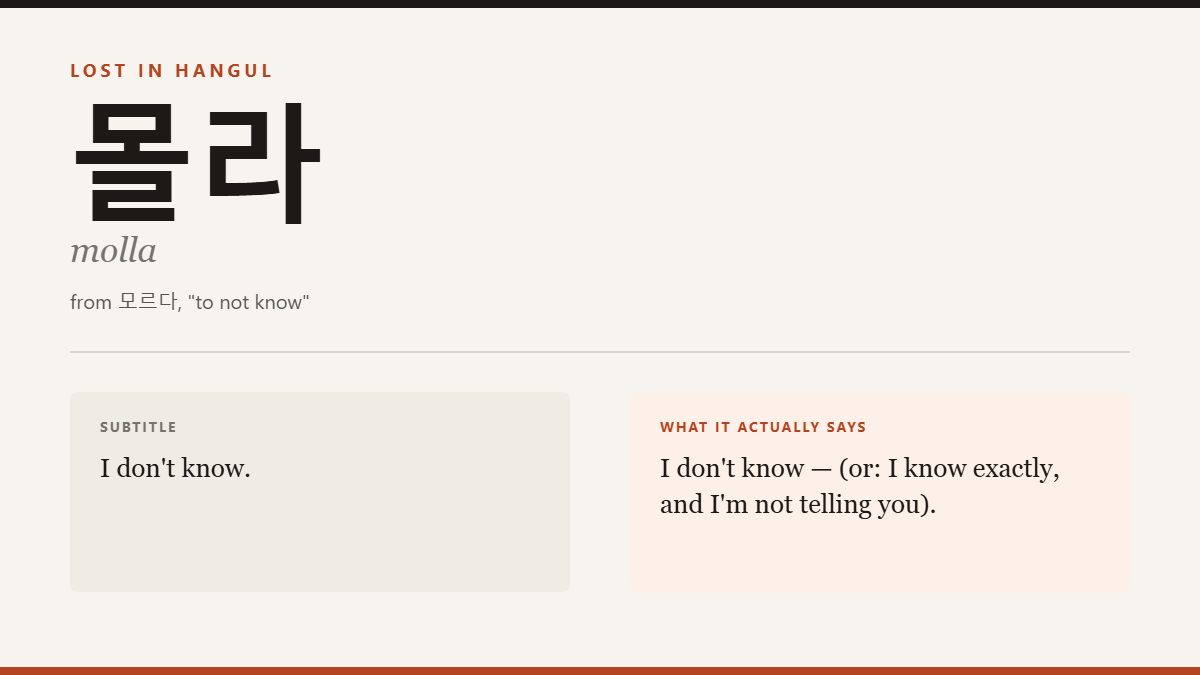
“Molla” (몰라) — “I don’t know,” and “I’m not talking about it”

October 13, 2026 by mataXinfo
몰라 (molla) word card

몰라 means “I don’t know.” With a pout or a turned back, it means “I’m not discussing this” — the Korean sulk in two syllables. And 몰라요 and 모르겠어요 are not equally polite.

Categories Things They Say Leave a comment

“Jjajeungna” (짜증나) — annoyed, irritated, and completely over it

October 12, 2026 by mataXinfo
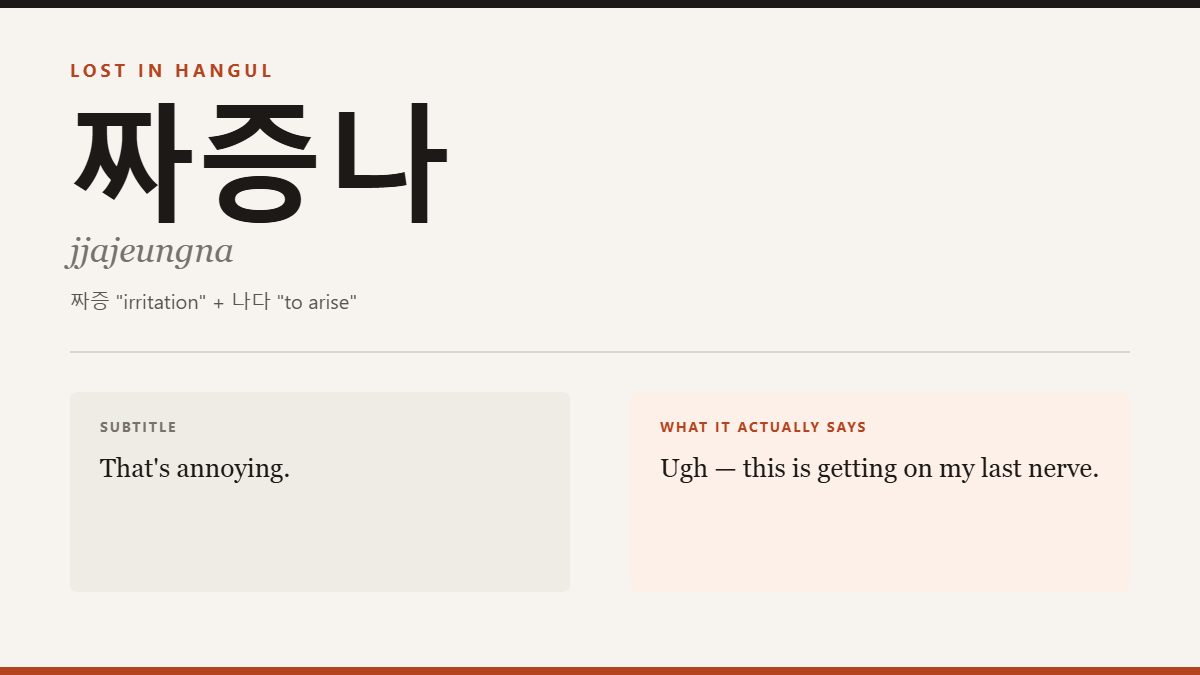
짜증나 (jjajeungna) word card

짜증나 — properly spelled 짜증 나 — means “this is so annoying,” the scratchy irritation of small things going wrong. It isn’t the same as anger, 답답해 or 귀찮아.

Categories Untranslatable Words Leave a comment

“Saturi” (사투리) — the Korean accents subtitles turn into standard English

October 12, 2026 by mataXinfo
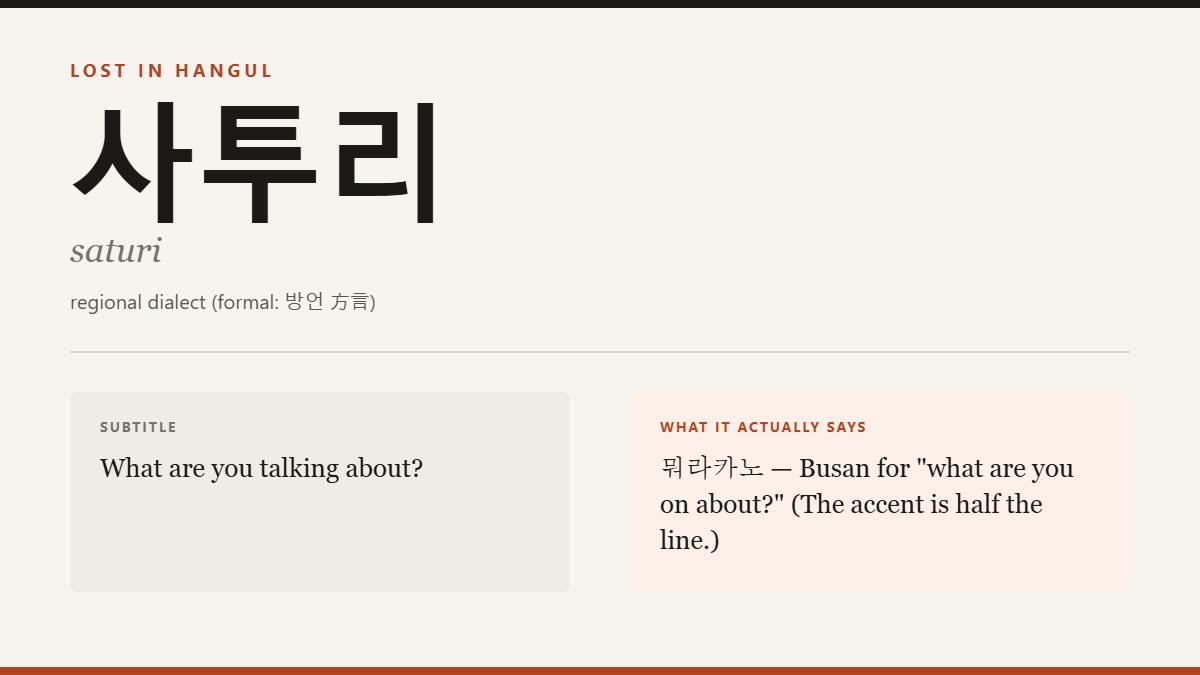
사투리 (saturi) word card

사투리 means regional dialect. Busan, Jeolla, Chungcheong and Jeju speech each carry a whole character type in Korean drama — and English subtitles almost always flatten them into the same neutral voice.

Categories Subtitle Notes Leave a comment

“Yeobo” (여보) — what married couples call each other, and its link to 여보세요

October 12, 2026 by mataXinfo
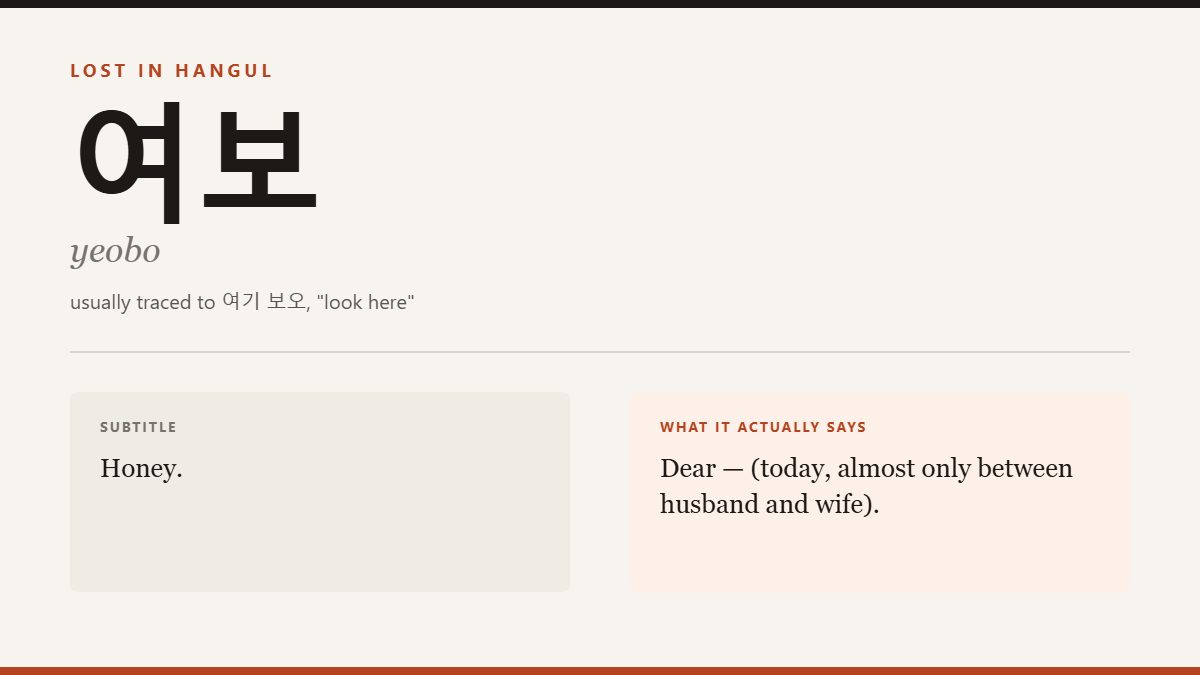
여보 (yeobo) word card

여보 is the classic word Korean husbands and wives use for each other — “honey,” “dear.” It’s usually traced to 여기 보오, “look here,” the same root as 여보세요, the phone “hello.”

Categories Honorifics & Titles Leave a comment

“Honbap” (혼밥) — eating alone, and the word that made it normal

October 11, 2026 by mataXinfo
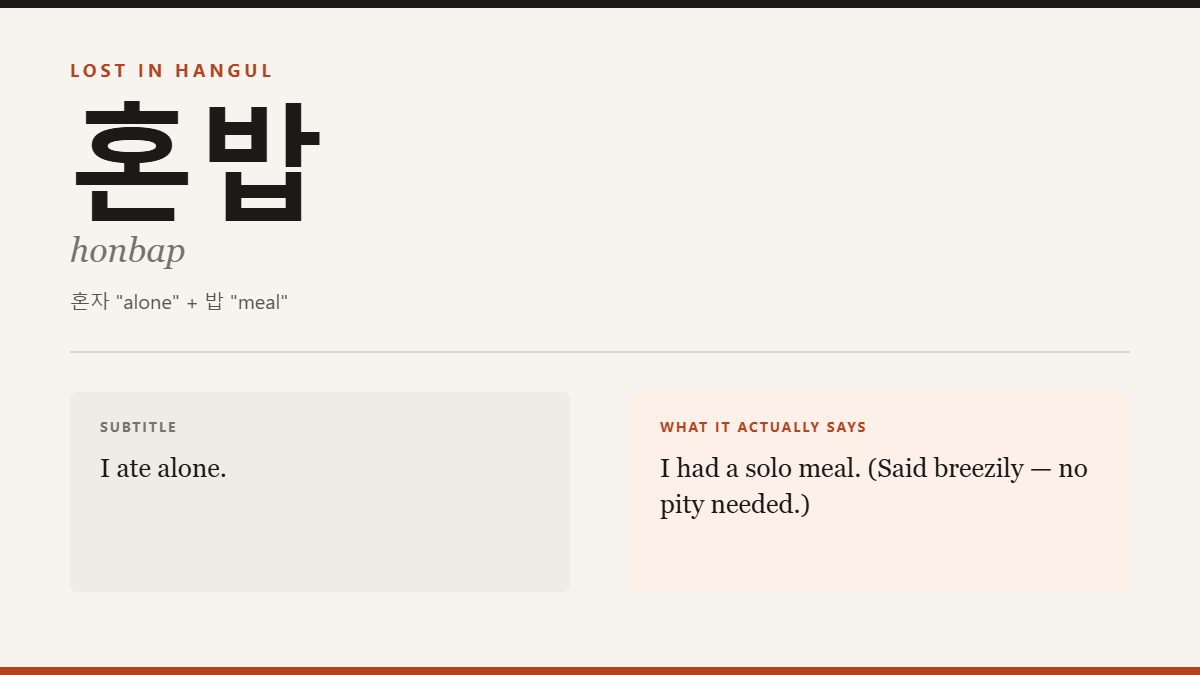
혼밥 (honbap) word card

혼밥 is short for 혼자 먹는 밥, “a meal eaten alone.” The word spread along with the habit and spawned a family — 혼술, 혼영, 혼행. In a country where meals are made for sharing, eating alone needed a name before it could feel normal.

Categories Slang & Internet Korean Leave a comment

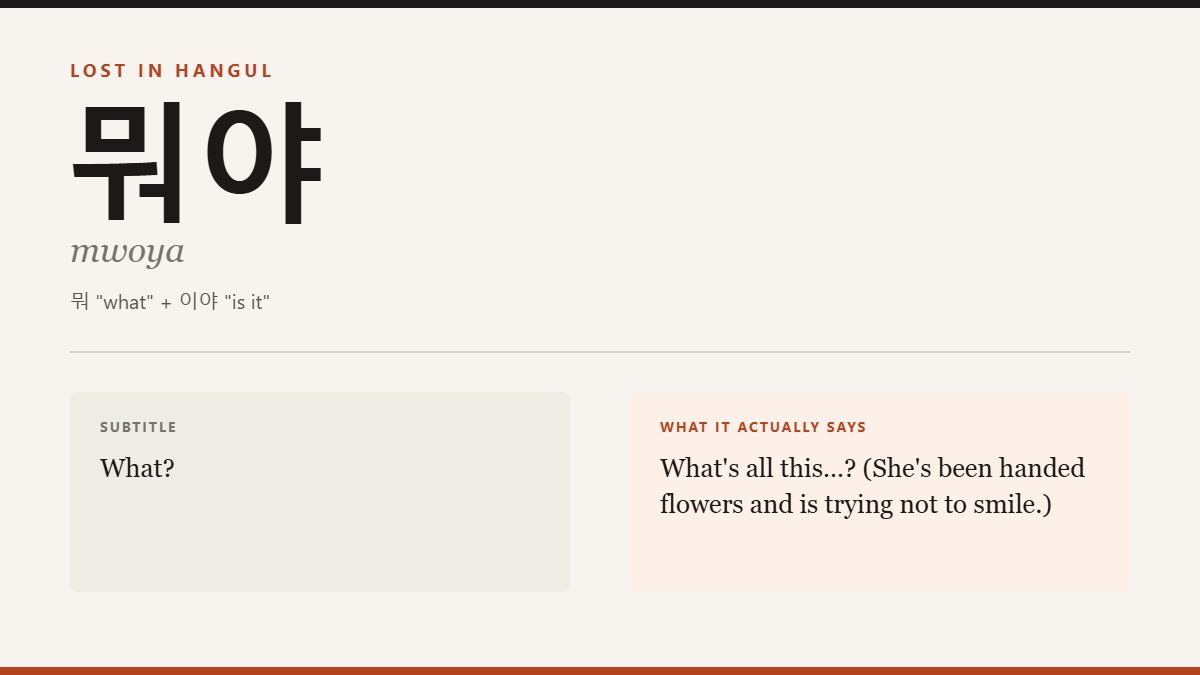
“Mwoya” (뭐야) — “what is it?”, “what the—”, and “what’s all this?”

October 11, 2026 by mataXinfo
뭐야 (mwoya) word card

뭐야 literally asks “what is it?” In practice it’s surprise, annoyance, flustered delight or disbelief, depending on the voice. Doubled, as 뭐야 뭐야, it’s usually good news.

Categories Things They Say Leave a comment

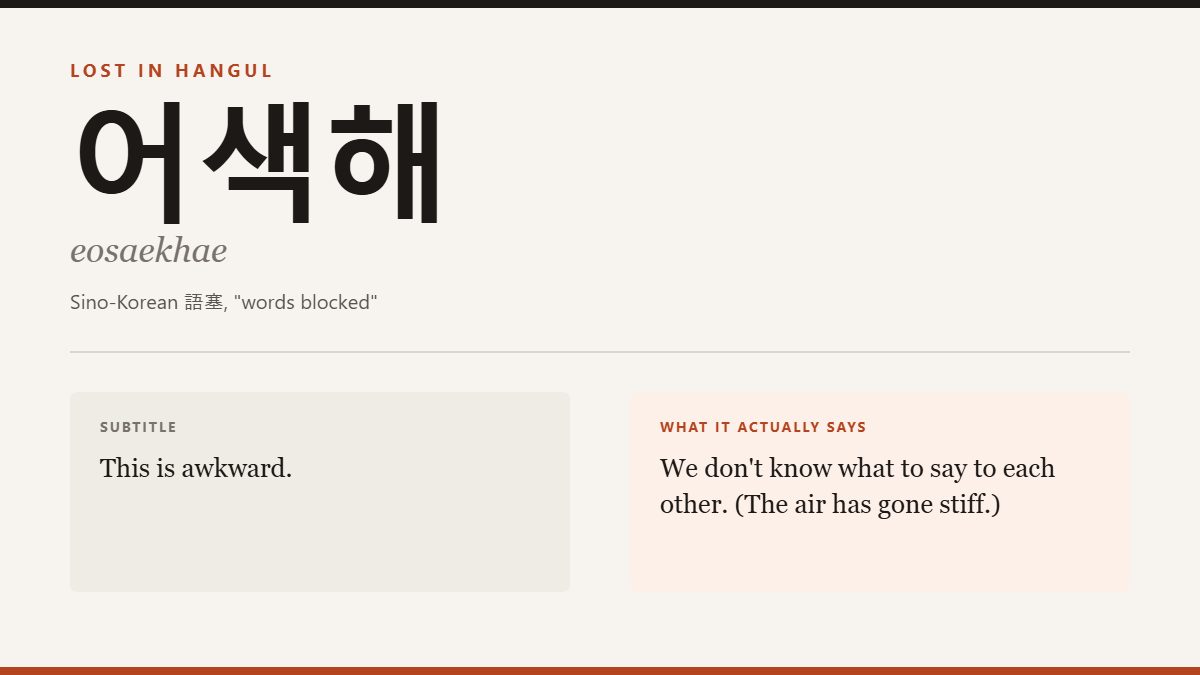
“Eosaekhae” (어색해) — awkward, and Korean’s other kinds of awkward

October 11, 2026 by mataXinfo
어색해 (eosaekhae) word card

어색해 means awkward — the silence after a first meeting, the stiffness between two people who fell out, a sentence that doesn’t sound right. Korean splits “awkward” into several words, and they aren’t interchangeable.

Categories Untranslatable Words Leave a comment

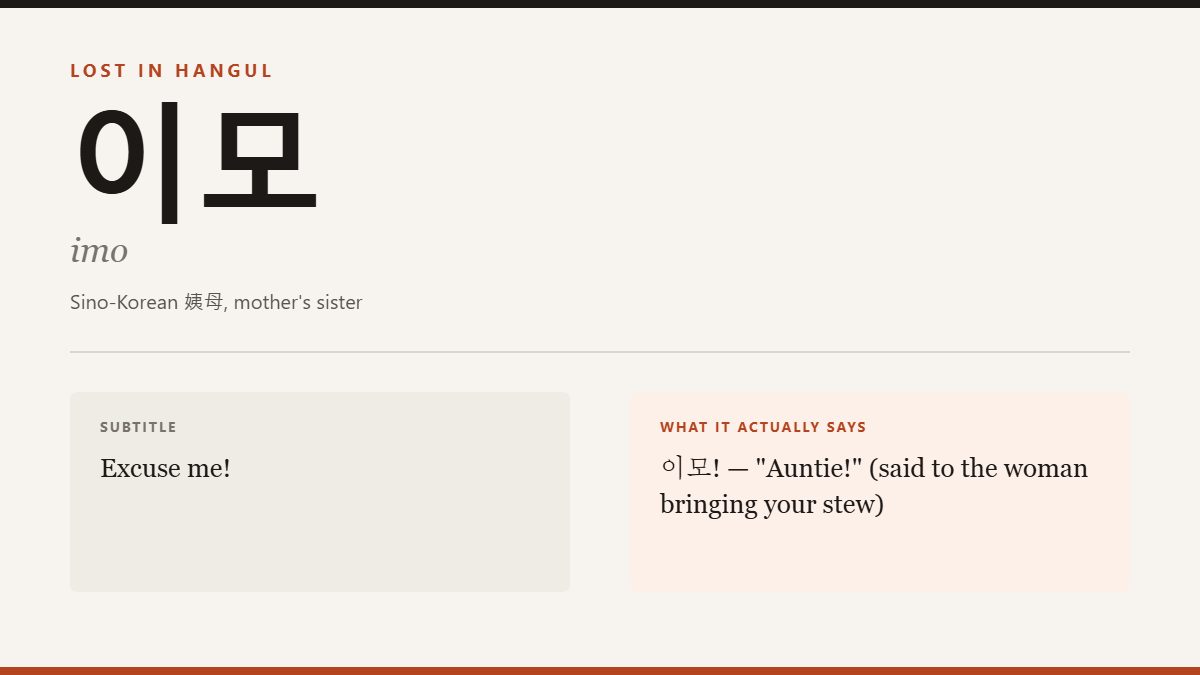
“Imo” (이모) — your mother’s sister, and the woman who runs the restaurant

October 10, 2026 by mataXinfo
이모 (imo) word card

이모 means your mother’s sister — not your father’s, who is 고모. It’s also how Koreans warmly call the woman serving at a restaurant, the childminder, and Mum’s best friend.

Categories Honorifics & Titles Leave a comment

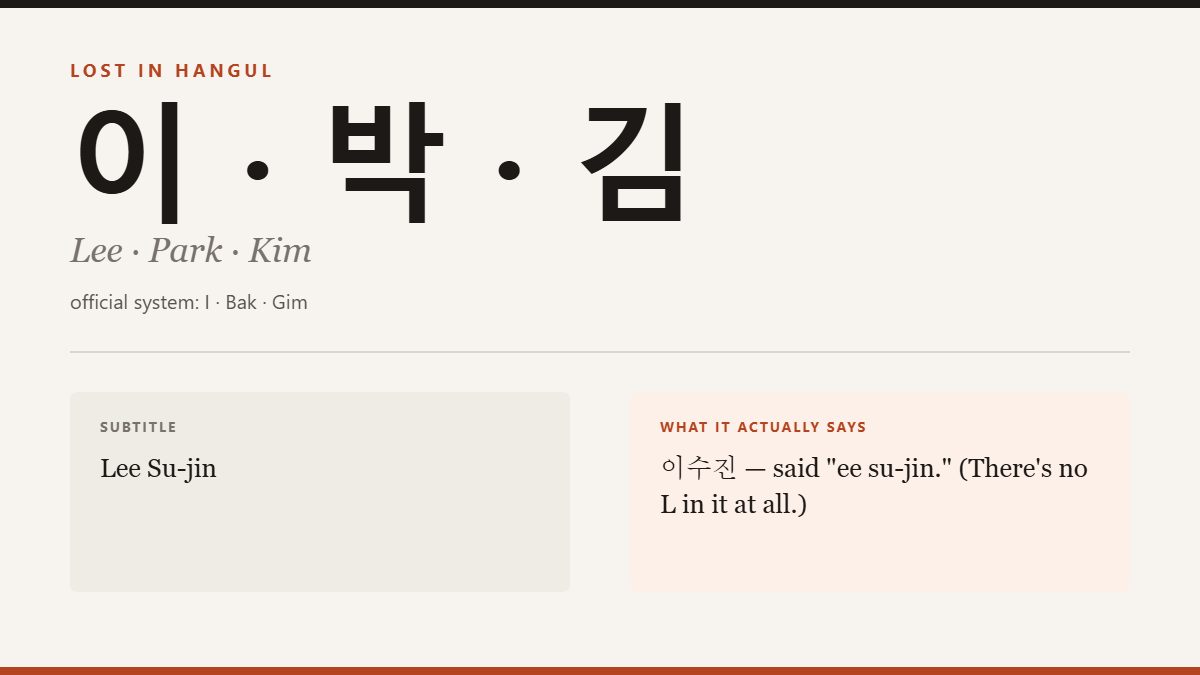
“Lee,” “Park,” “Kim” (이·박·김) — why Korean names aren’t spelled the way they sound

October 10, 2026 by mataXinfo
이 · 박 · 김 (Lee · Park · Kim) word card

이 has no L, 박 has no R, and 김 starts somewhere between K and G. The usual spellings of Korean surnames come from older habits, and Korea’s official romanization was never applied to them — so Busan changed its spelling in 2000, and the Parks didn’t.

Categories Subtitle Notes Leave a comment

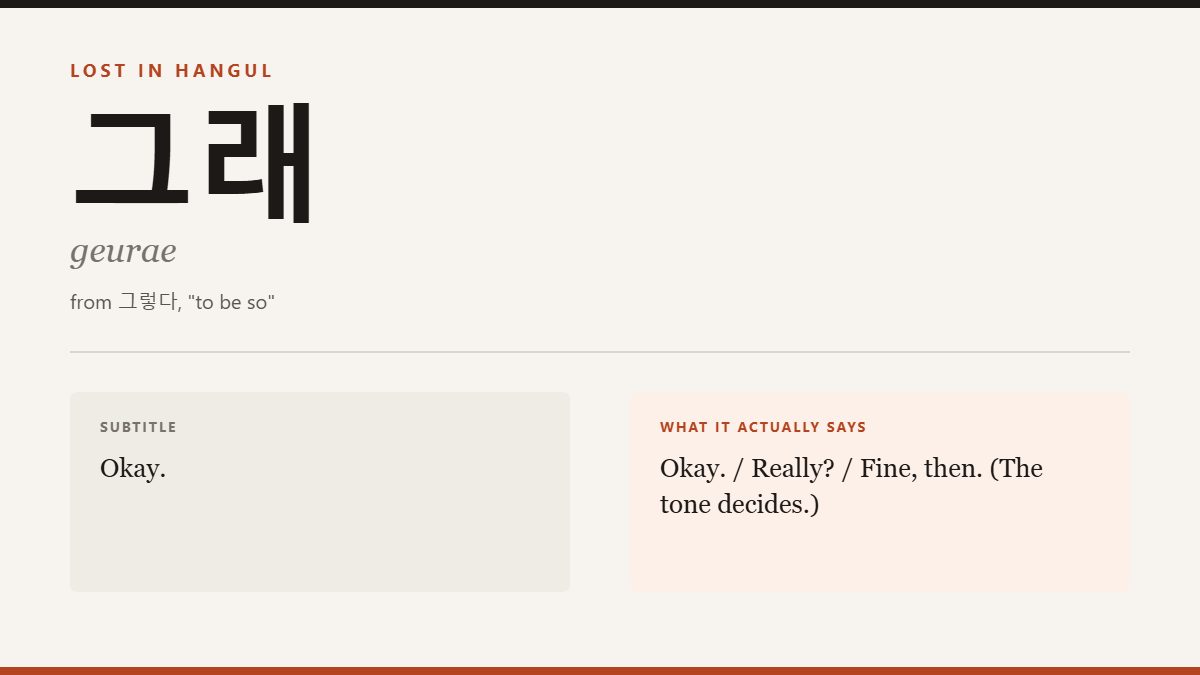
“Geurae” (그래) — yes, okay, really?, and “fine, then”

October 10, 2026 by mataXinfo
그래 (geurae) word card

그래 means “that’s right,” “okay,” “really?” and, through gritted teeth, “fine, have it your way.” Same word every time; the tone carries the meaning.

Categories Things They Say Leave a comment
Older posts
Page1 Page2 … Page8 Next →

What this is

Korean words, honorifics and lines that subtitles cannot carry across. One word per article: what it means, what the subtitle says, and what got dropped.

How these are written →

Start here

  • Gosaenghaesseo — not "good job"
  • Jeong — attachment you did not choose
  • Why she calls him Oppa
  • Ani — the word that is not "no"

Categories

  • Honorifics & Titles (18)
  • Slang & Internet Korean (18)
  • Subtitle Notes (16)
  • Things They Say (20)
  • Untranslatable Words (19)

Search

© 2026 Lost in Hangul • Built with GeneratePress