“Yeobo” (여보) — what married couples call each other, and its link to 여보세요
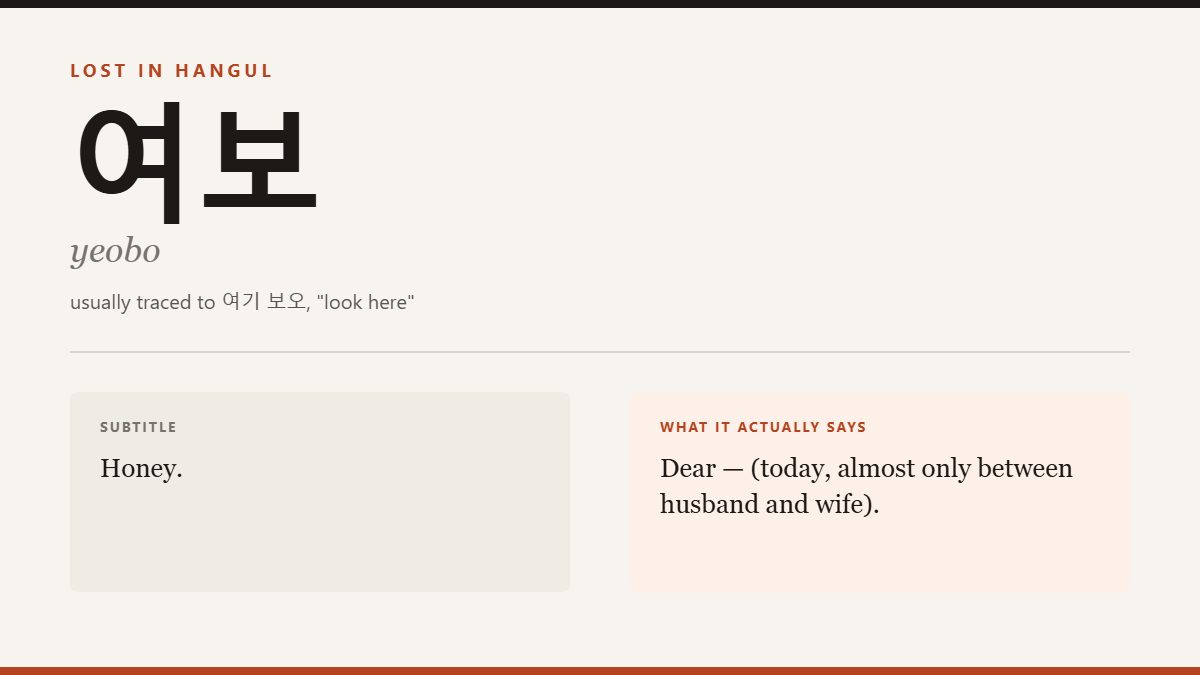
여보 is the classic word Korean husbands and wives use for each other — “honey,” “dear.” It’s usually traced to 여기 보오, “look here,” the same root as 여보세요, the phone “hello.”
Oppa, hyung, nuna, sunbae, and the moment two people drop honorifics. Subtitles flatten all of it into “you”.
여보 is the classic word Korean husbands and wives use for each other — “honey,” “dear.” It’s usually traced to 여기 보오, “look here,” the same root as 여보세요, the phone “hello.”
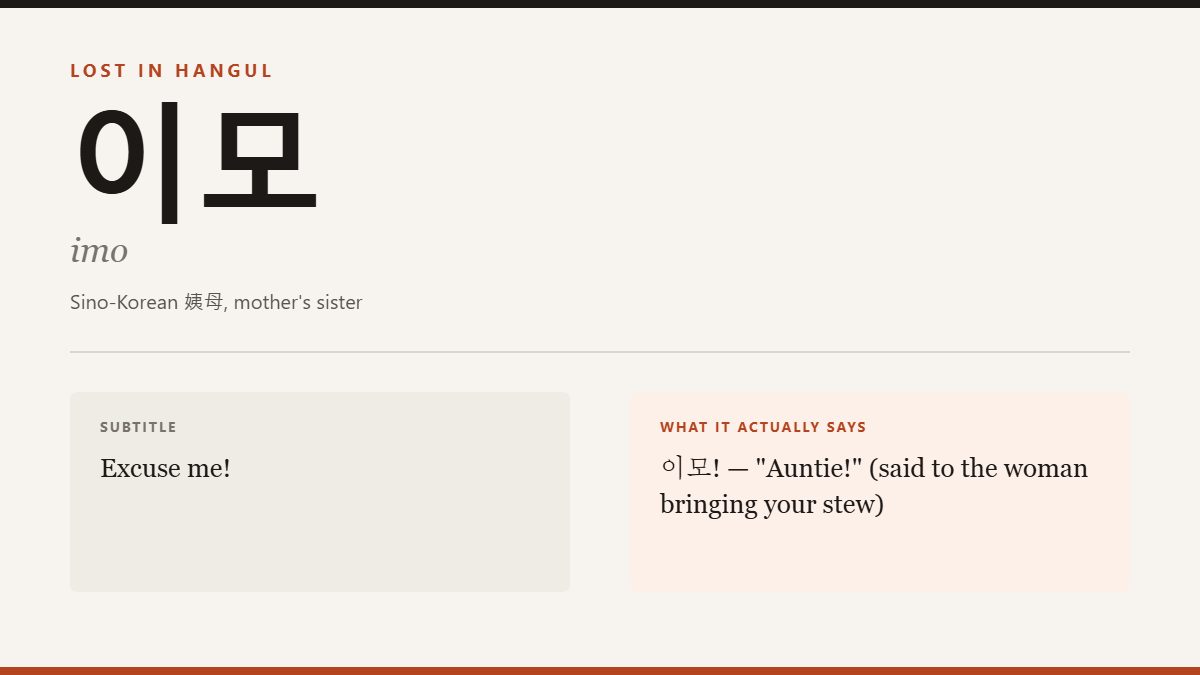
이모 means your mother’s sister — not your father’s, who is 고모. It’s also how Koreans warmly call the woman serving at a restaurant, the childminder, and Mum’s best friend.
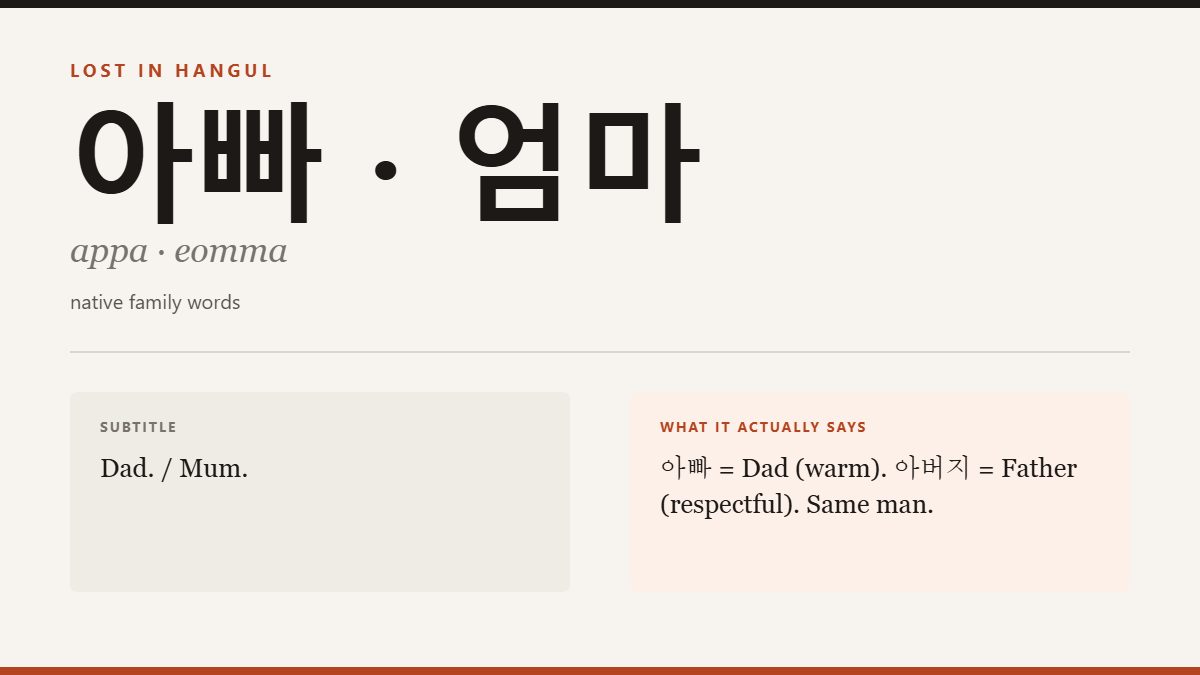
엄마 and 아빠 are Mum and Dad. 어머니 and 아버지 are Mother and Father. Korean adults move between them in ways English speakers don’t, and other people’s parents get a third set of words.
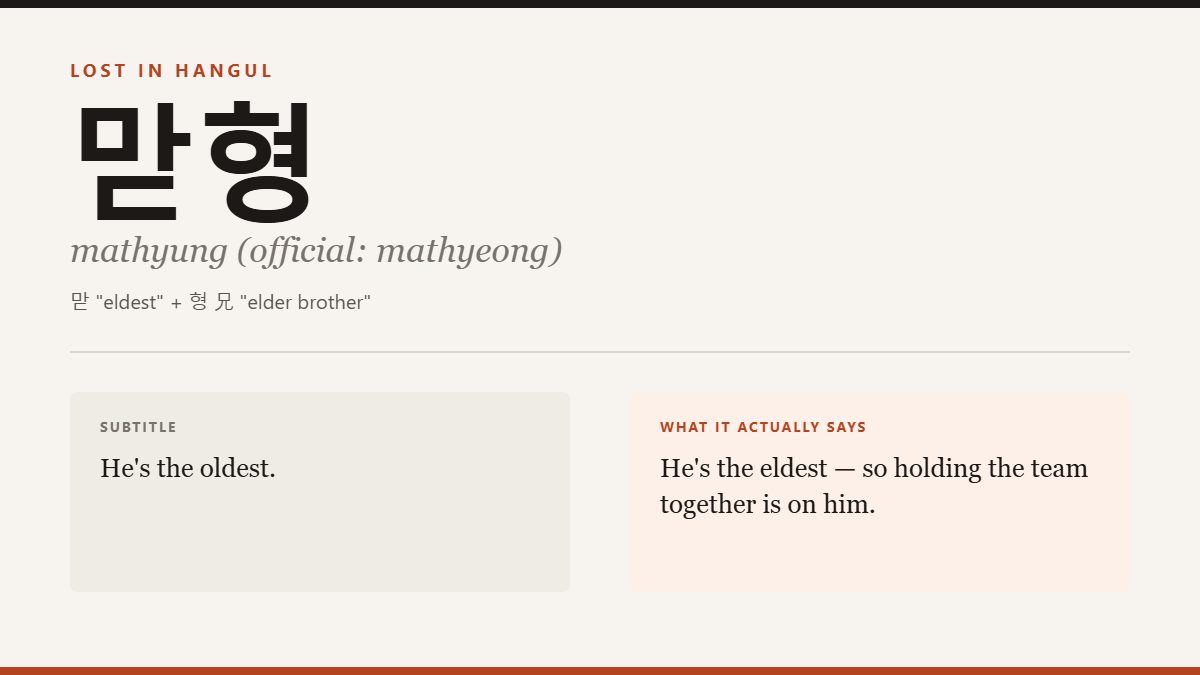
맏형 means the eldest of the brothers. In idol groups, sports teams and offices it means the oldest man in the group — and the one expected to hold it together, whether or not he’s the leader.
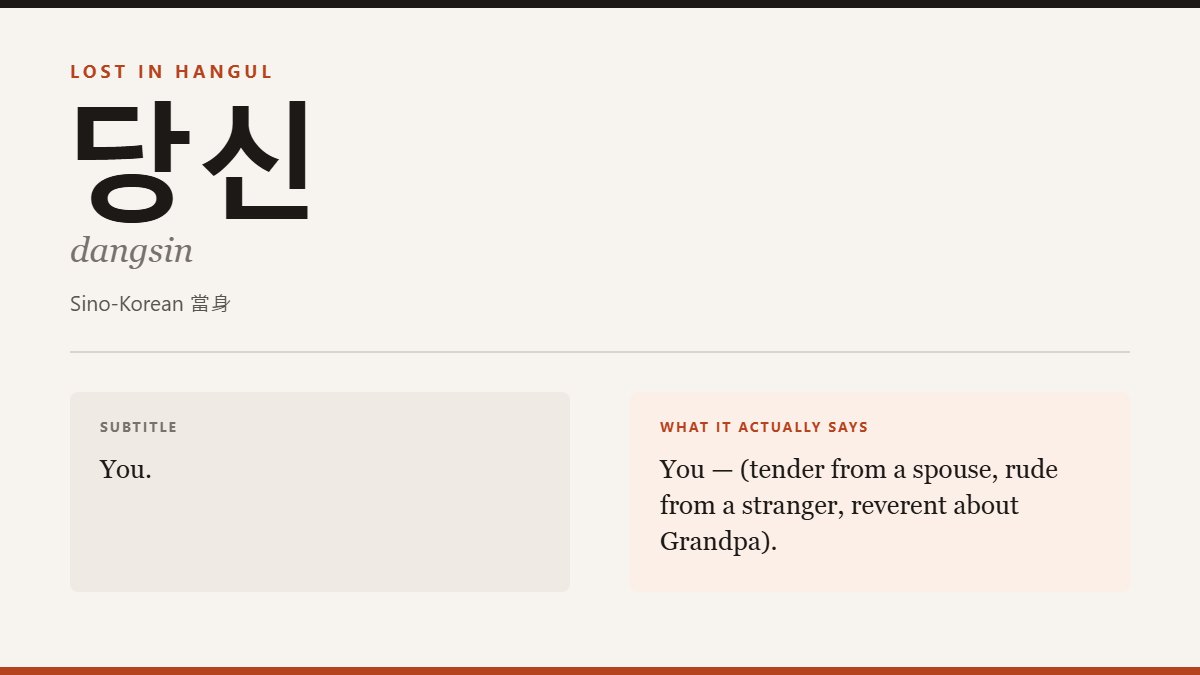
Textbooks translate 당신 as “you.” In real Korean it’s rarely that simple: it’s what an old couple call each other, what people shout in a fight, and a respectful word for an absent elder.
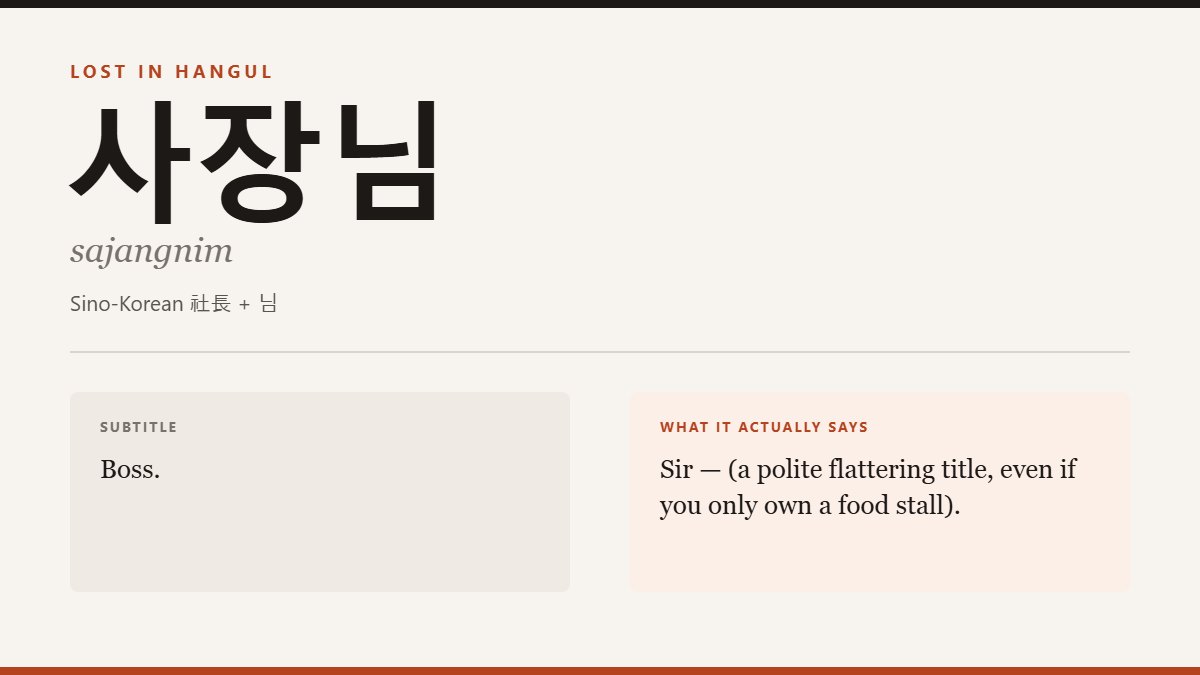
사장님 means company president. It also means the owner of the corner shop, the taxi driver, and, in a market, you — because sellers call their customers 사장님 too.
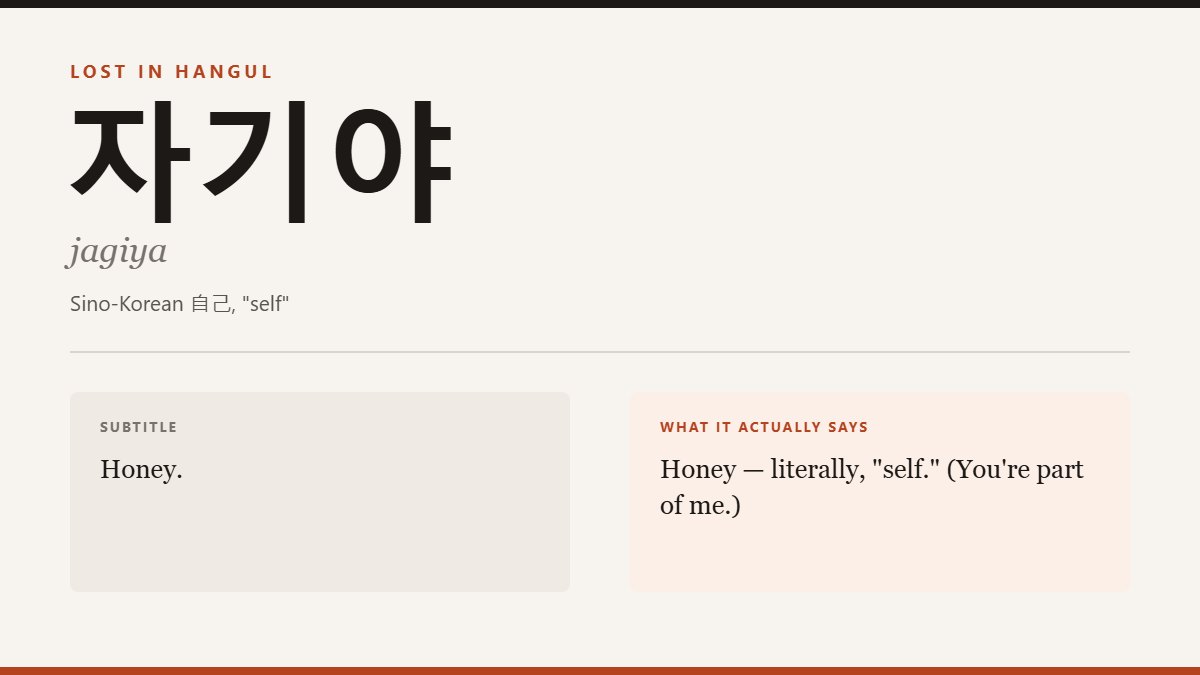
자기 means “oneself,” yet 자기야 is one of the most common things Korean couples call each other. Here is how it’s used, who else uses it, and how it compares with 여보.
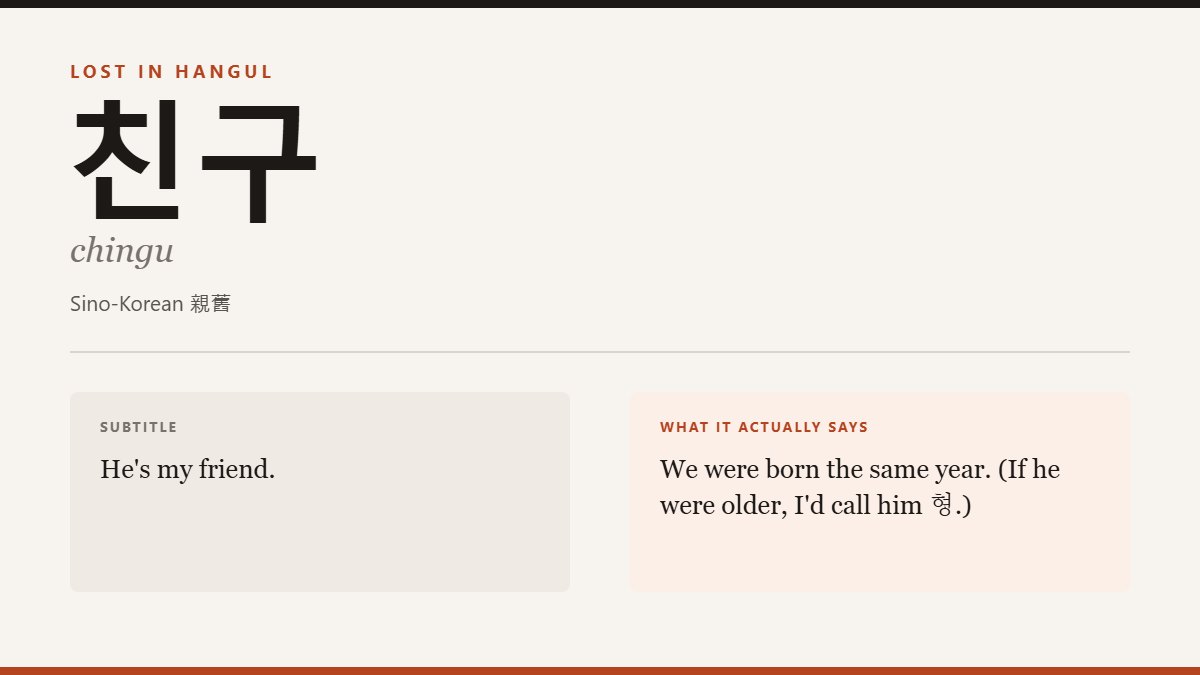
In Korean, 친구 usually means someone born in the same year as you. An older friend is 형, 누나, 오빠 or 언니; a younger one is 동생. That changes how friendship is talked about.
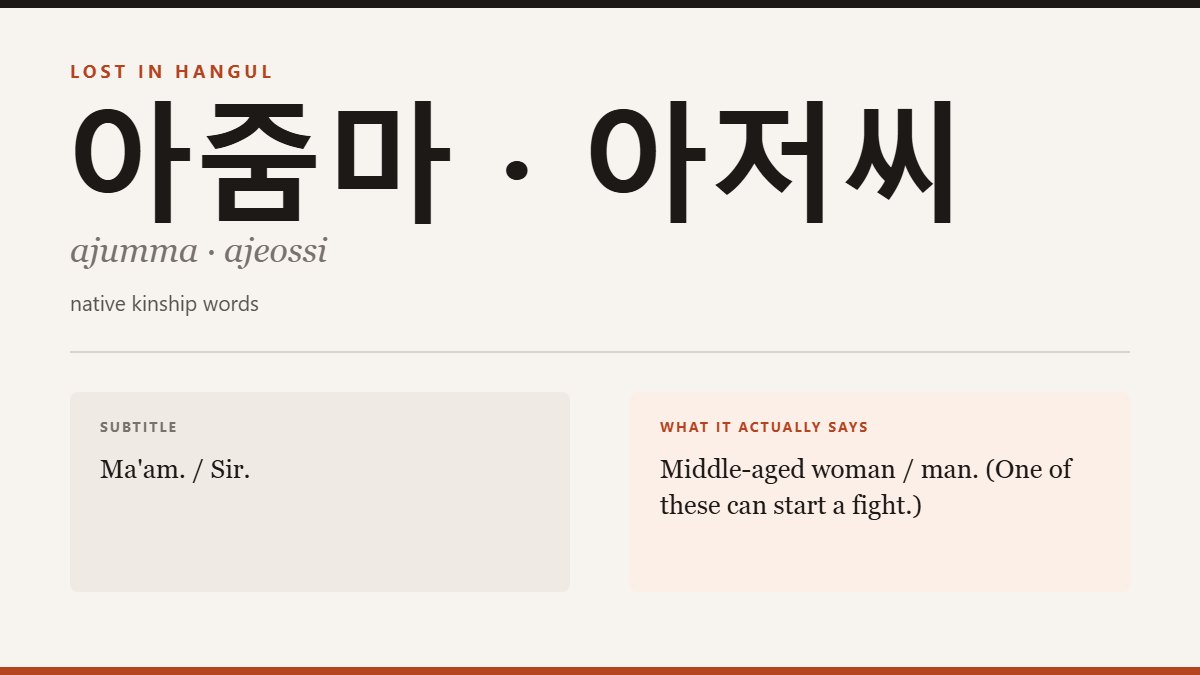
아줌마 and 아저씨 are what you call a middle-aged woman or man you don’t know. One of them is far riskier to use than the other, and Korean speakers have workarounds.
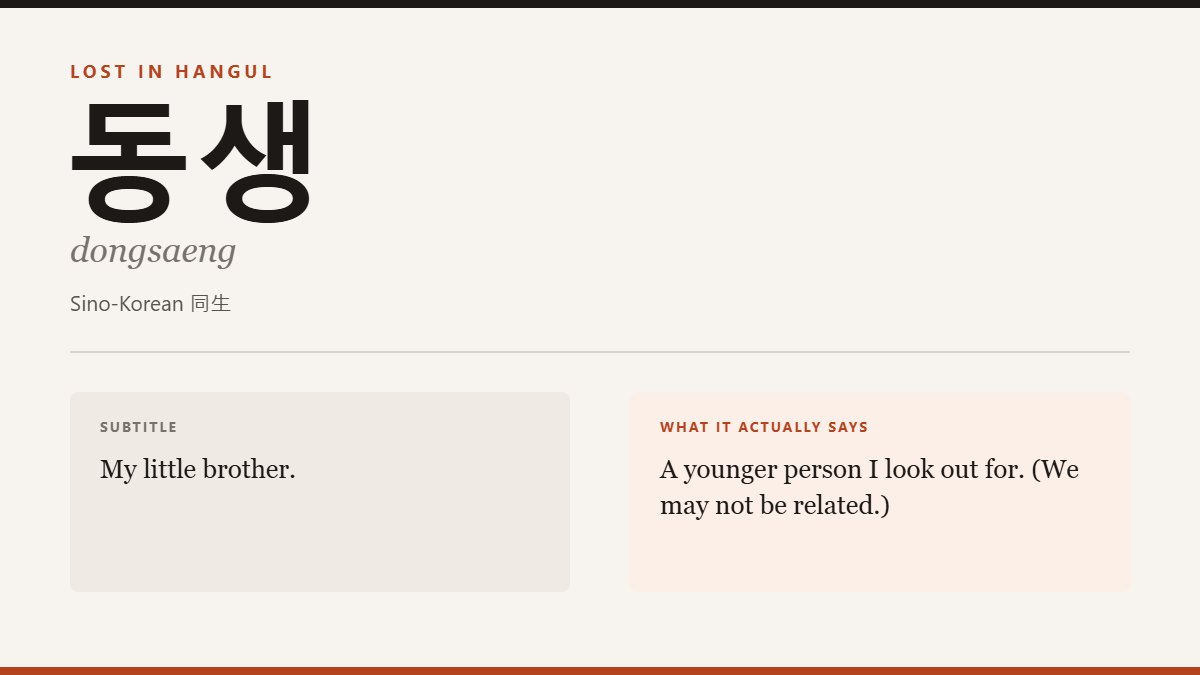
동생 means younger sibling. It also means the younger friend, coworker or neighbour you look out for — and that second meaning is the one subtitles usually miss.
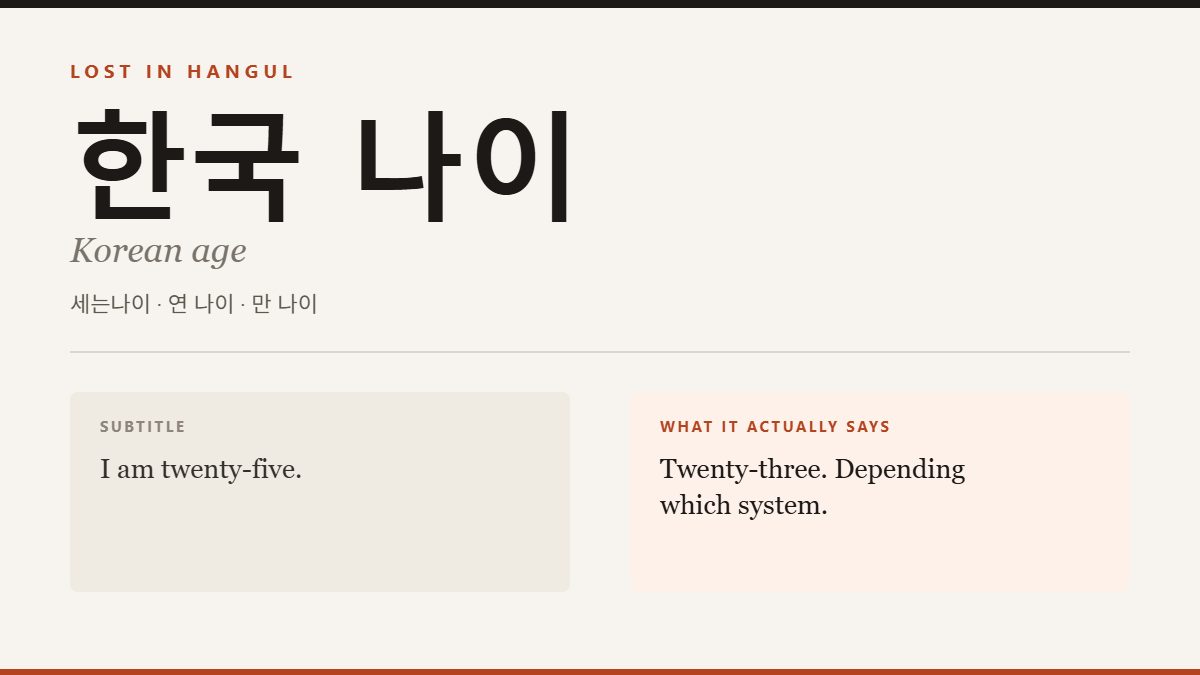
Born at one, everyone ageing together on New Year’s Day, and a legal change in 2023 that everyday speech has not finished catching up with.
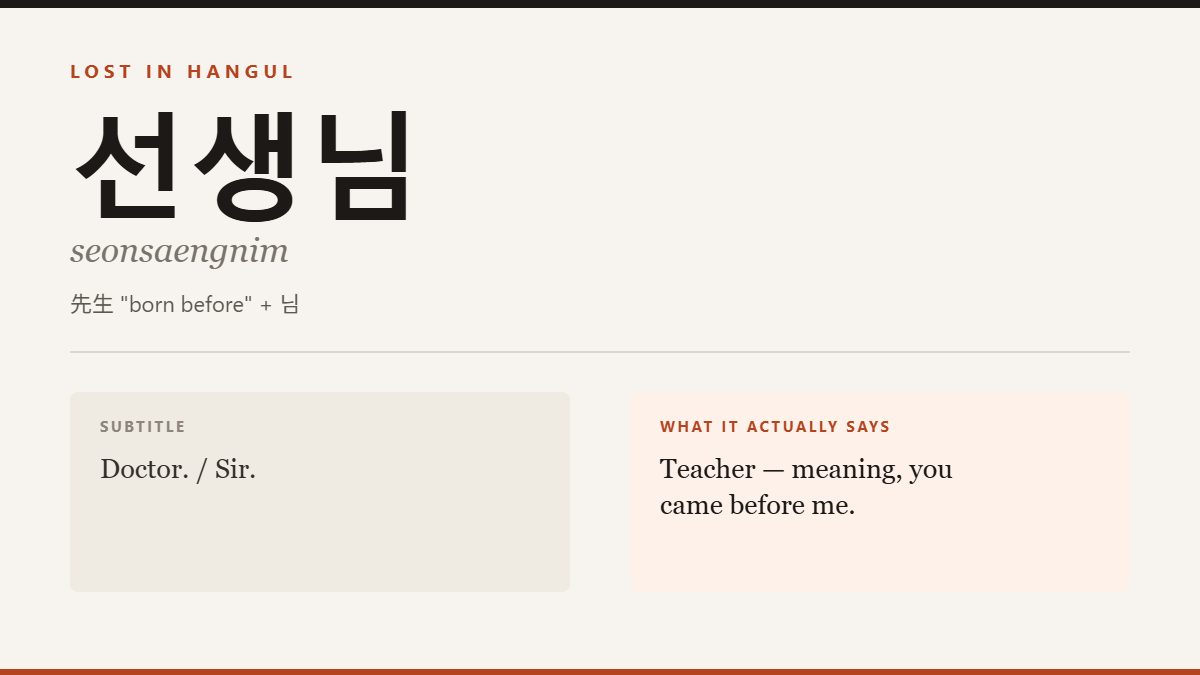
The hanja read as “born before”, which is why the word travels so far outside classrooms. If you do not know what to call someone older, this is the answer.