“Seonsaengnim” (선생님) — teacher, doctor, lawyer, stranger
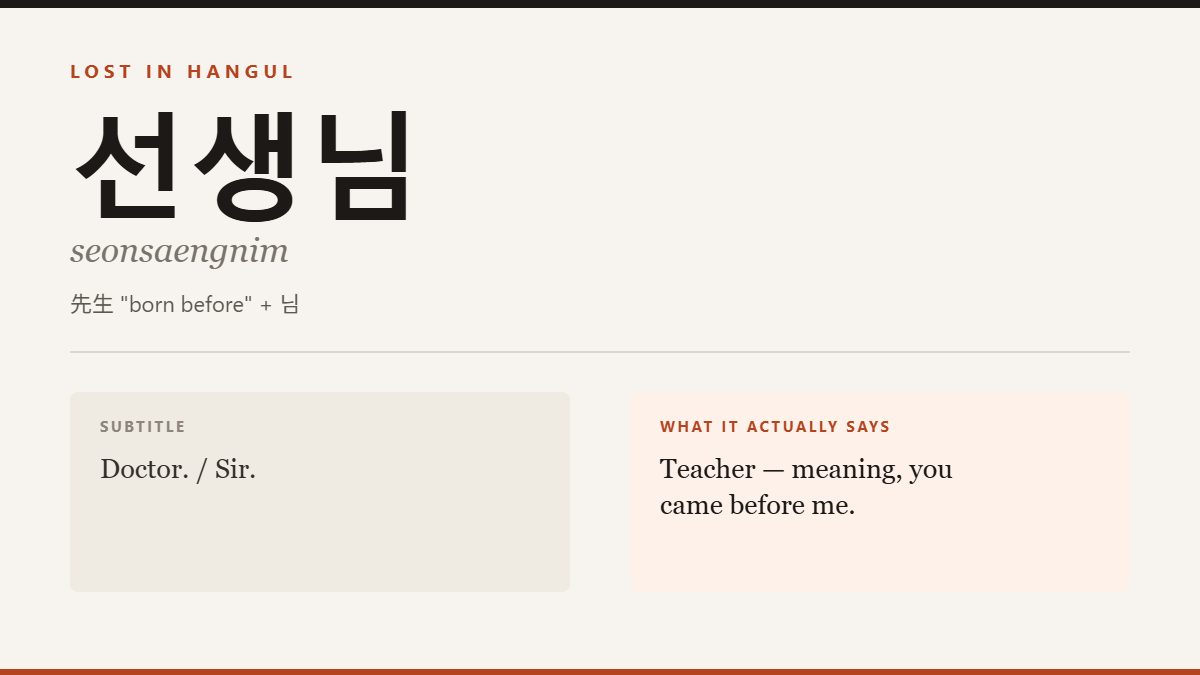
The hanja read as “born before”, which is why the word travels so far outside classrooms. If you do not know what to call someone older, this is the answer.
The hanja read as “born before”, which is why the word travels so far outside classrooms. If you do not know what to call someone older, this is the answer.
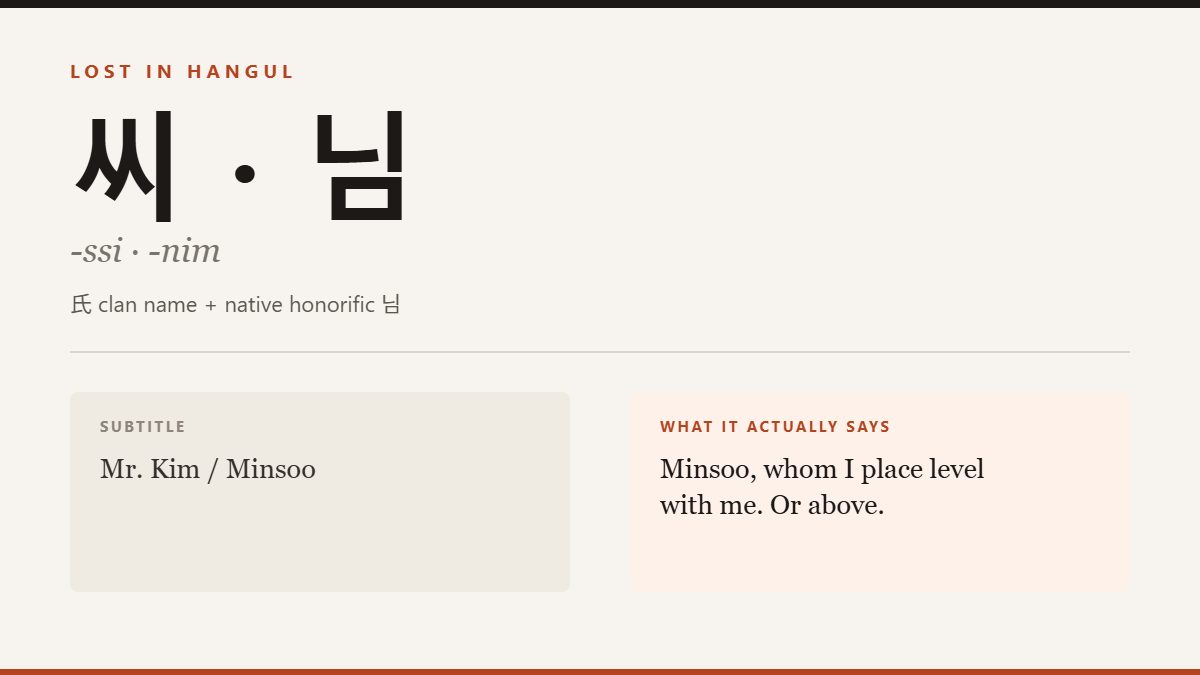
Every textbook teaches 씨 as “the polite one”. Attach it to a surname alone, or to anyone senior to you, and it is the opposite of polite.
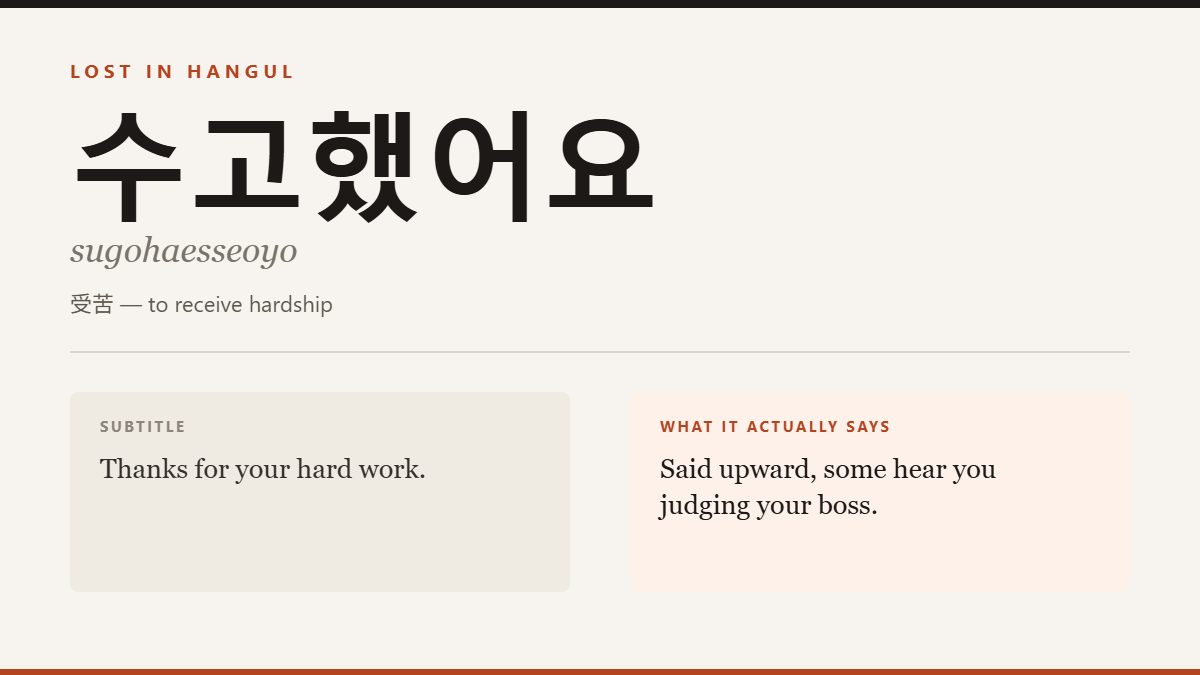
The most-used sentence in Korean working life, and there is a live argument about whether you are allowed to say it to your boss. Both sides are real and it splits by age.
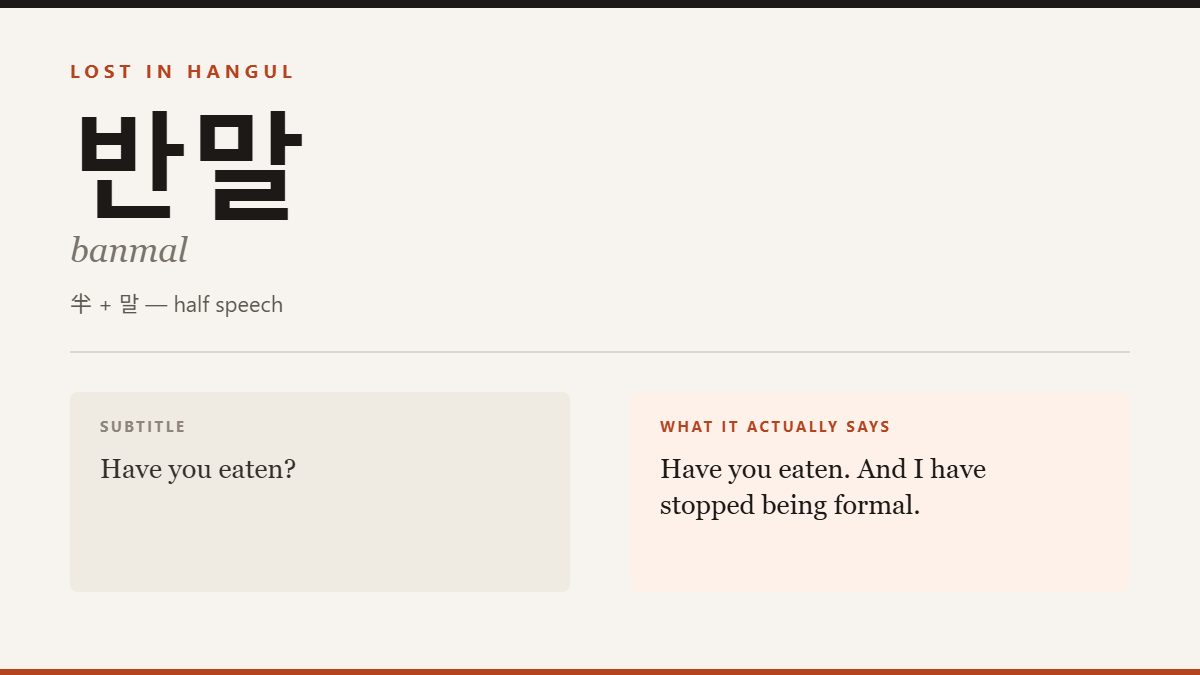
Korean grammar forces a choice about the listener in every sentence. Dropping the polite ending either lets someone in or insults them, and English subtitles show neither.
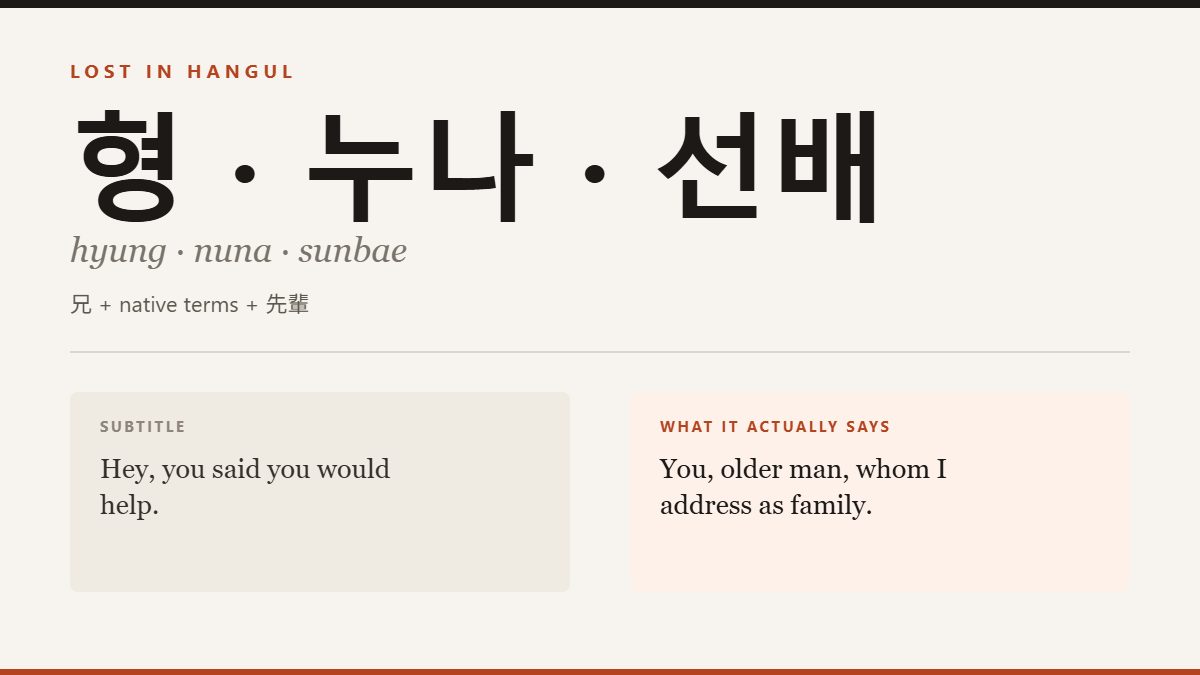
Korean mostly does not say “you”. It says what you are to the speaker, and which word gets used depends on the speaker’s gender too. English subtitles flatten four words into one pronoun.
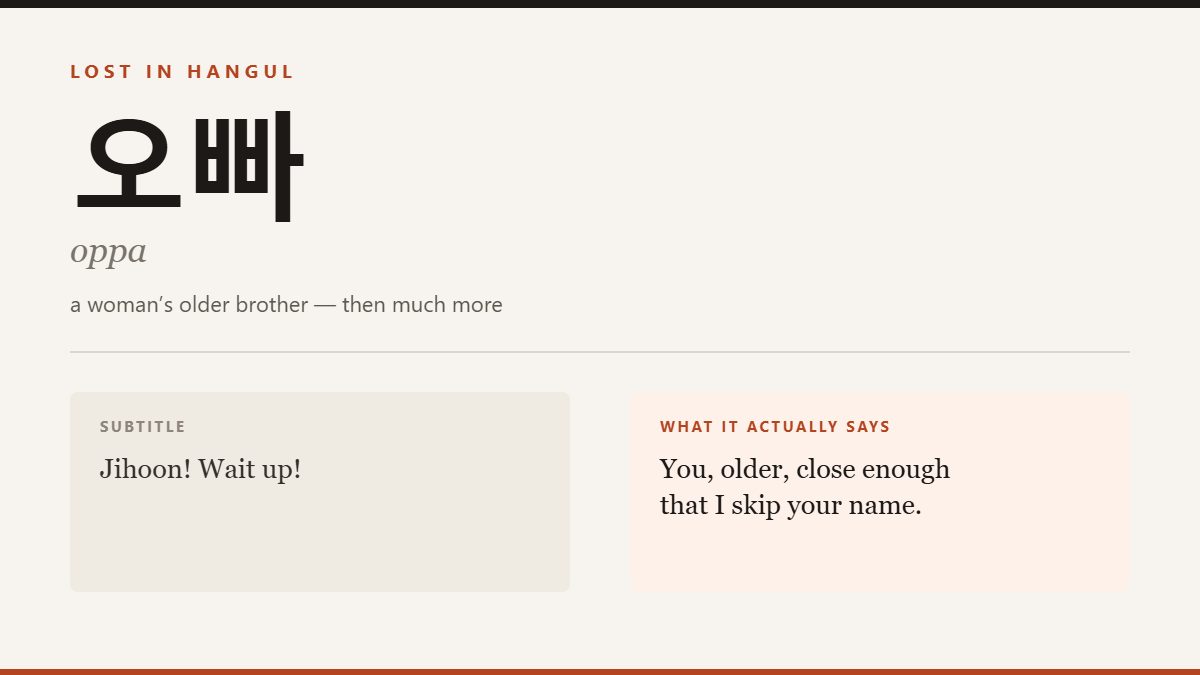
One word tells you the speaker is a woman, the listener is an older man, and they are close. English has nothing that carries any of it, so subtitles print his name and three facts disappear.