“TMI” in Korean means the opposite of TMI in English
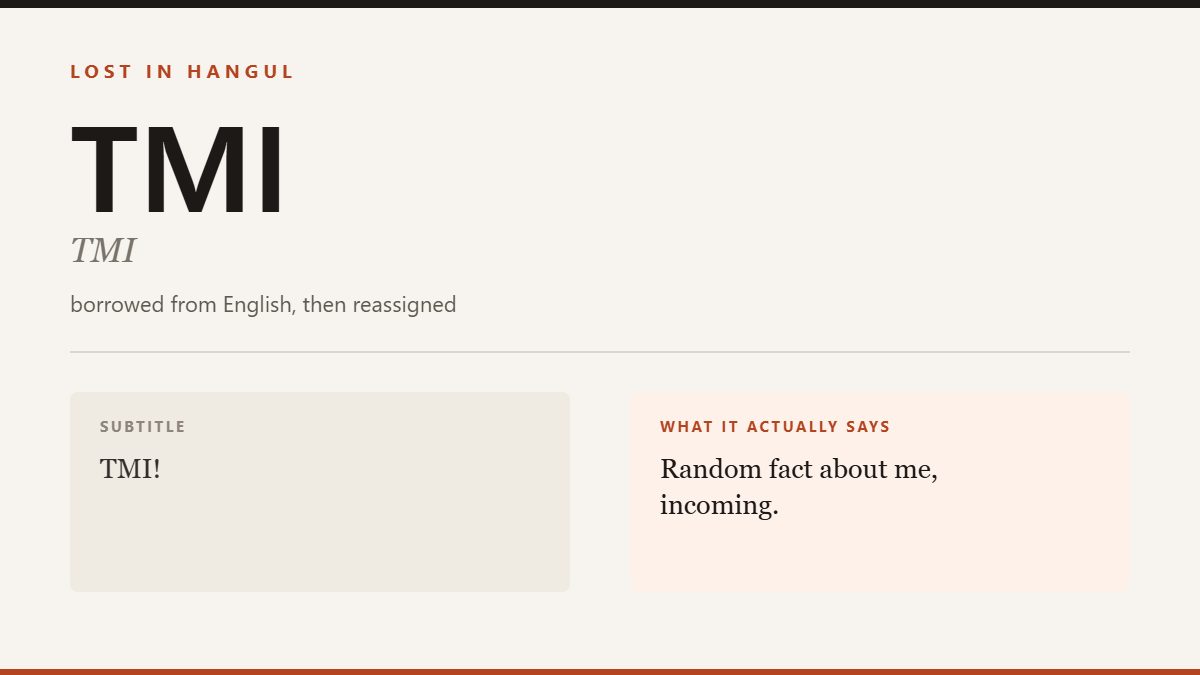
Borrowed from English, reassigned within a few years. In Korean it introduces a small personal fact you are volunteering, which is why leaving it untranslated makes the subtitle less accurate.
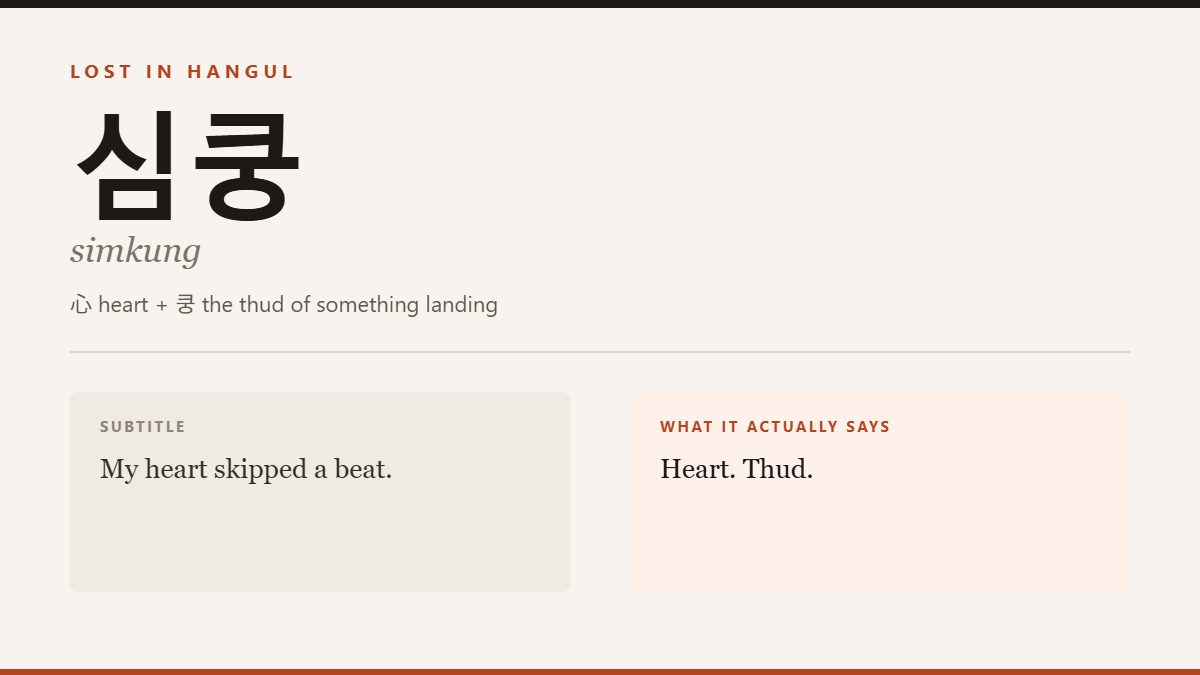
The Sino-Korean word for heart bolted to the native sound of something heavy landing. One hit, always positive, and completely untranslatable in four characters.
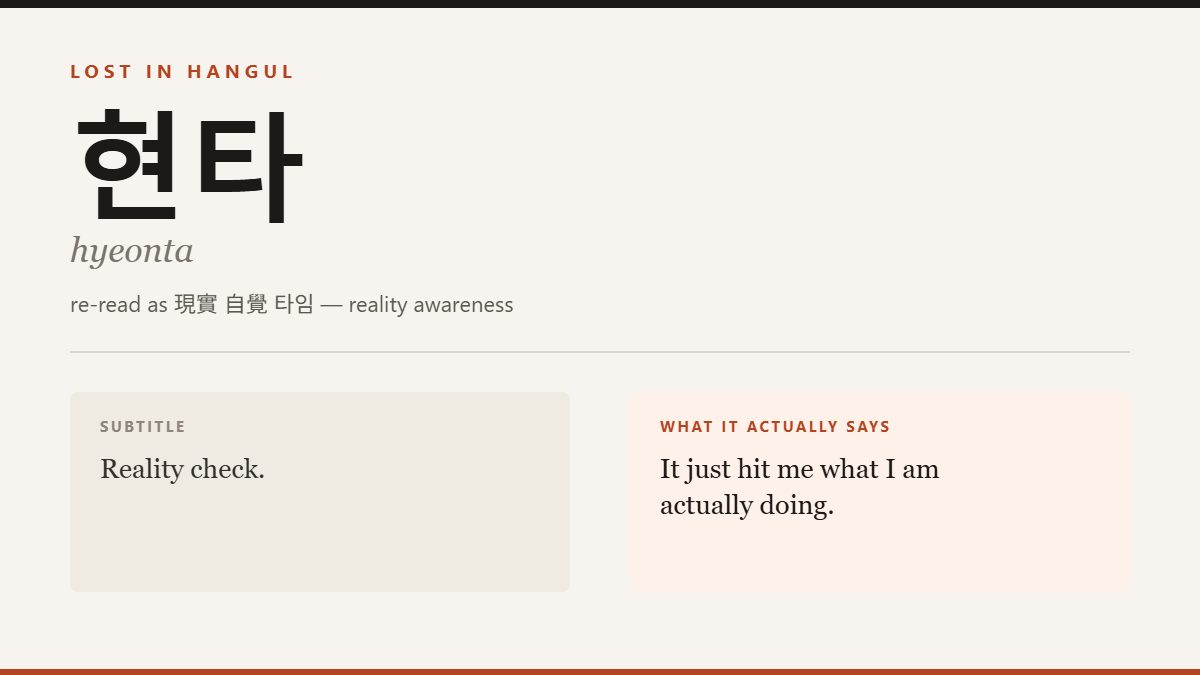
The crash after the concert, the receipt after the spending spree. Its actual origin is not the one everyone repeats, and the word has outrun it anyway.
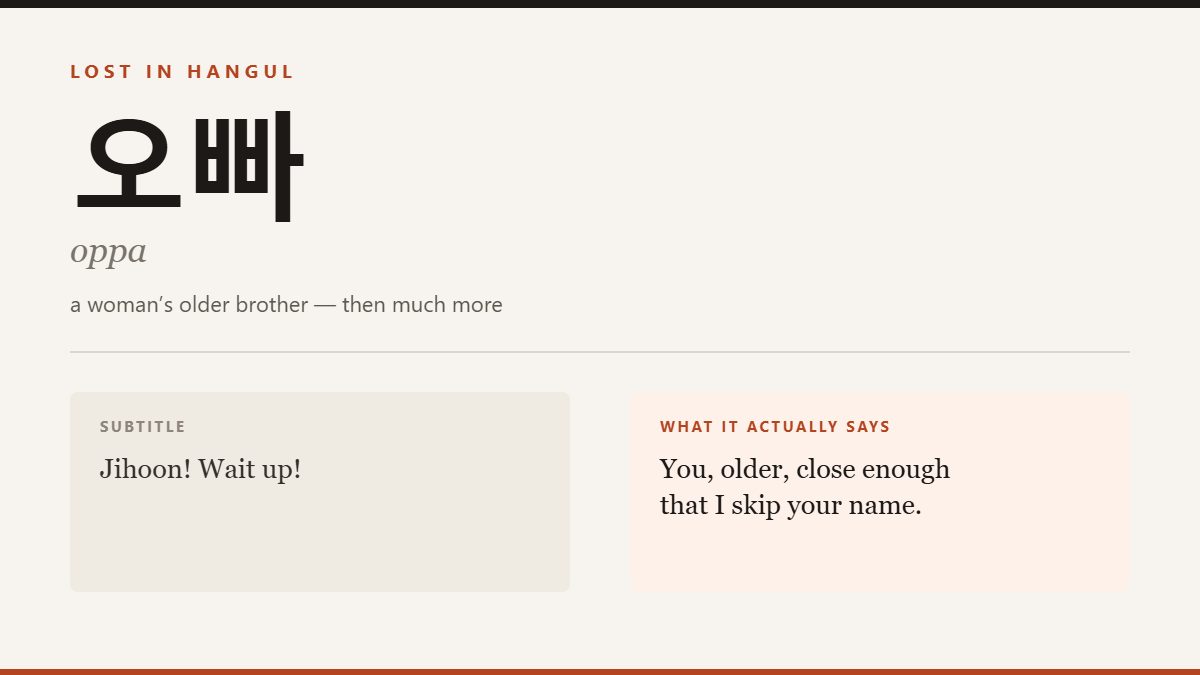
One word tells you the speaker is a woman, the listener is an older man, and they are close. English has nothing that carries any of it, so subtitles print his name and three facts disappear.