“TMI” in Korean means the opposite of TMI in English
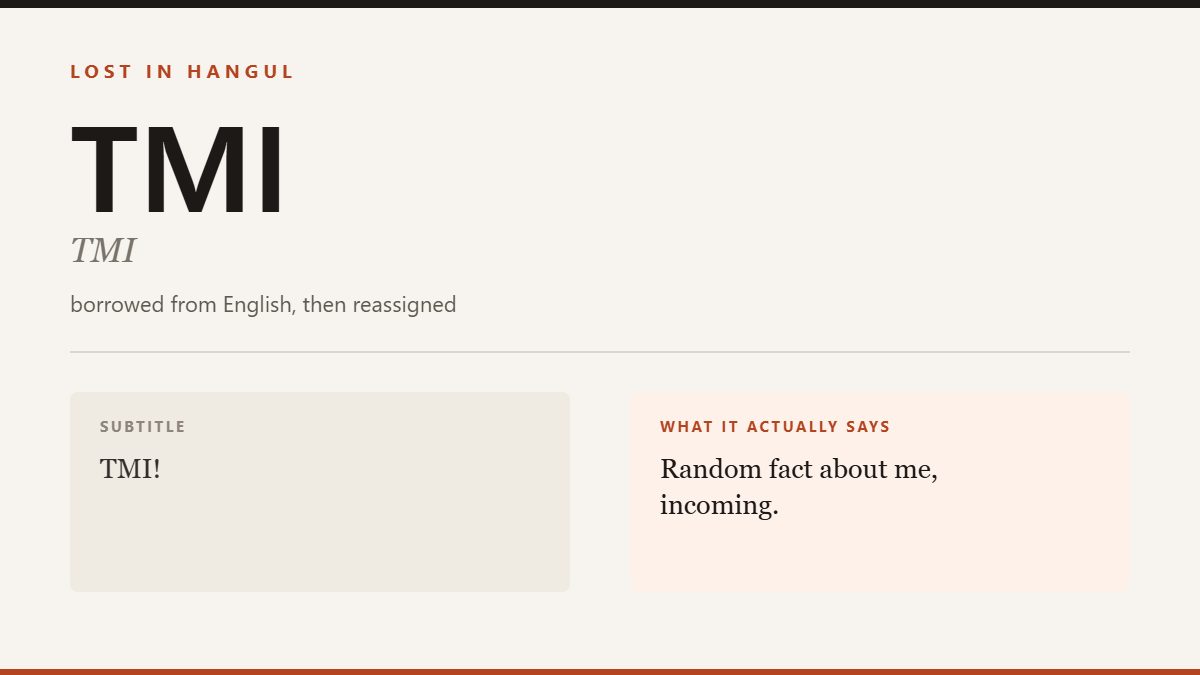
Borrowed from English, reassigned within a few years. In Korean it introduces a small personal fact you are volunteering, which is why leaving it untranslated makes the subtitle less accurate.
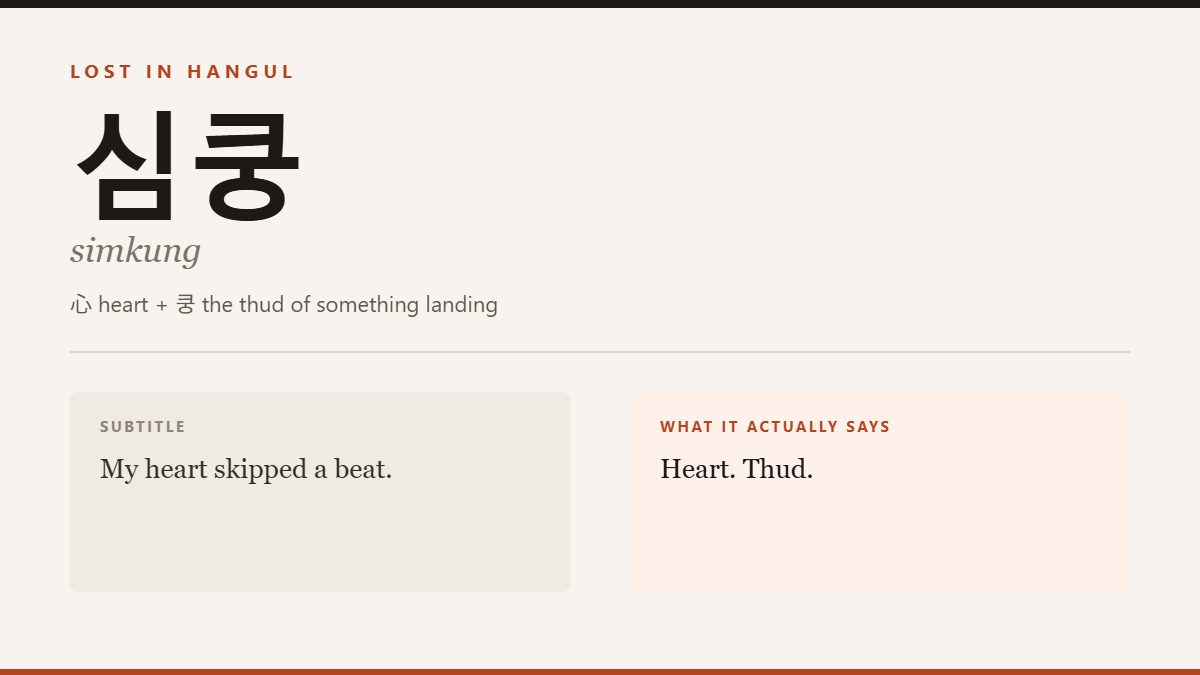
The Sino-Korean word for heart bolted to the native sound of something heavy landing. One hit, always positive, and completely untranslatable in four characters.
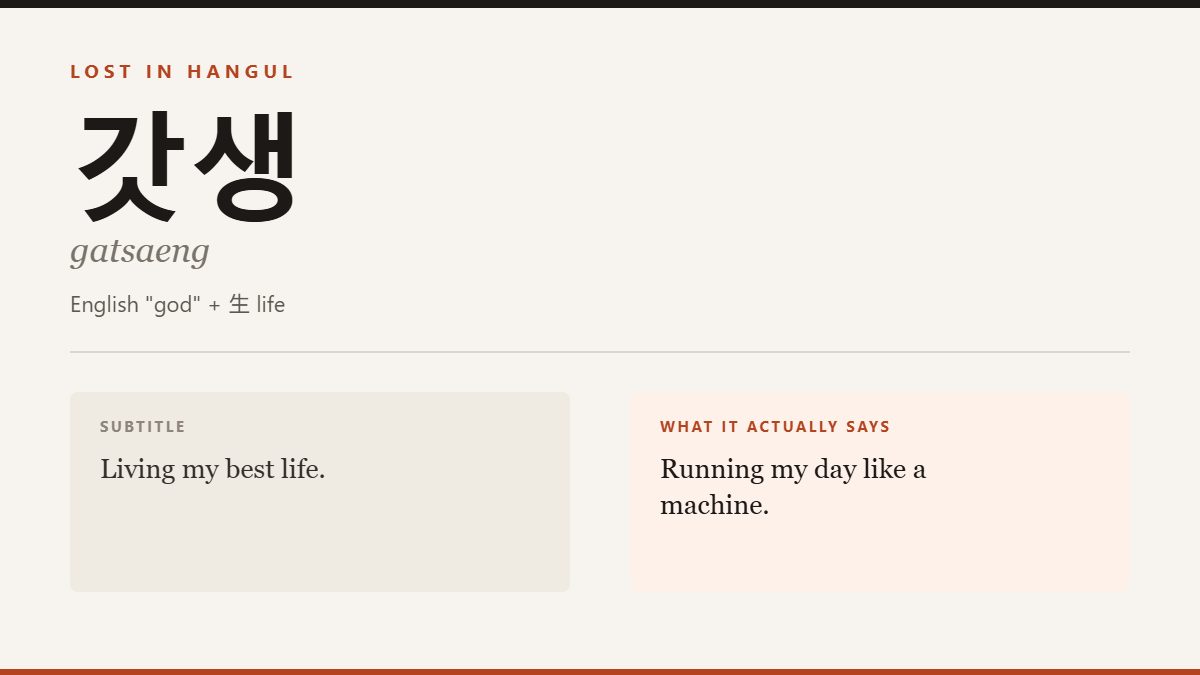
Half the English word “god”, half the Sino-Korean word for life. It admires the discipline and laughs at it in the same breath, which is why neither English translation works.
The crash after the concert, the receipt after the spending spree. Its actual origin is not the one everyone repeats, and the word has outrun it anyway.
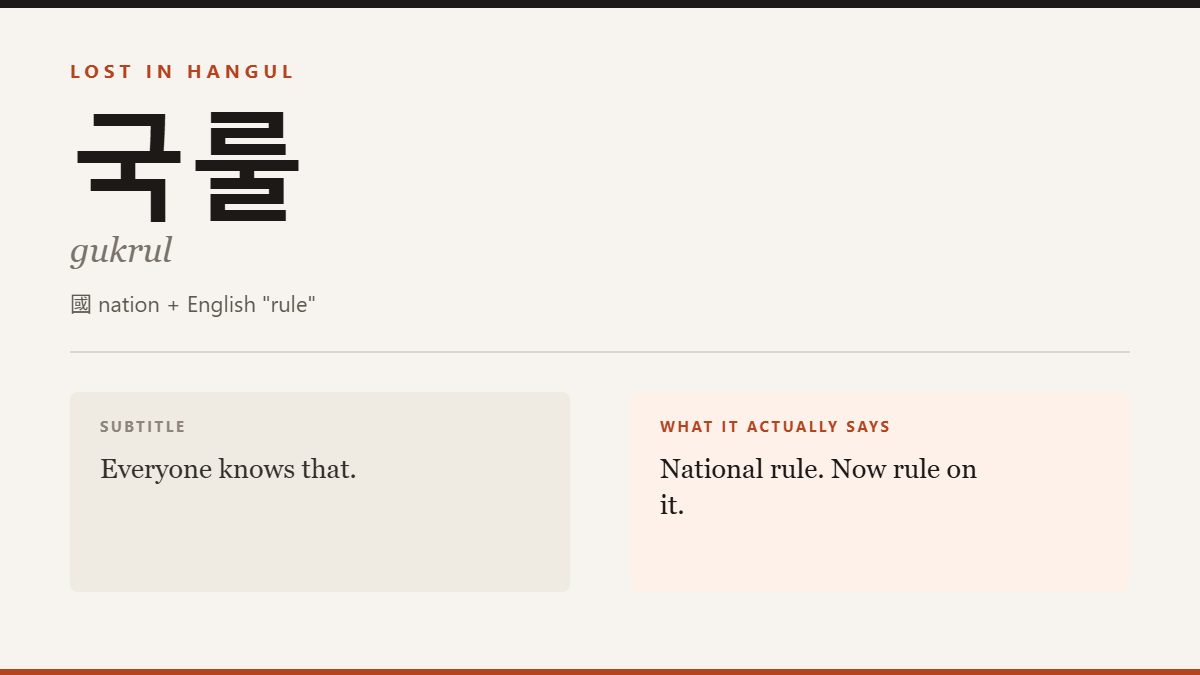
Half hanja, half English, entirely internet. Calling something the national rule is not a statement of fact — it is a bid for agreement, and the table has to rule on it.
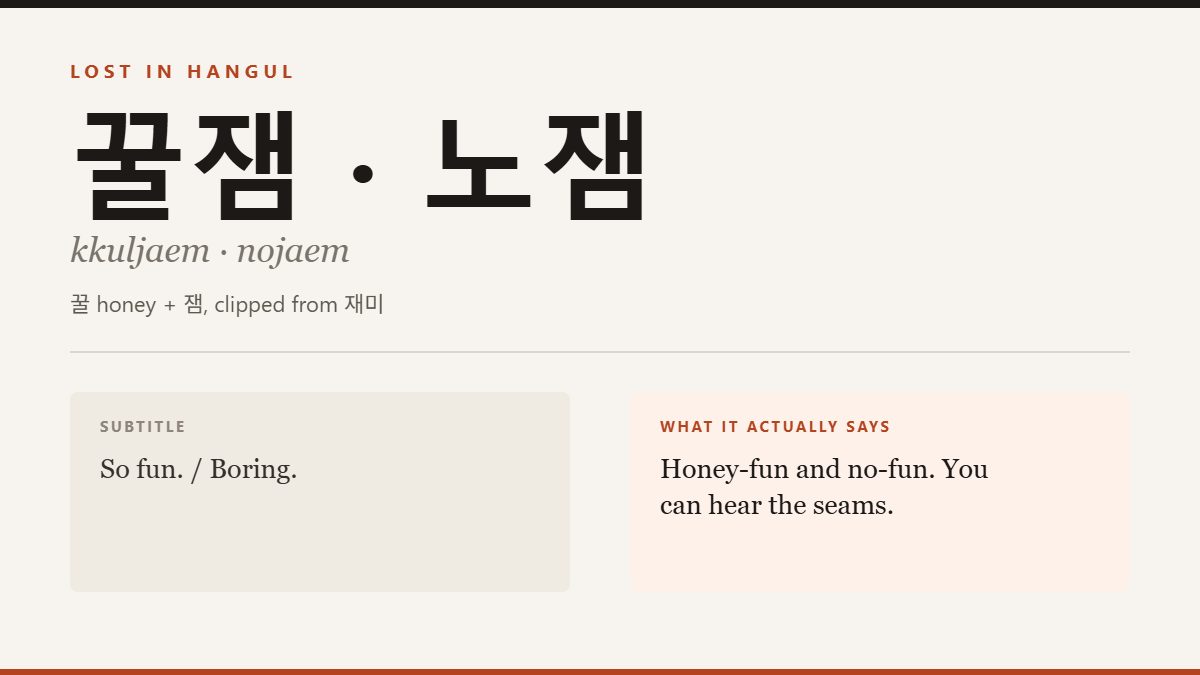
Honey-fun and no-fun. Both are built from parts, and once you can see the seams you can decode a whole shelf of Korean internet vocabulary you have never met.
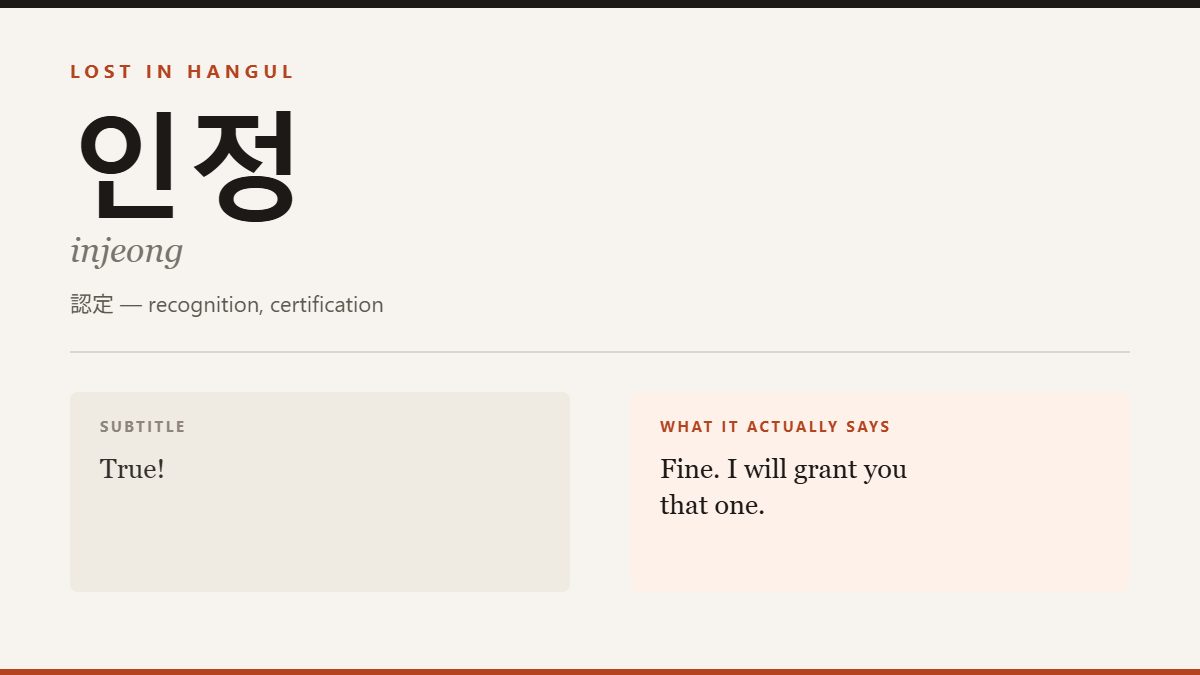
A stiff legal word for recognition, clipped down to a single shouted syllable pair. It does not mean “I agree”. It means “fine, I’ll grant you that”, which is a different move.
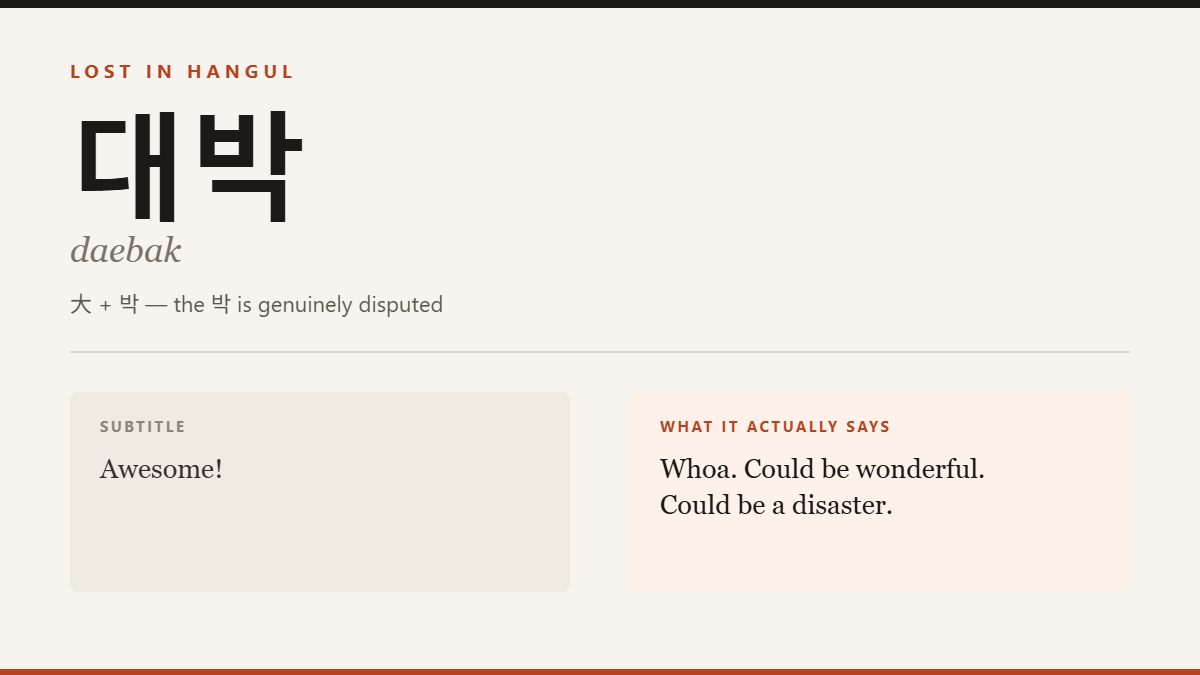
A windfall, a hit, a delighted whoa and an appalled whoa, all in two syllables sorted by tone alone. Its origin is genuinely disputed, whatever the internet tells you about gourds.