“Molla” (몰라) — “I don’t know,” and “I’m not talking about it”
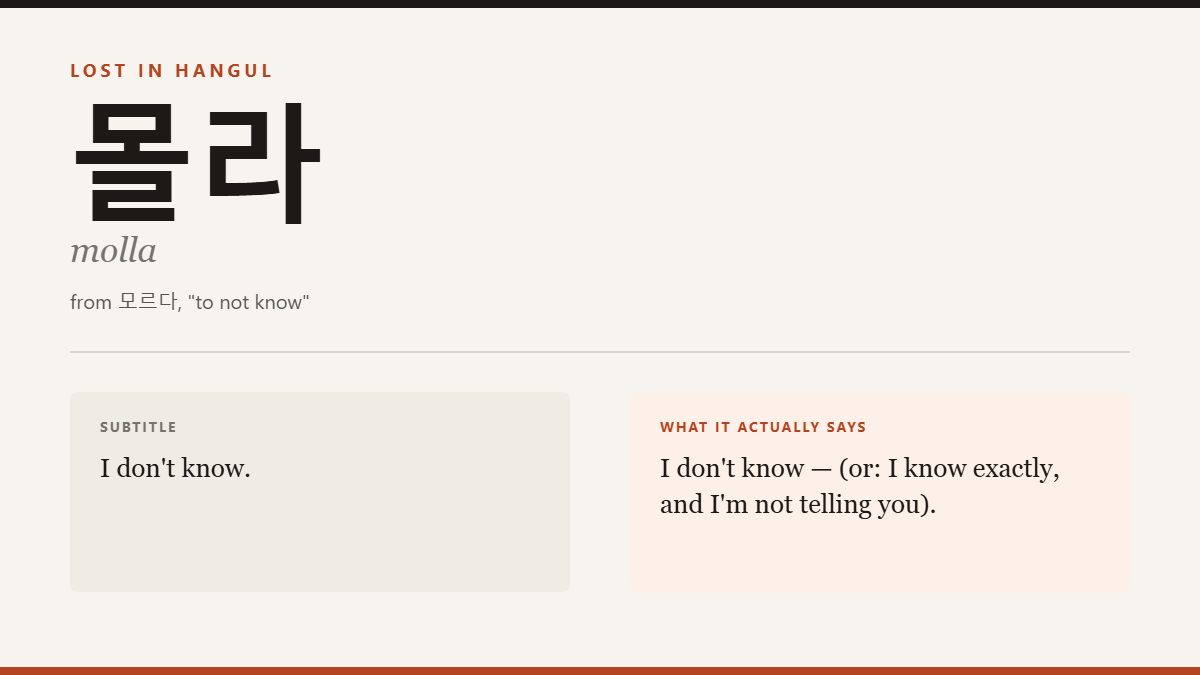
몰라 means “I don’t know.” With a pout or a turned back, it means “I’m not discussing this” — the Korean sulk in two syllables. And 몰라요 and 모르겠어요 are not equally polite.
The everyday lines idols and cast members say to each other — gosaenghaesseo, sugohaesseoyo, hwaiting — and what they actually carry.
몰라 means “I don’t know.” With a pout or a turned back, it means “I’m not discussing this” — the Korean sulk in two syllables. And 몰라요 and 모르겠어요 are not equally polite.
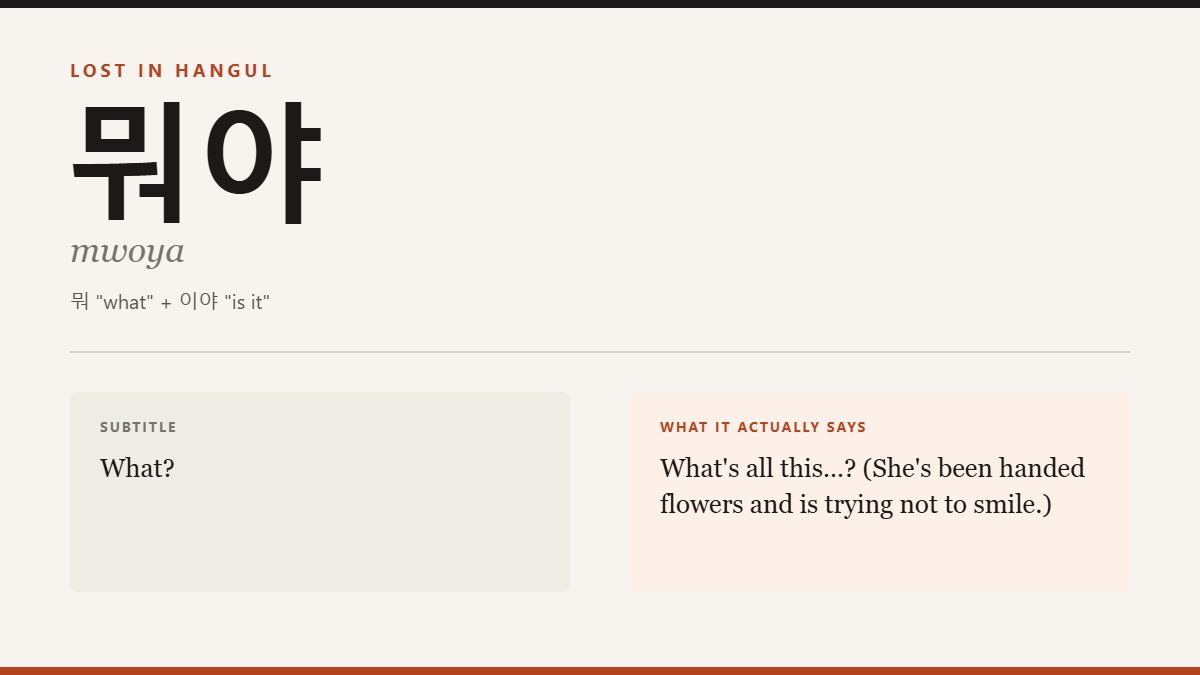
뭐야 literally asks “what is it?” In practice it’s surprise, annoyance, flustered delight or disbelief, depending on the voice. Doubled, as 뭐야 뭐야, it’s usually good news.
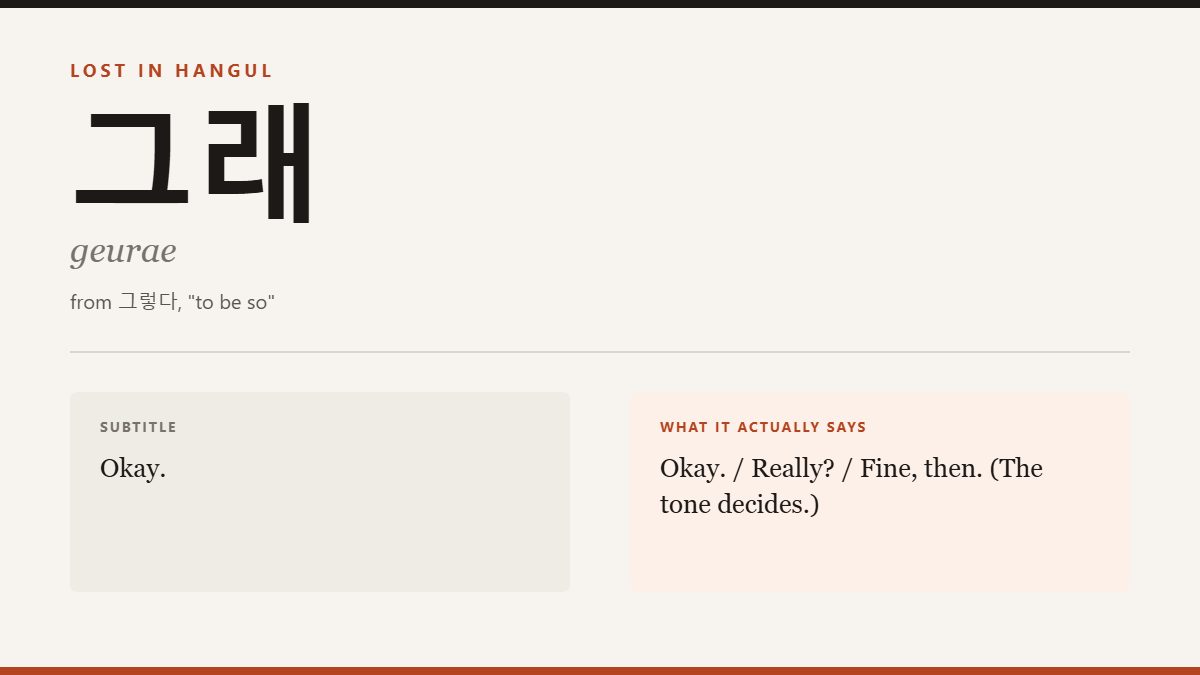
그래 means “that’s right,” “okay,” “really?” and, through gritted teeth, “fine, have it your way.” Same word every time; the tone carries the meaning.
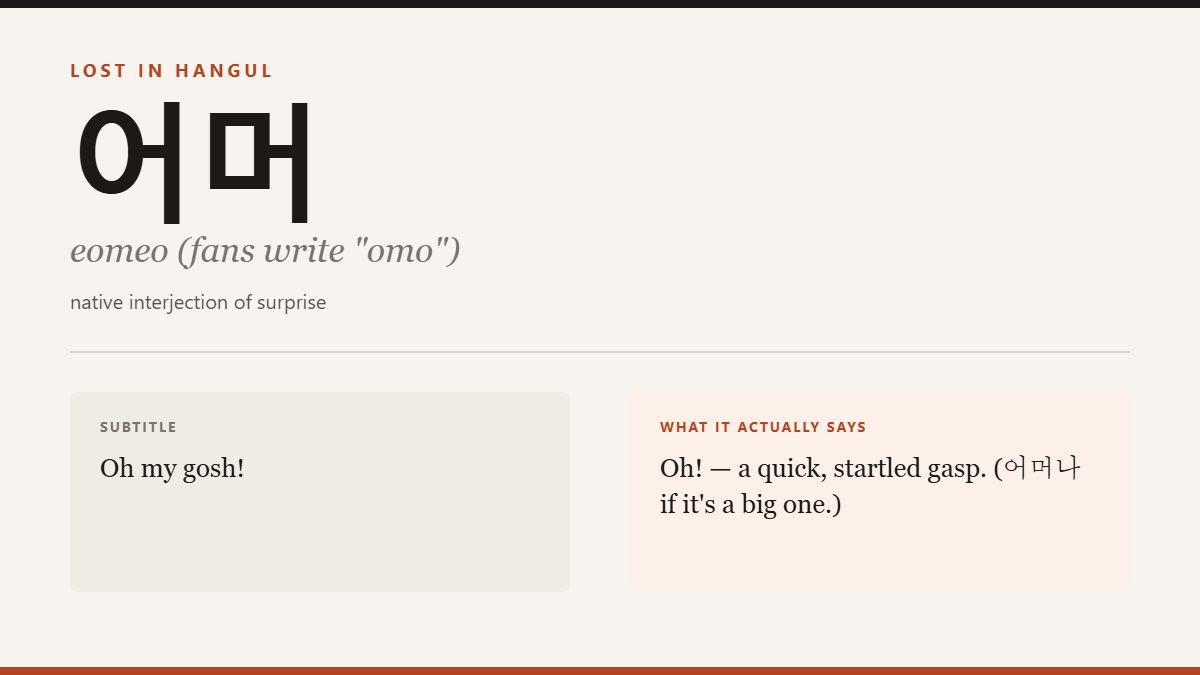
어머 — written “omo” by many fans — is a quick gasp: “oh!”, “oh my!” 어머나 is bigger, 어머머 is scandalised gossip, and 엄마야 is real fright. The dictionary even notes who says it most.
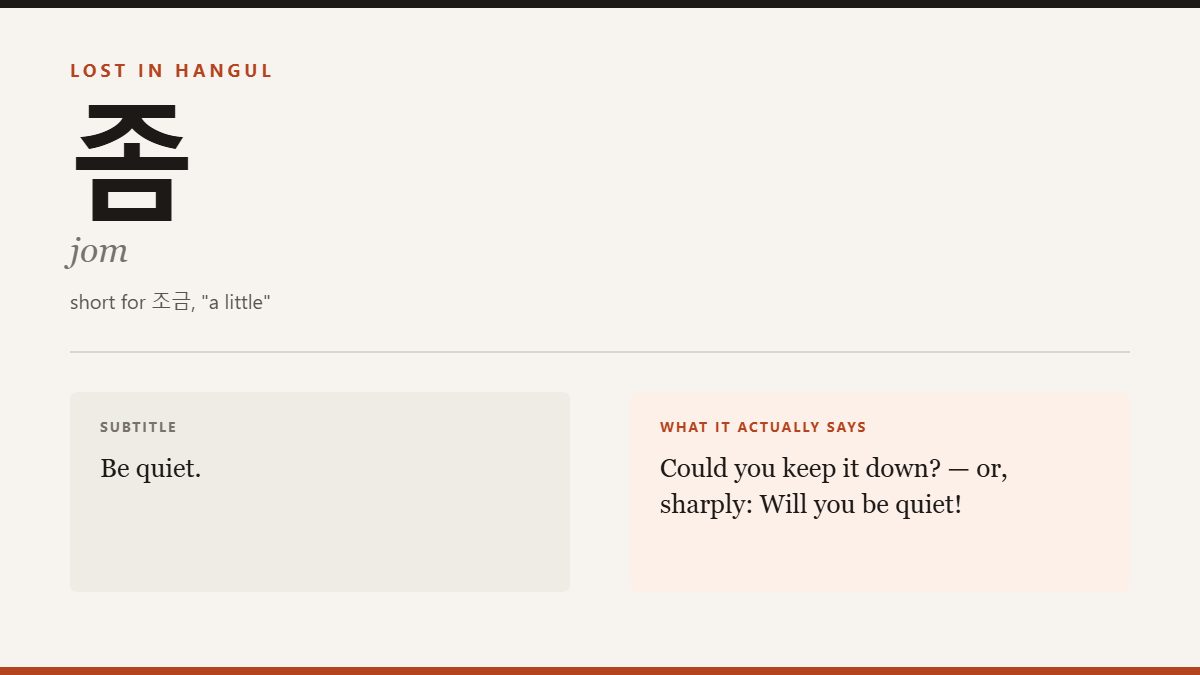
좀 is short for 조금, “a little.” Most of the time it isn’t measuring anything. It softens a request, sharpens a complaint, or quietly means “pretty good, actually” — and only the tone tells you which.
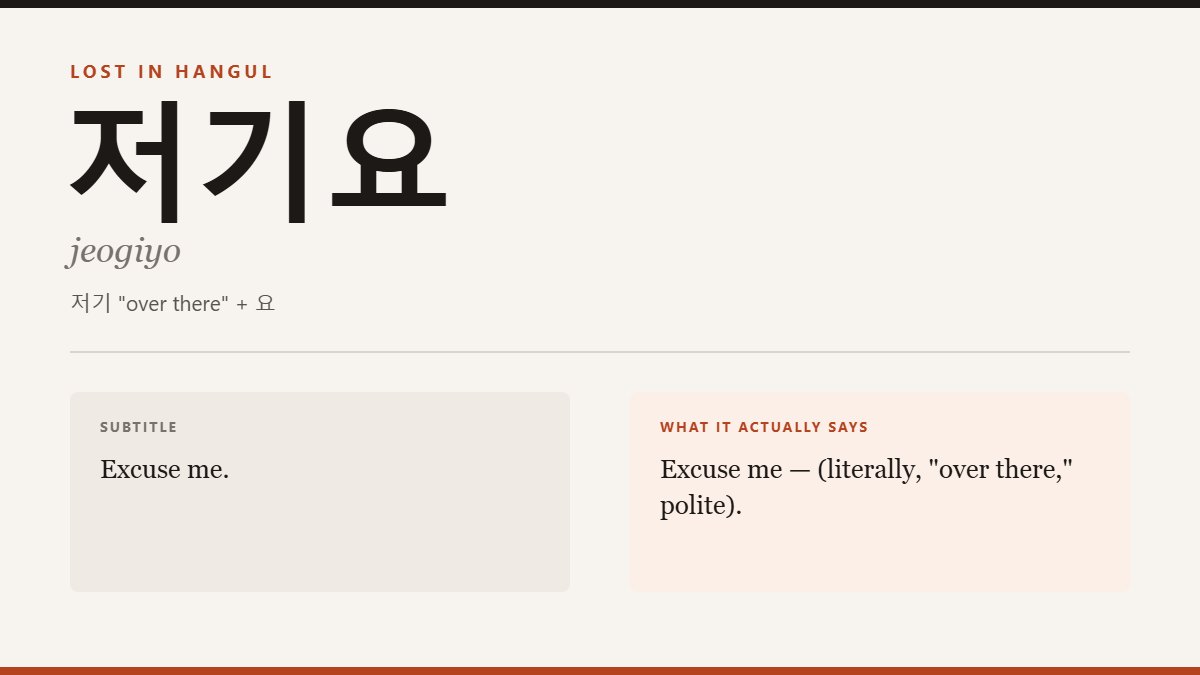
저기요 is how you get a stranger’s or a waiter’s attention in Korea. Literally it means “over there.” Said softly, 저기… also means “um, so…” — the start of something hard to say.
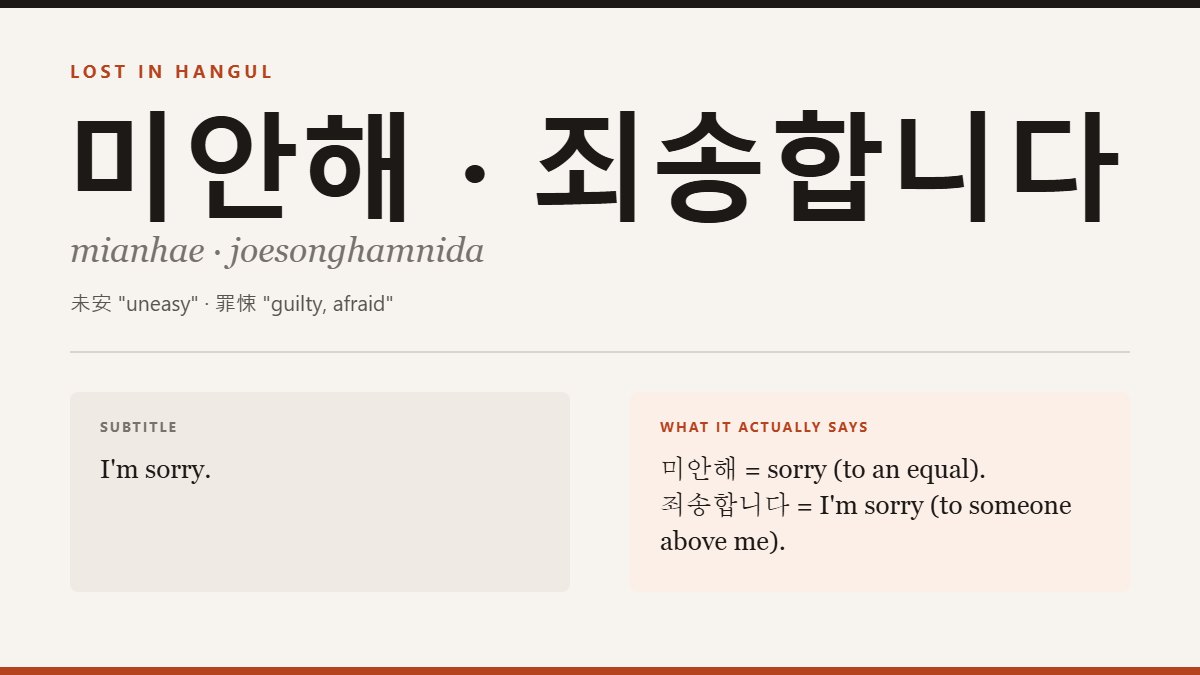
Korean has two main apologies. 미안해 is between equals or downward; 죄송합니다 is upward and heavier. Using the wrong one is noticeable — and 미안한데 often isn’t an apology at all.
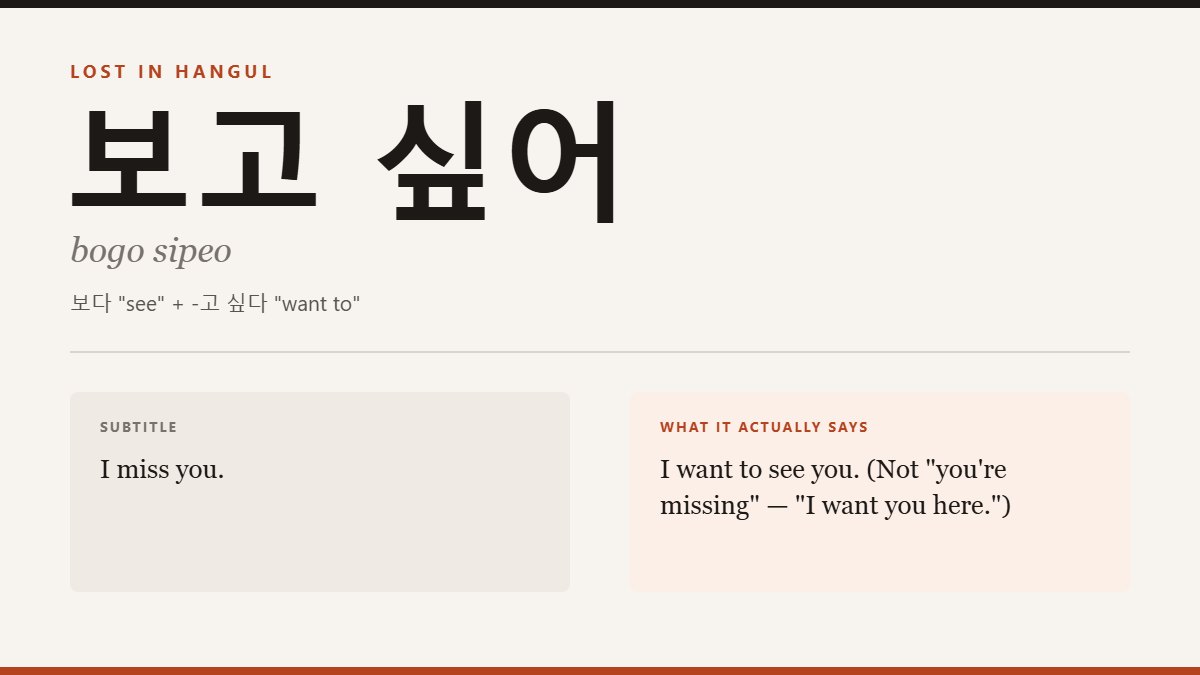
보고 싶어 is how Korean says “I miss you,” but it literally means “I want to see you.” That makes the feeling active rather than a lack — and it’s why it also works for movies.
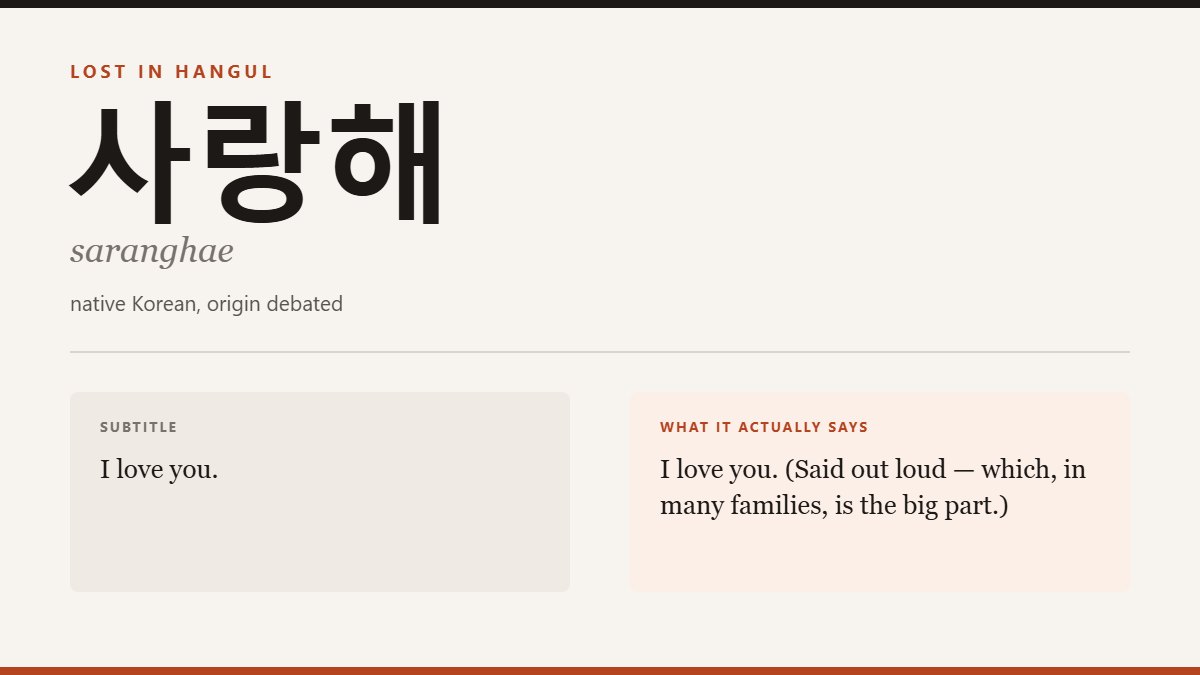
사랑해 means “I love you,” but for a long time many Korean families rarely said it out loud. The word’s history, its levels of politeness, and what gets said instead.
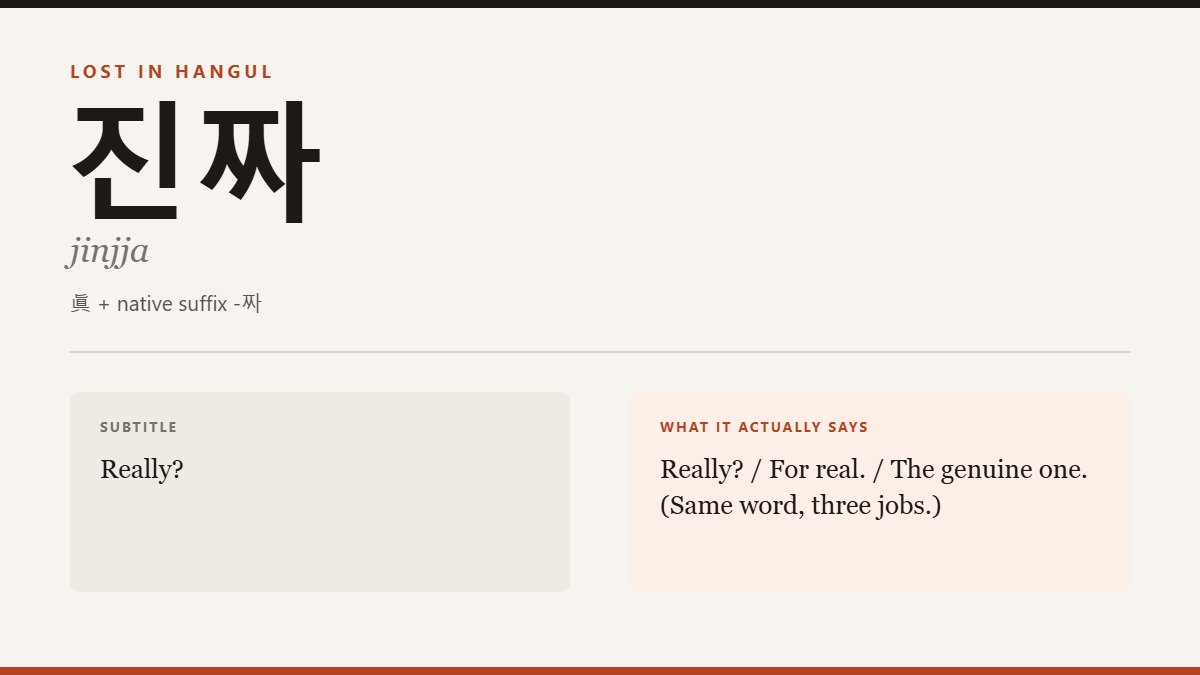
진짜 means real, really, and “are you serious?” It is one of the most frequent words in spoken Korean. Here is how it differs from 정말, and what 레알 is doing next to it.
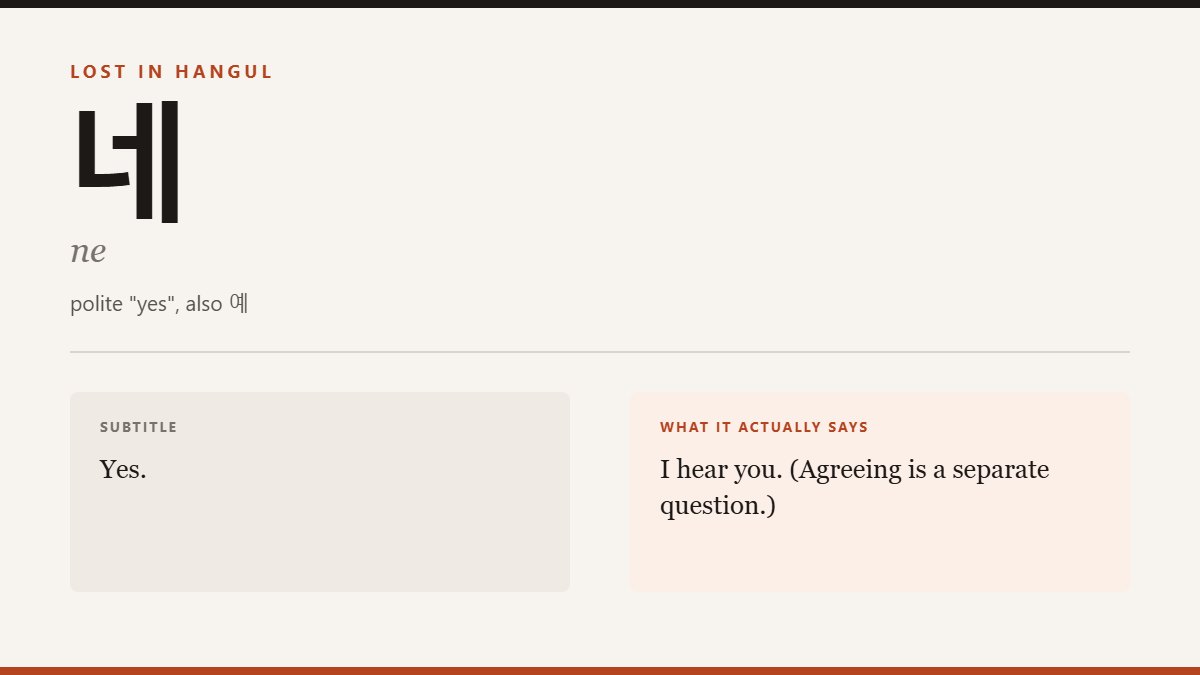
네 means yes, but it also means “I’m listening,” “pardon?”, “I’m here,” and — in answer to a negative question — “right, I didn’t.” Here is how to tell which.
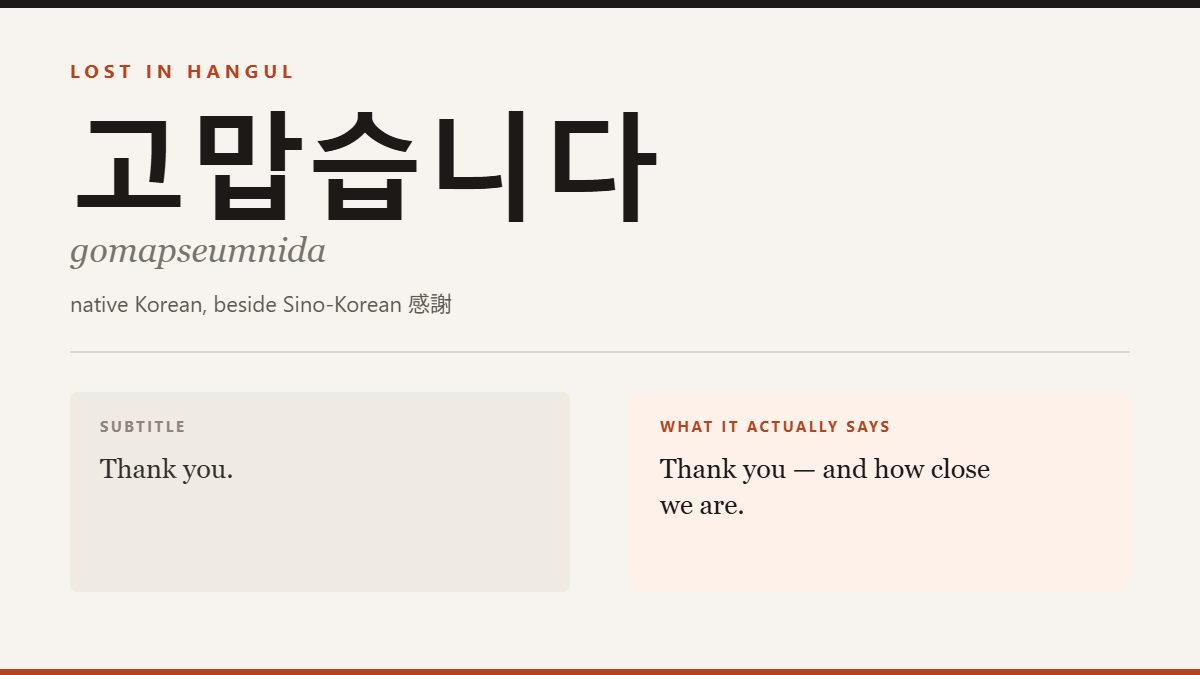
One is native Korean, one is Sino-Korean, and the choice is a small signal about distance. Neither is wrong, and most speakers say they do not think about it.