“Eotteokhae” (어떡해) — not a question, despite appearances
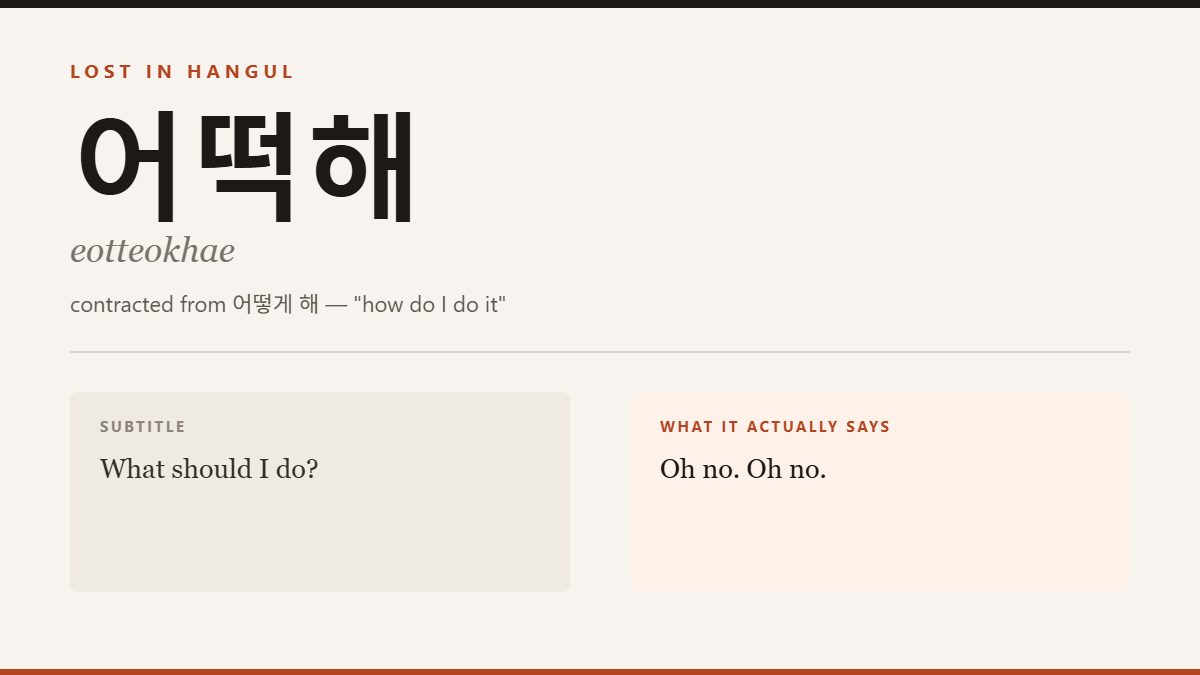
Subtitles write “what should I do?” and turn a wail into a request for advice. It also doubles as a squeal at something too cute to handle.
The everyday lines idols and cast members say to each other — gosaenghaesseo, sugohaesseoyo, hwaiting — and what they actually carry.
Subtitles write “what should I do?” and turn a wail into a request for advice. It also doubles as a squeal at something too cute to handle.
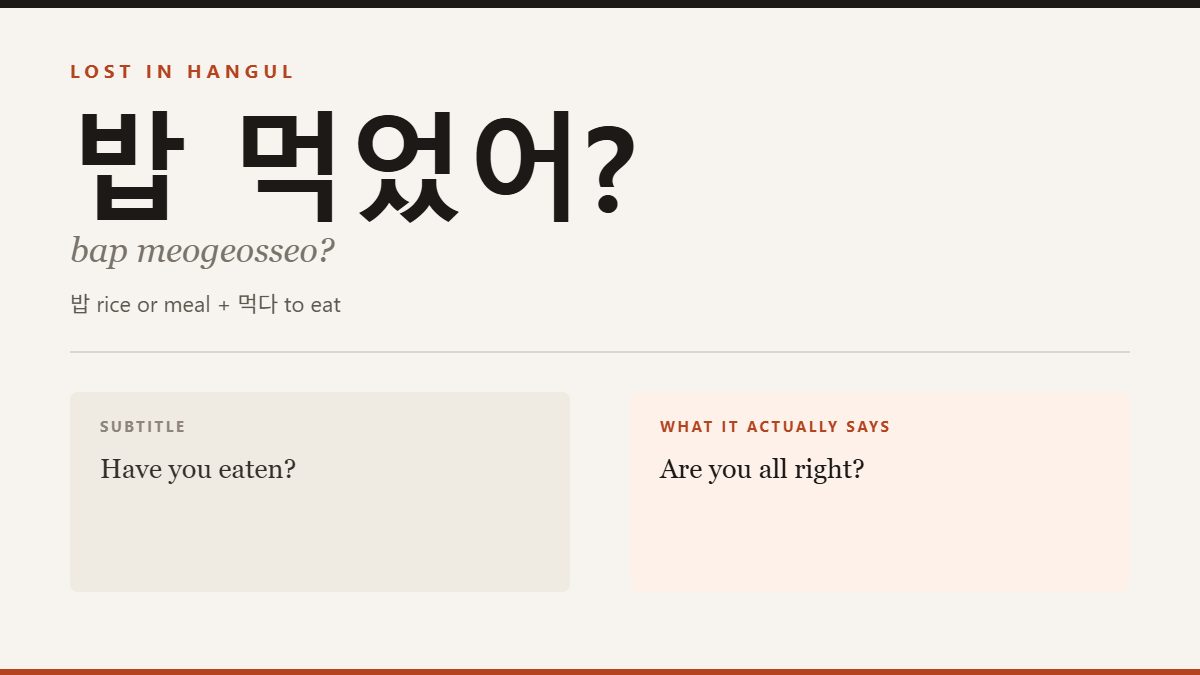
It sits in the slot English fills with “how are you”. Which is why a character can burst into tears when a parent asks it over the phone.
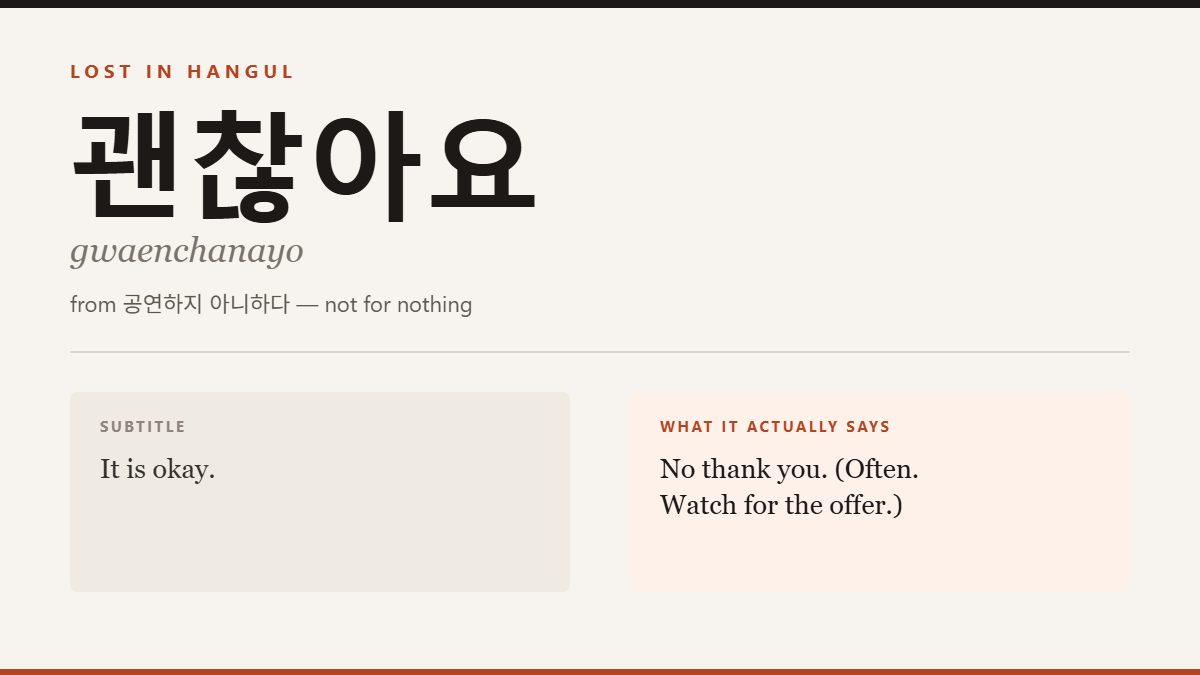
The subtitle says “It’s okay” and the character has just declined. If someone offers you something and you actually want it, this is the one word not to say.
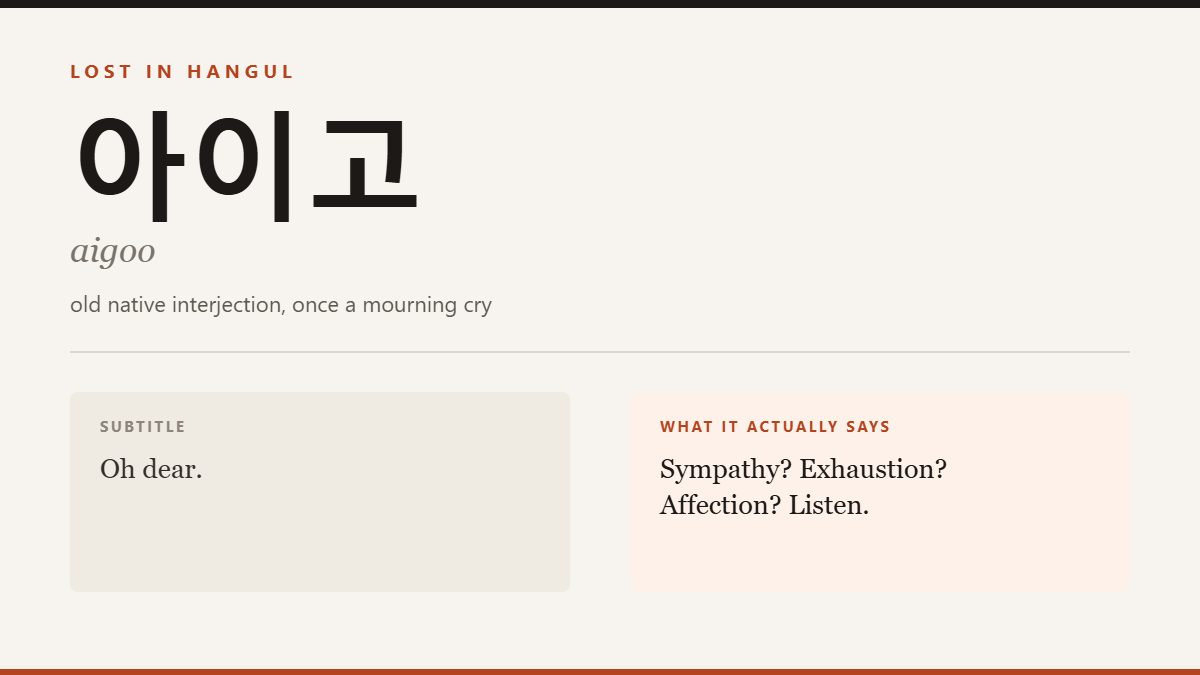
Sympathy, exhaustion, affection, exasperation, shock and grief, all from the same two syllables. English splits those across five different words and picks wrong.
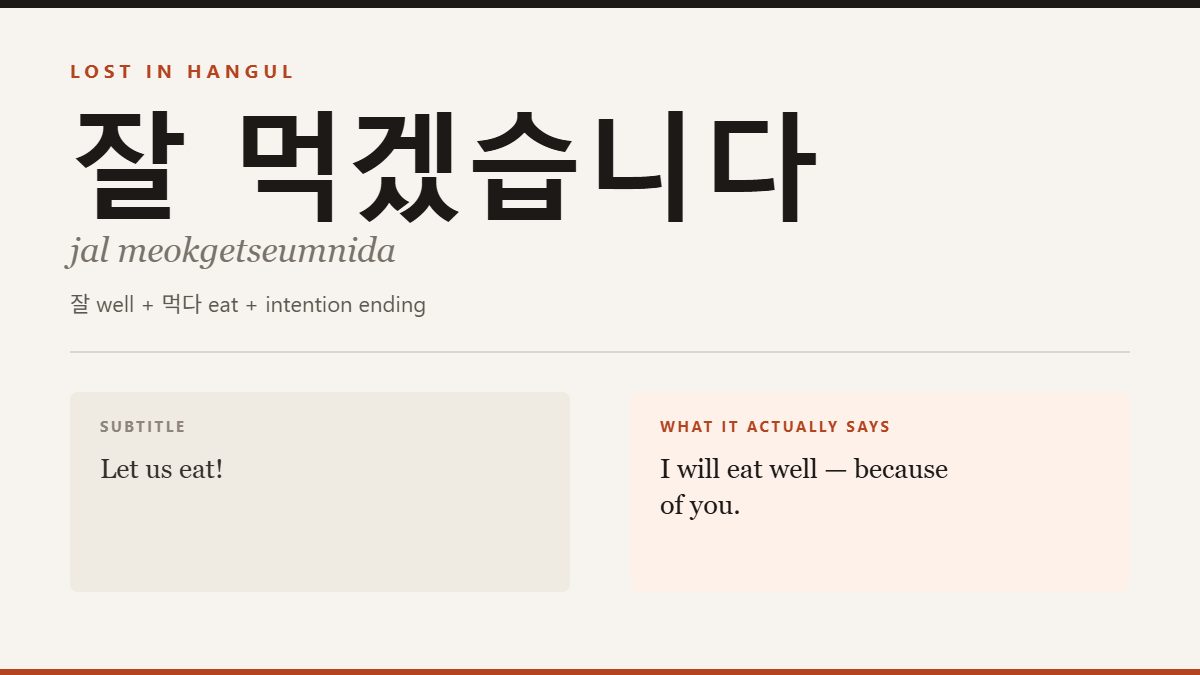
It is a thank-you disguised as a statement about yourself, and it is aimed at whoever is feeding you. Say it to a waiter and it lands wrong.
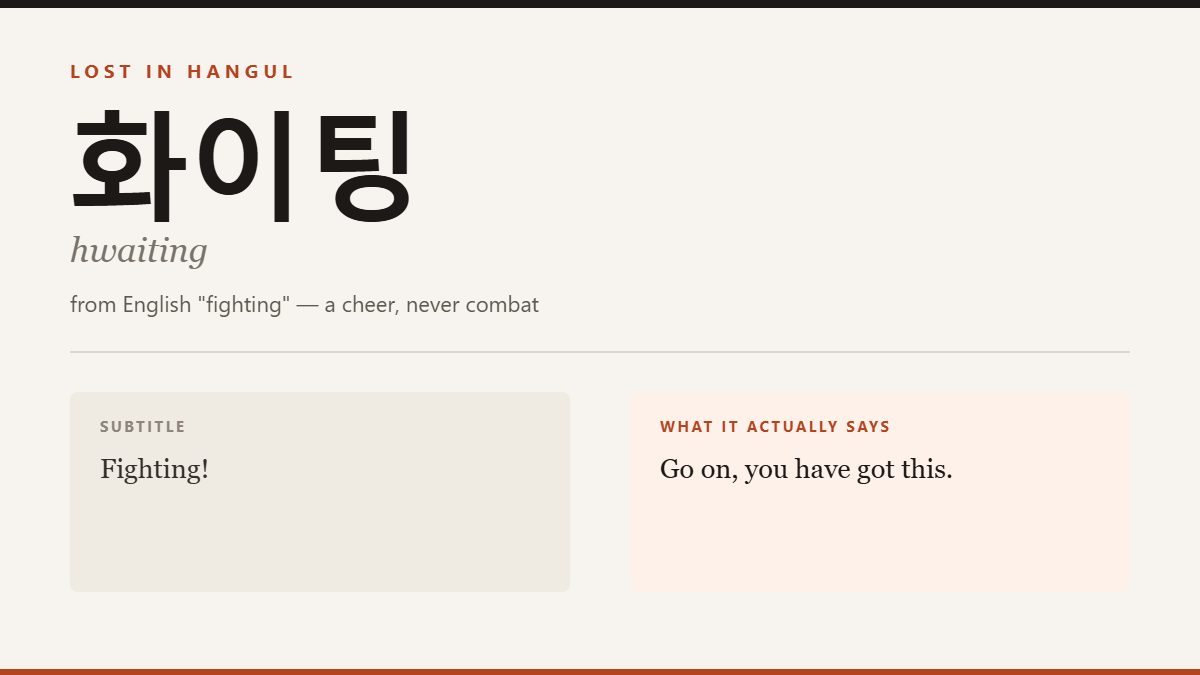
It comes from the English word “fighting” and means the opposite of what an English speaker hears. It is a cheer said before the hard thing, and there is a different word for after.
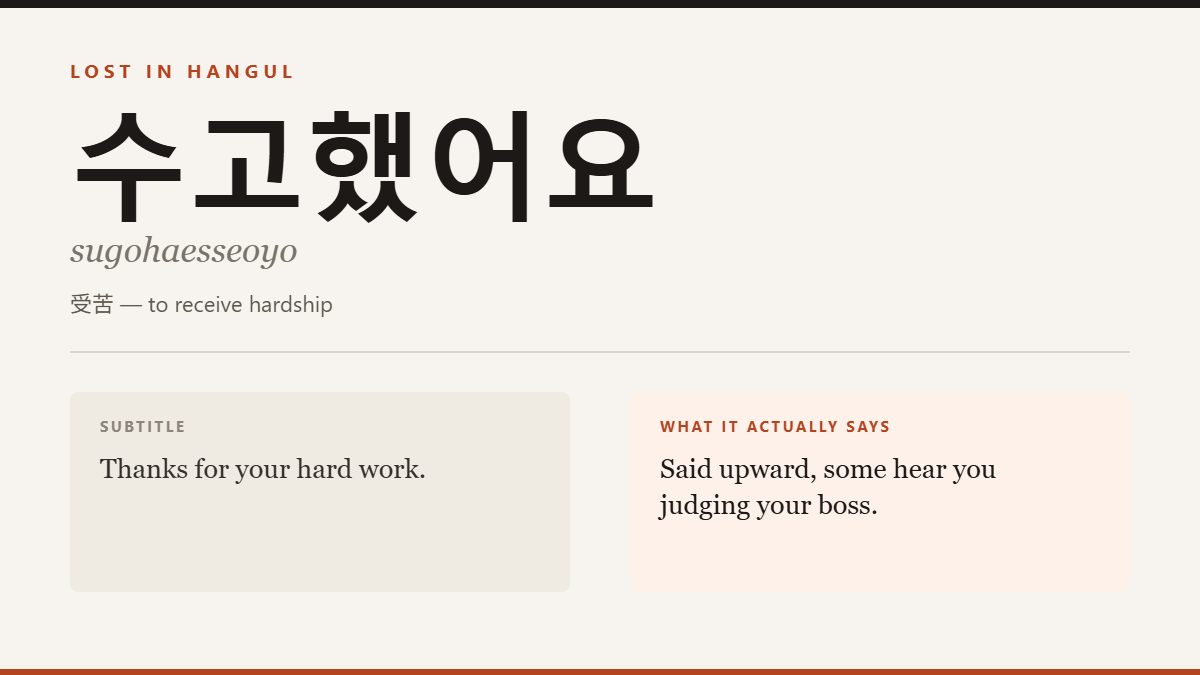
The most-used sentence in Korean working life, and there is a live argument about whether you are allowed to say it to your boss. Both sides are real and it splits by age.
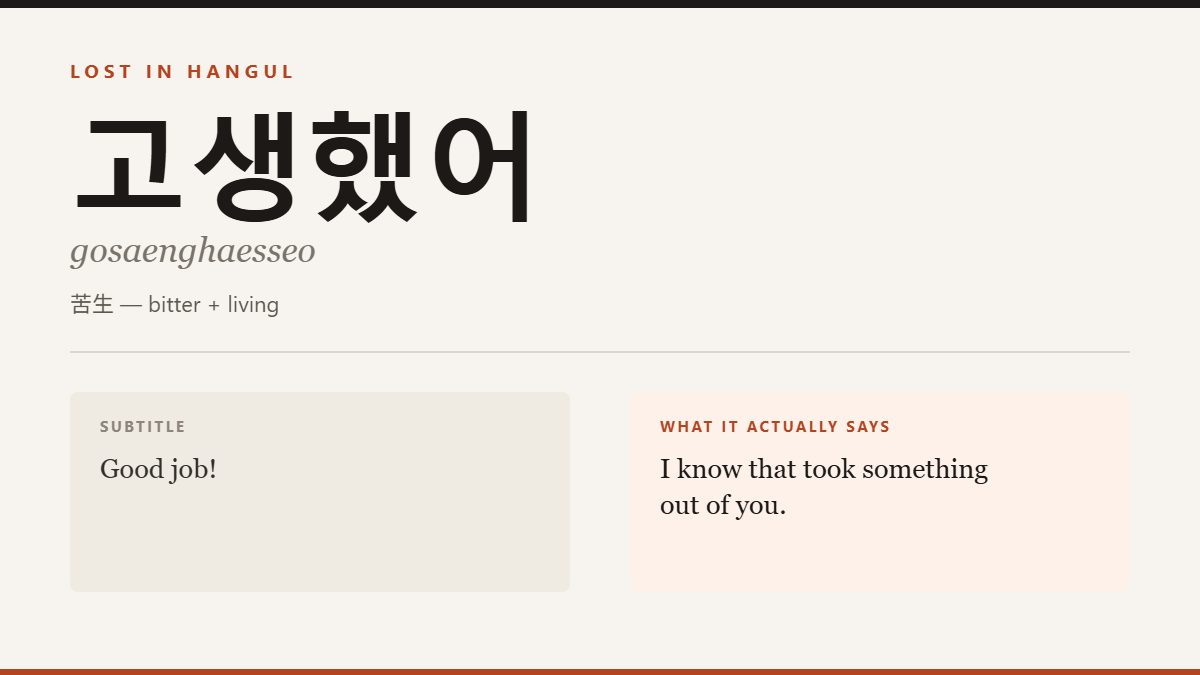
The subtitle says “Good job.” The word literally means “you did bitter living,” and it says nothing at all about whether you succeeded. That gap explains a lot of crying scenes.