The pronouns Korean never said, and English put in anyway
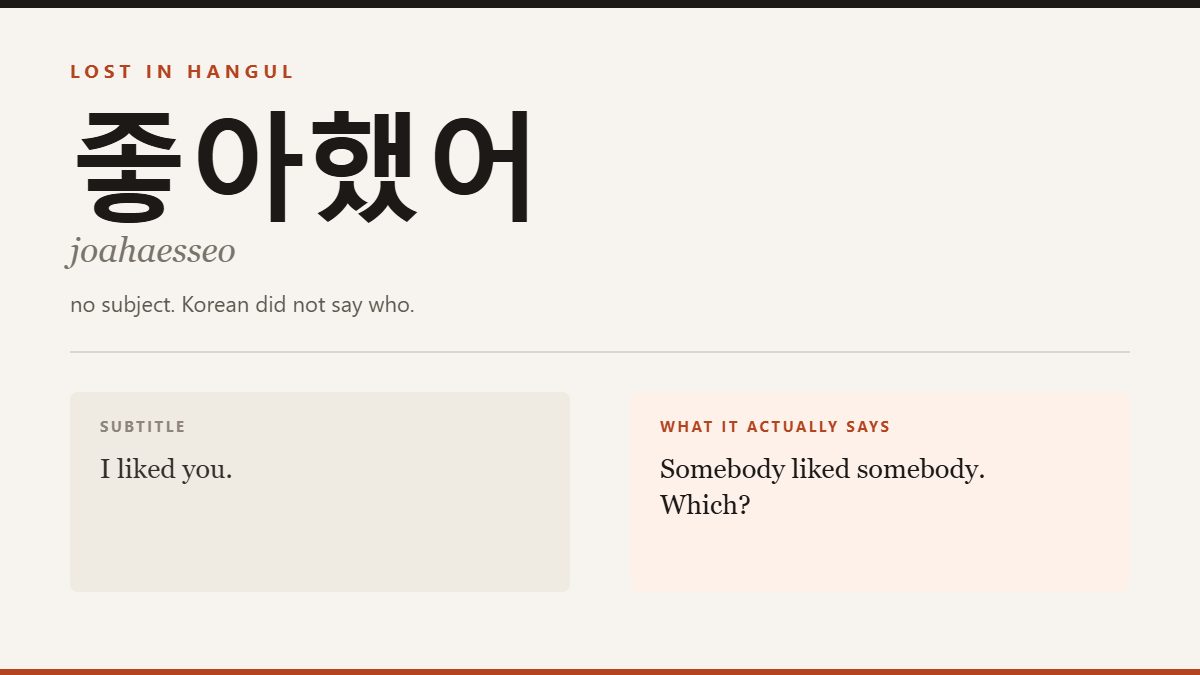
Korean leaves the subject out whenever context covers it. English cannot, so every subtitle contains a decision about who the sentence was about — and sometimes the vagueness was the point.
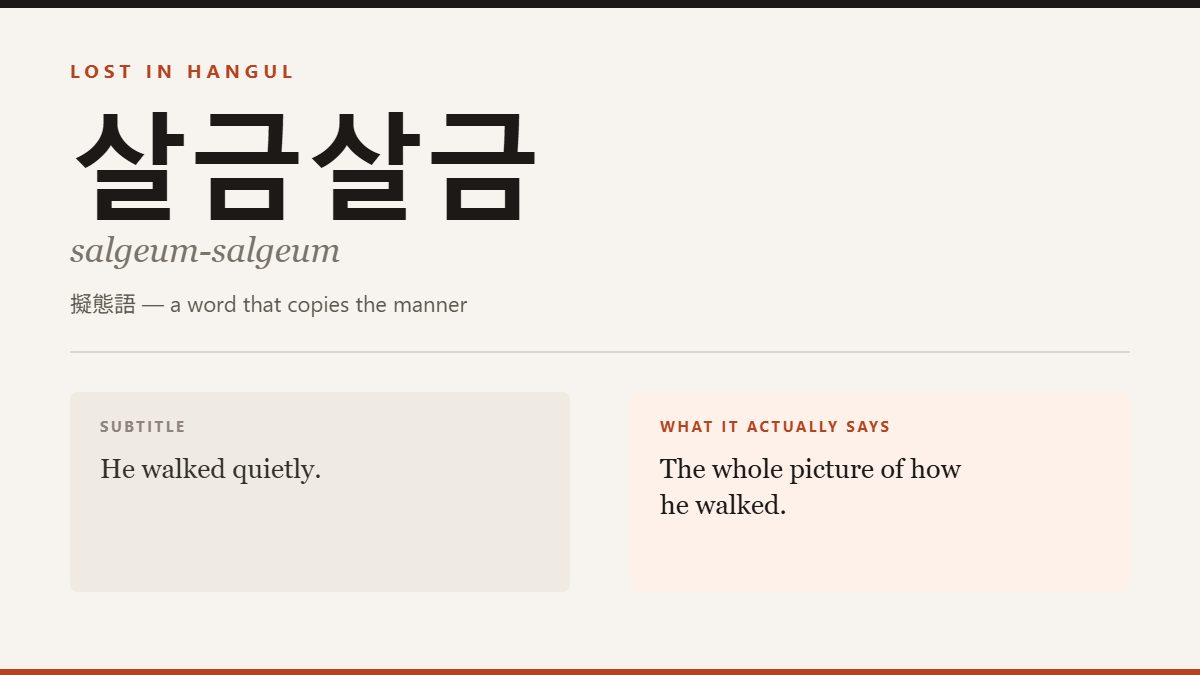
English has bang and crash. It has nothing for the family of words that describe the way a thing glitters, creeps or chews — which is most of a Korean variety caption.
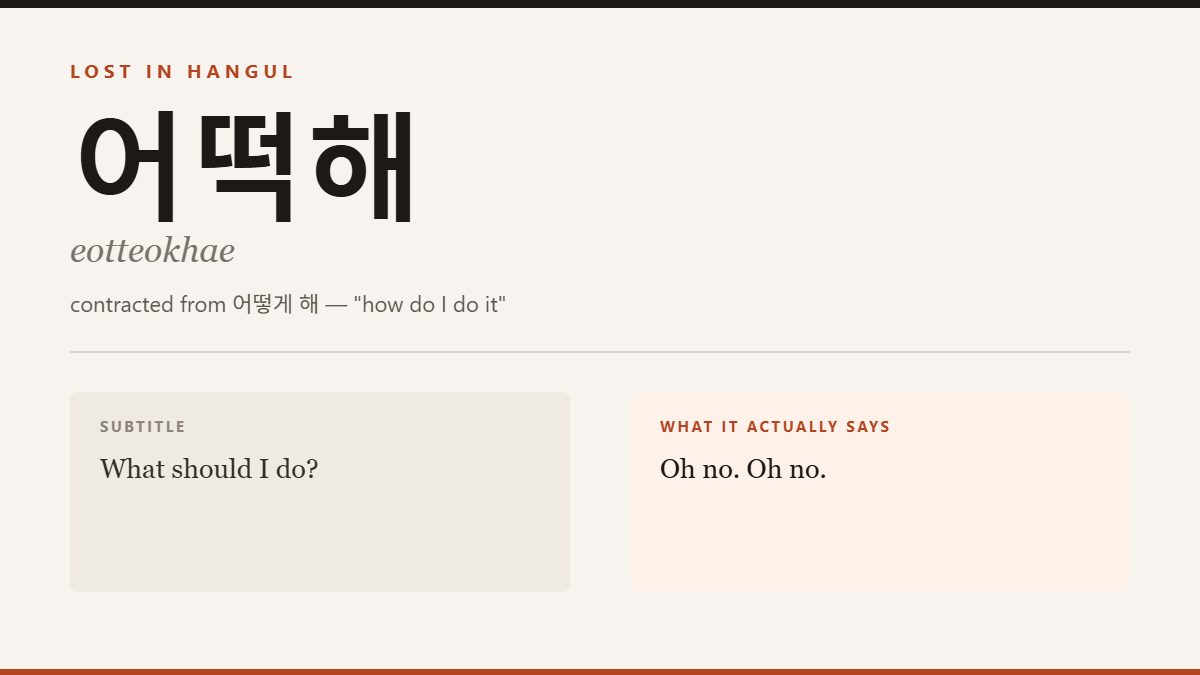
Subtitles write “what should I do?” and turn a wail into a request for advice. It also doubles as a squeal at something too cute to handle.
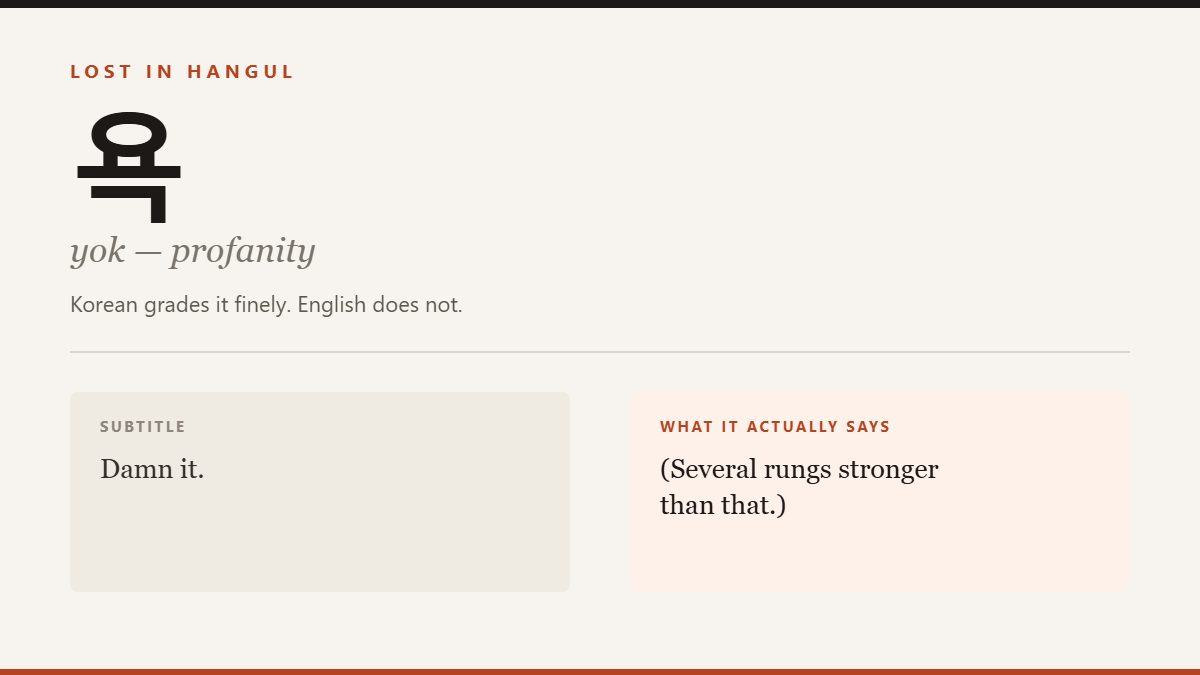
Korean grades profanity finely and English does not. Faced with a rung that has no English equivalent, subtitlers round down — and characterisation goes with it.
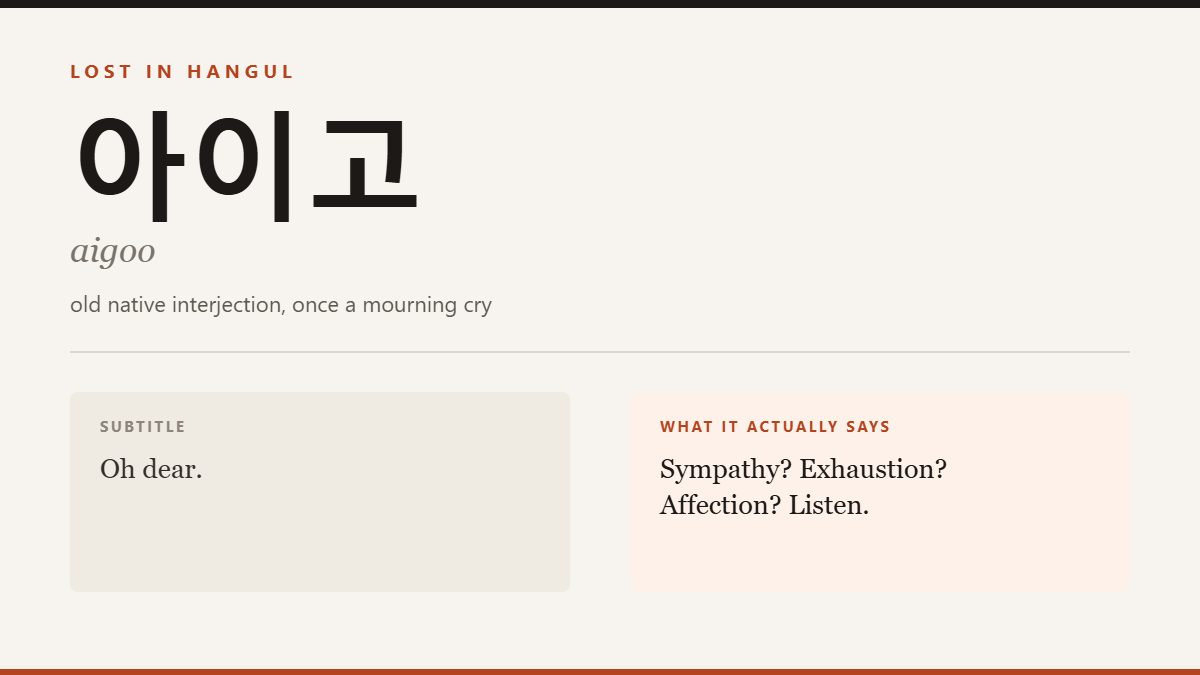
Sympathy, exhaustion, affection, exasperation, shock and grief, all from the same two syllables. English splits those across five different words and picks wrong.
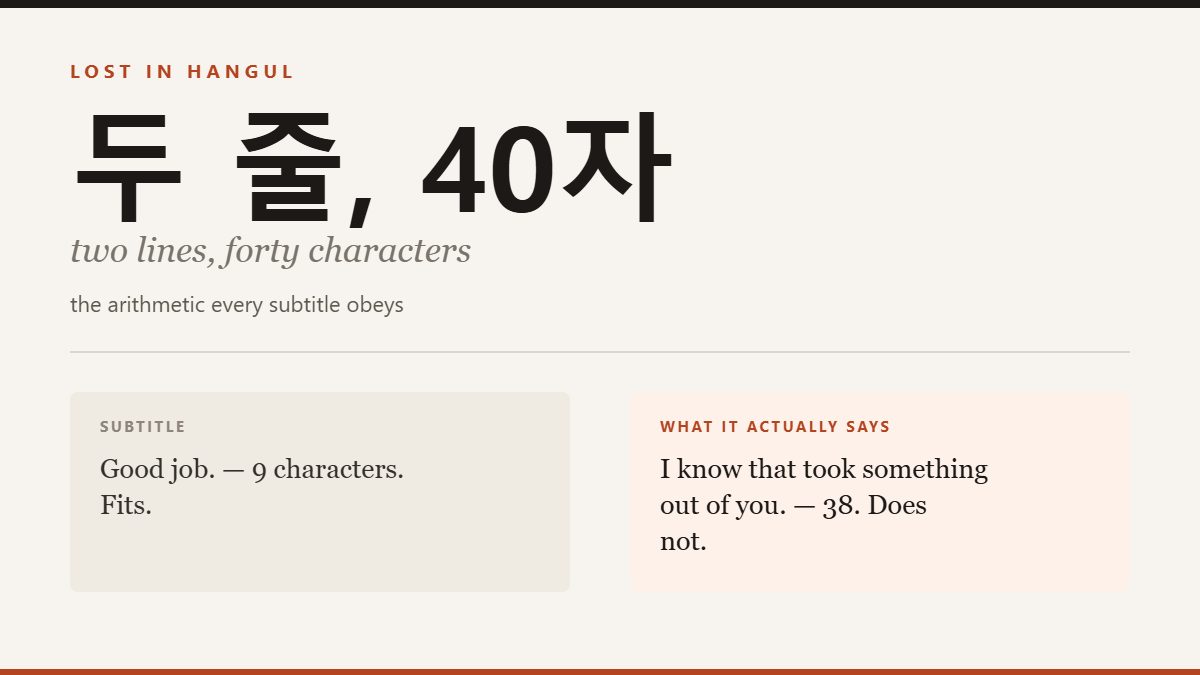
Most of what gets lost between Korean and an English subtitle is lost to arithmetic: two lines, about forty characters each, read at the speed an audience can manage while watching.
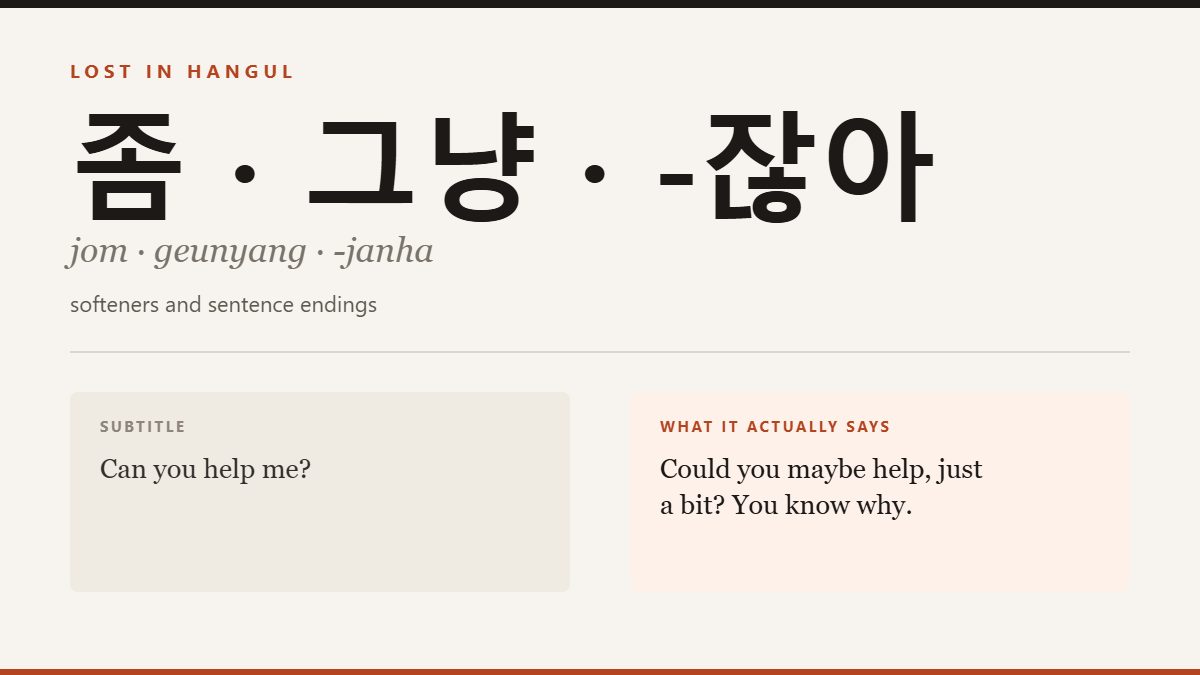
좀, 그냥, 막, -네, -잖아. None of them carry facts, all of them carry tone, and a subtitle rationed by the character cuts them first. That is why subtitled Korean sounds curter than it is.
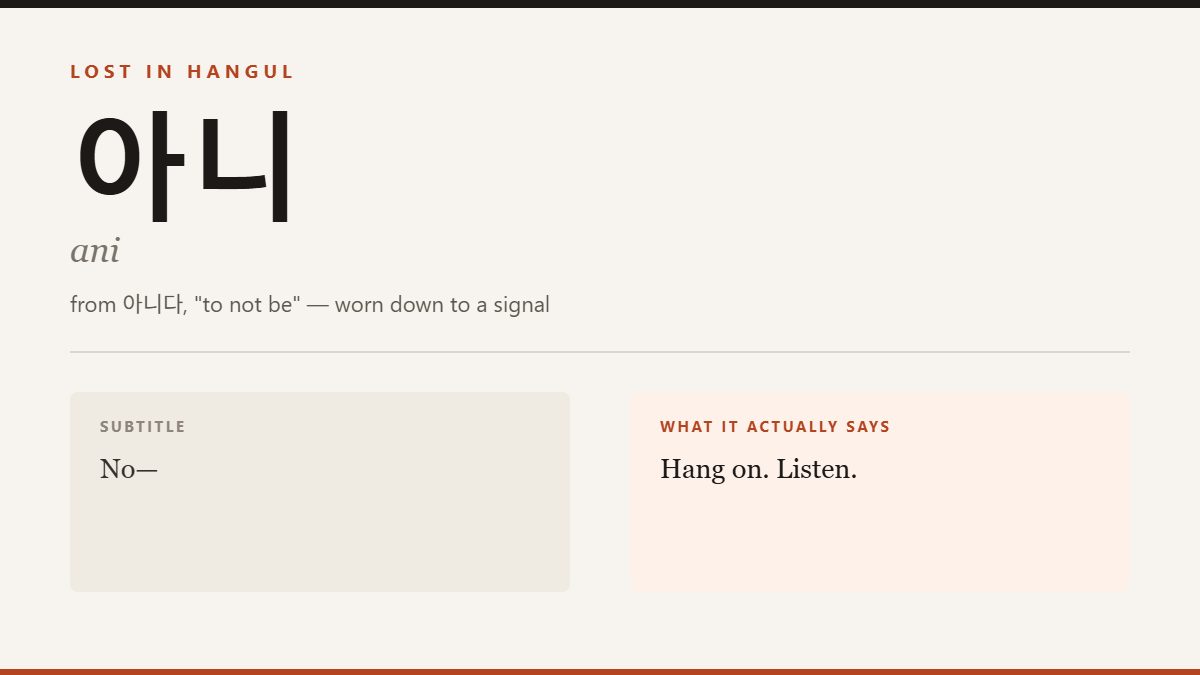
Subtitles print “No—” and then the speaker agrees with everything. The bare 아니 at the front of a sentence is closer to “wait” or “hang on”, and it denies nothing.