Skip to content

Lost in Hangul

  • Home
  • Untranslatable Words
  • Honorifics & Titles
  • Things They Say
  • Slang & Internet Korean
  • Subtitle Notes
  • About
  • Contact
  • Privacy Policy

Subtitle Notes

Why official subtitles translate the way they do, what they choose to drop, and the constraints translators work under.

“Konglish” (콩글리시) — the English words that aren’t English, and what subtitles do with them
October 13, 2026 by mataXinfo
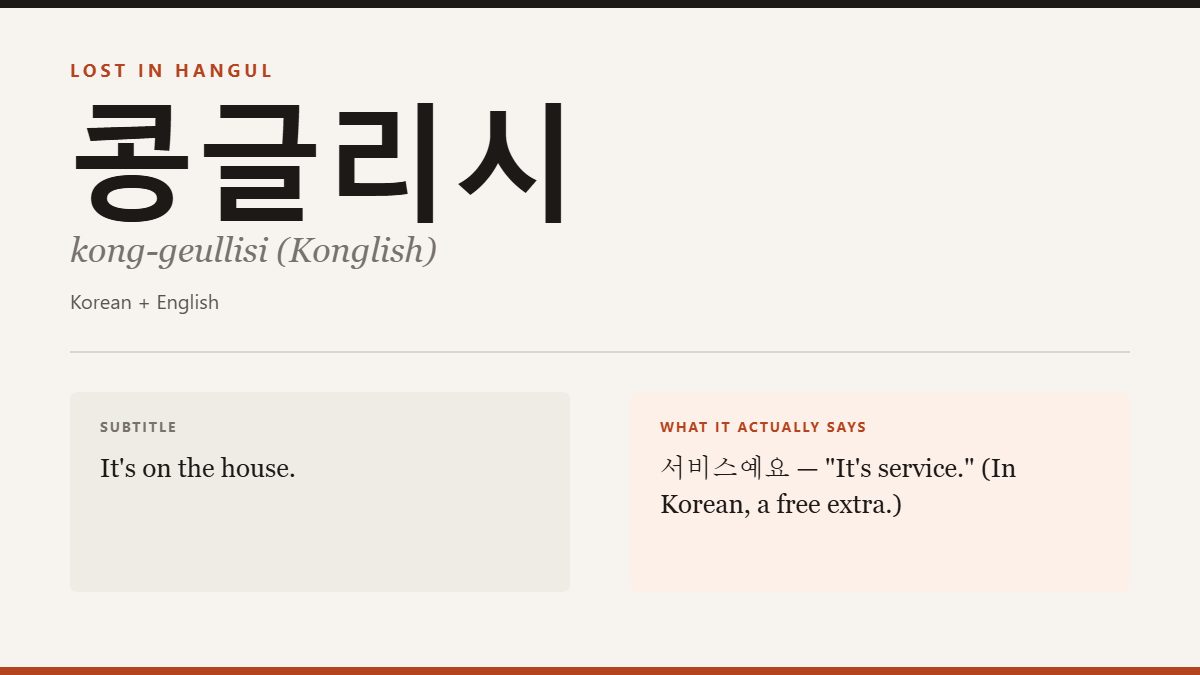
콩글리시 (kong-geullisi (Konglish)) word card

핸드폰, 아이쇼핑, 서비스, 스킨십: Korean is full of English-looking words that mean something else. Subtitles quietly translate them back into real English — and lose the joke when a character is showing off.
Categories Subtitle Notes Leave a comment

“Saturi” (사투리) — the Korean accents subtitles turn into standard English

October 12, 2026 by mataXinfo
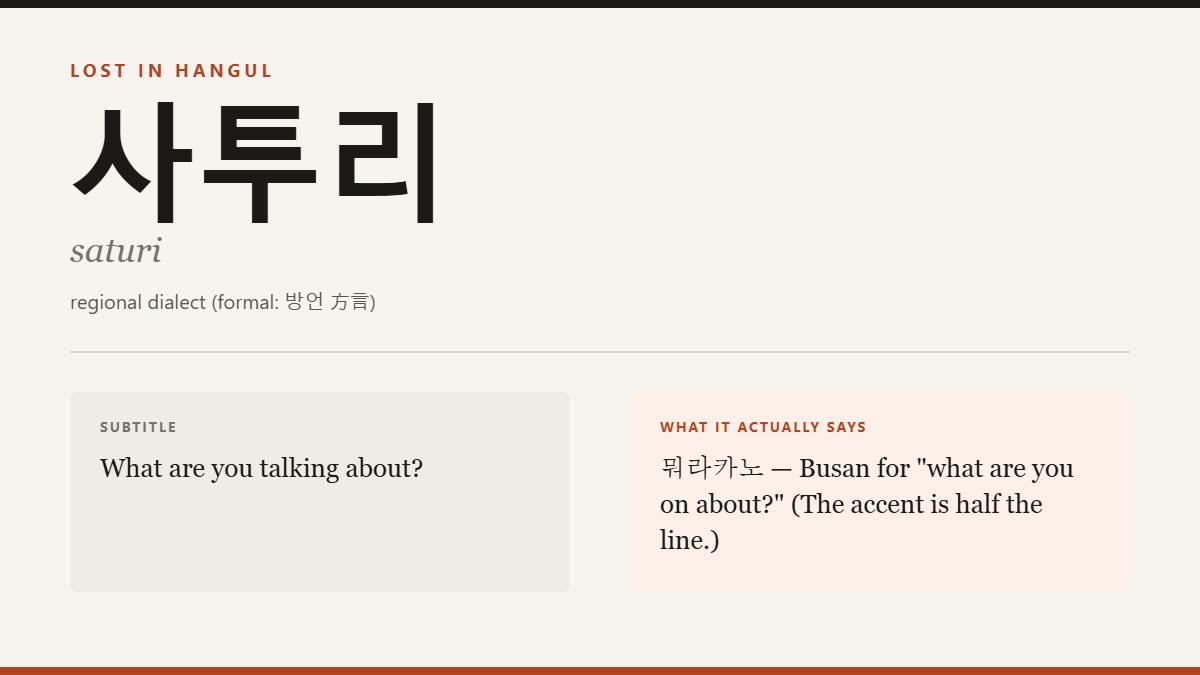
사투리 (saturi) word card

사투리 means regional dialect. Busan, Jeolla, Chungcheong and Jeju speech each carry a whole character type in Korean drama — and English subtitles almost always flatten them into the same neutral voice.

Categories Subtitle Notes Leave a comment

“Lee,” “Park,” “Kim” (이·박·김) — why Korean names aren’t spelled the way they sound

October 10, 2026 by mataXinfo
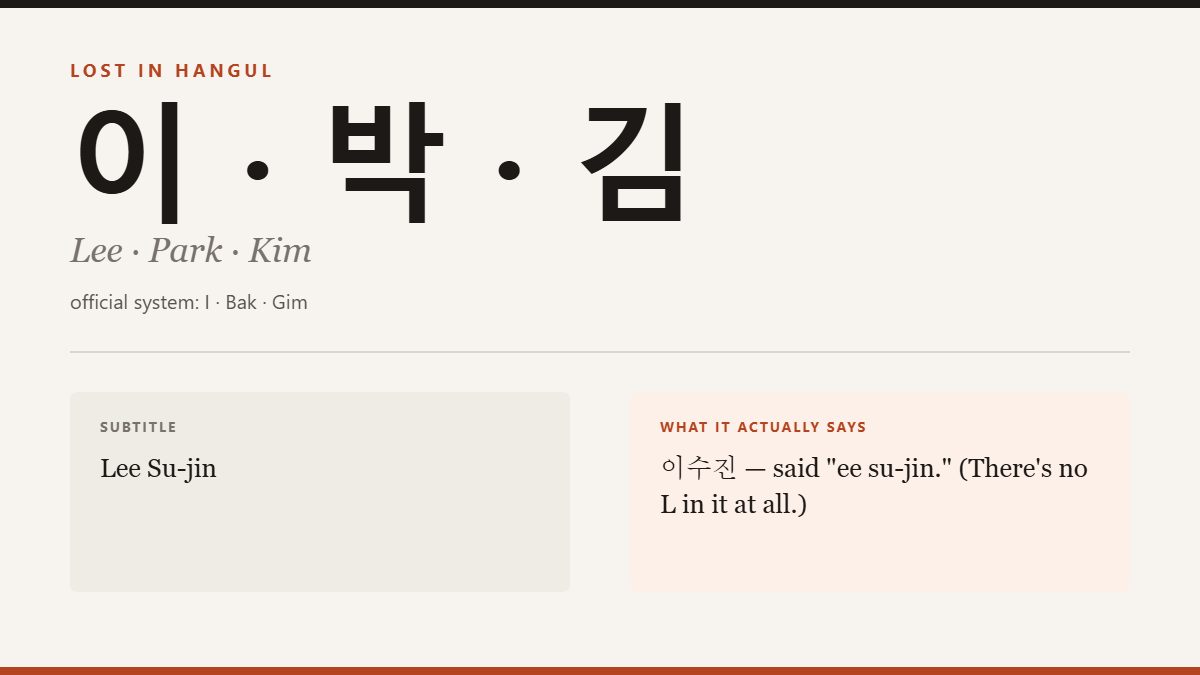
이 · 박 · 김 (Lee · Park · Kim) word card

이 has no L, 박 has no R, and 김 starts somewhere between K and G. The usual spellings of Korean surnames come from older habits, and Korea’s official romanization was never applied to them — so Busan changed its spelling in 2000, and the Parks didn’t.

Categories Subtitle Notes Leave a comment

“Jeo” and “Na” (저·나) — the humble “I” English can’t show

October 8, 2026 by mataXinfo
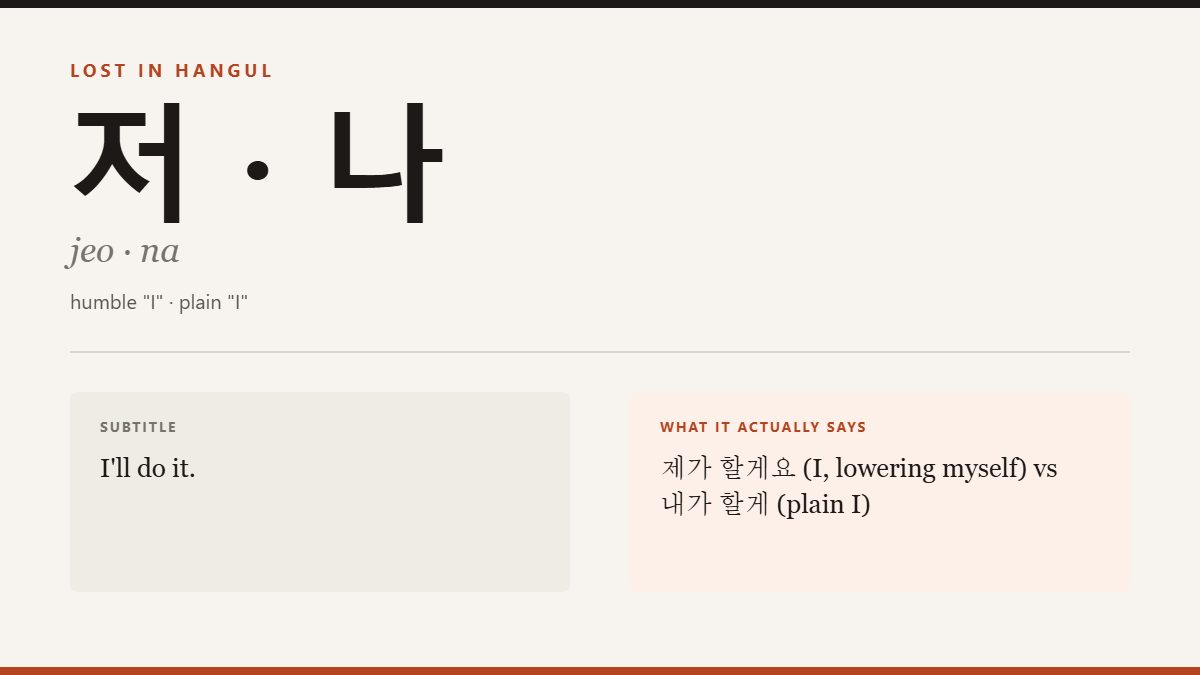
저 · 나 (jeo · na) word card

Korean has two everyday words for “I”: the plain 나 and the humble 저. Which one a character uses tells you who they think they’re talking to. In English subtitles, both are just “I.”

Categories Subtitle Notes Leave a comment

“Jal ja” (잘 자) and the goodnights subtitles merge

October 6, 2026 by mataXinfo
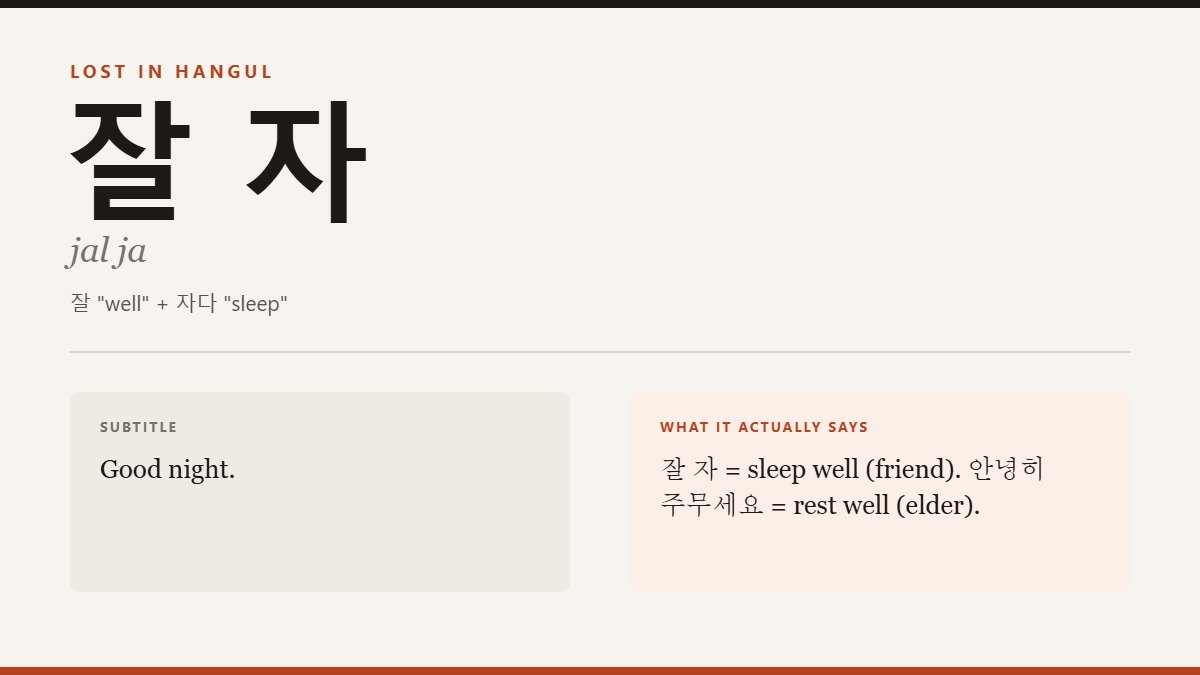
잘 자 (jal ja) word card

Korean has several ways to say goodnight, and they depend on who you’re talking to. 잘 자 to a friend, 안녕히 주무세요 to a grandparent. English subtitles turn them all into “Good night.”

Categories Subtitle Notes Leave a comment

When they suddenly use your full name — the alarm subtitles can’t ring

October 4, 2026 by mataXinfo
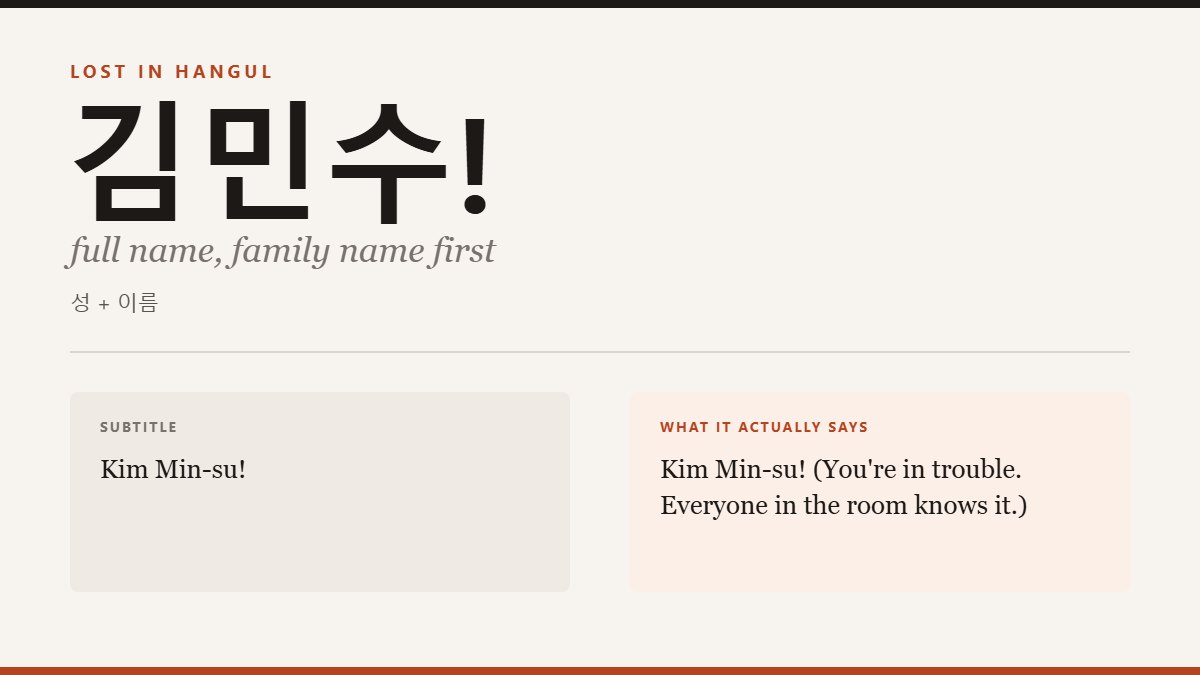
김민수! (full name, family name first) word card

Close Koreans call each other by given name plus 아/야. When a parent or partner switches to your full name, something is wrong. Subtitles print the same name and lose the alarm.

Categories Subtitle Notes Leave a comment

“Aish” (아이씨) — the half-swear subtitles turn into “Dammit”

October 3, 2026 by mataXinfo
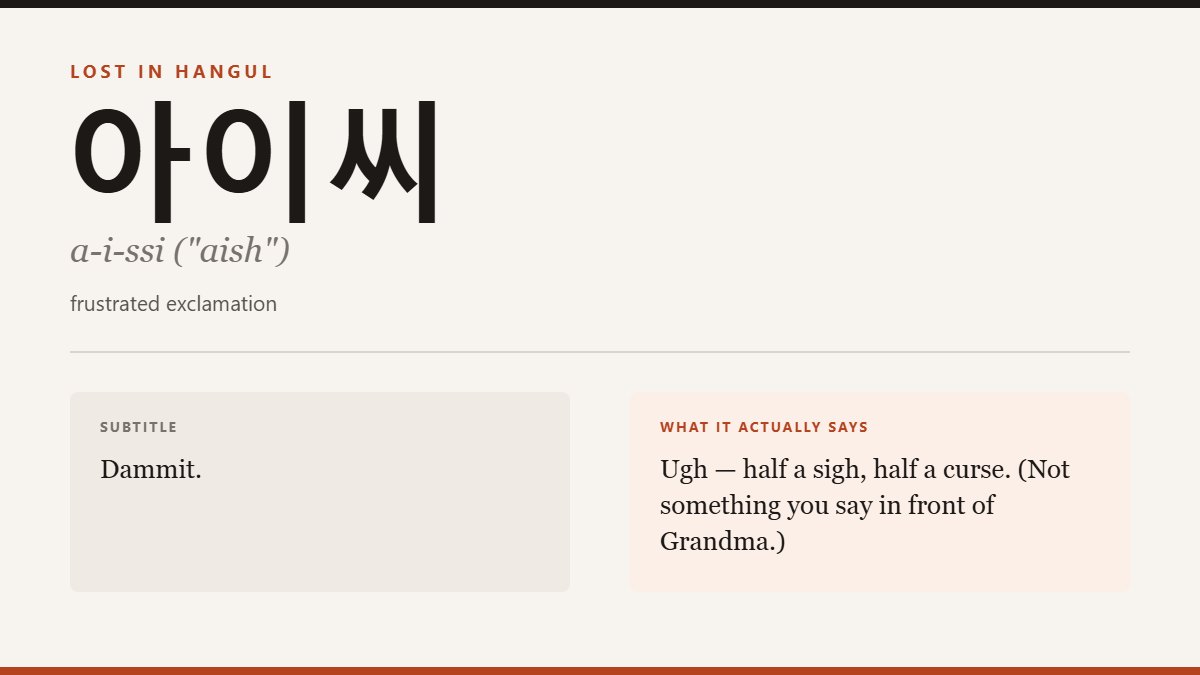
아이씨 (a-i-ssi ("aish")) word card

The sound fans spell “aish” is 아이씨 or 아씨: a frustrated mutter somewhere between a sigh and a curse. Whether it counts as swearing depends on who hears it.

Categories Subtitle Notes Leave a comment

합니다 vs 해요 — the two polite Koreans, and why subtitles merge them

October 2, 2026 by mataXinfo
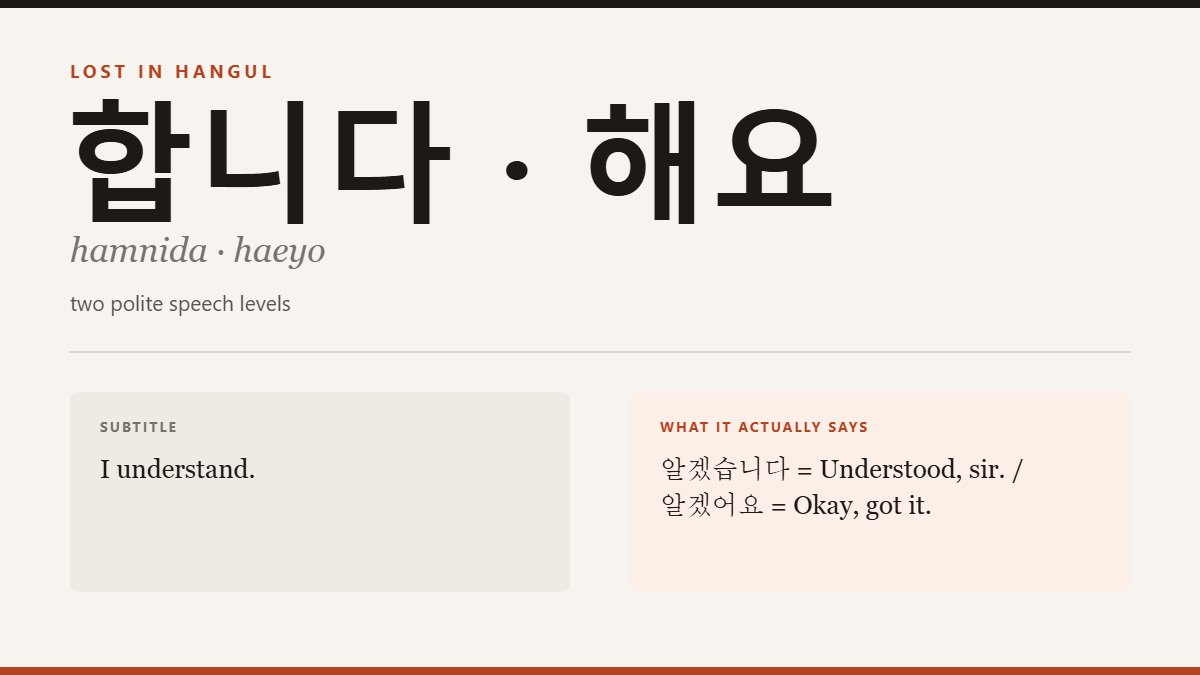
합니다 · 해요 (hamnida · haeyo) word card

Korean has two everyday polite styles: the crisp, formal -습니다 and the warm, polite -요. A character switching between them tells you a lot. Subtitles show neither.

Categories Subtitle Notes Leave a comment

The verbs that change for your grandmother — and why subtitles can’t show it

September 30, 2026 by mataXinfo
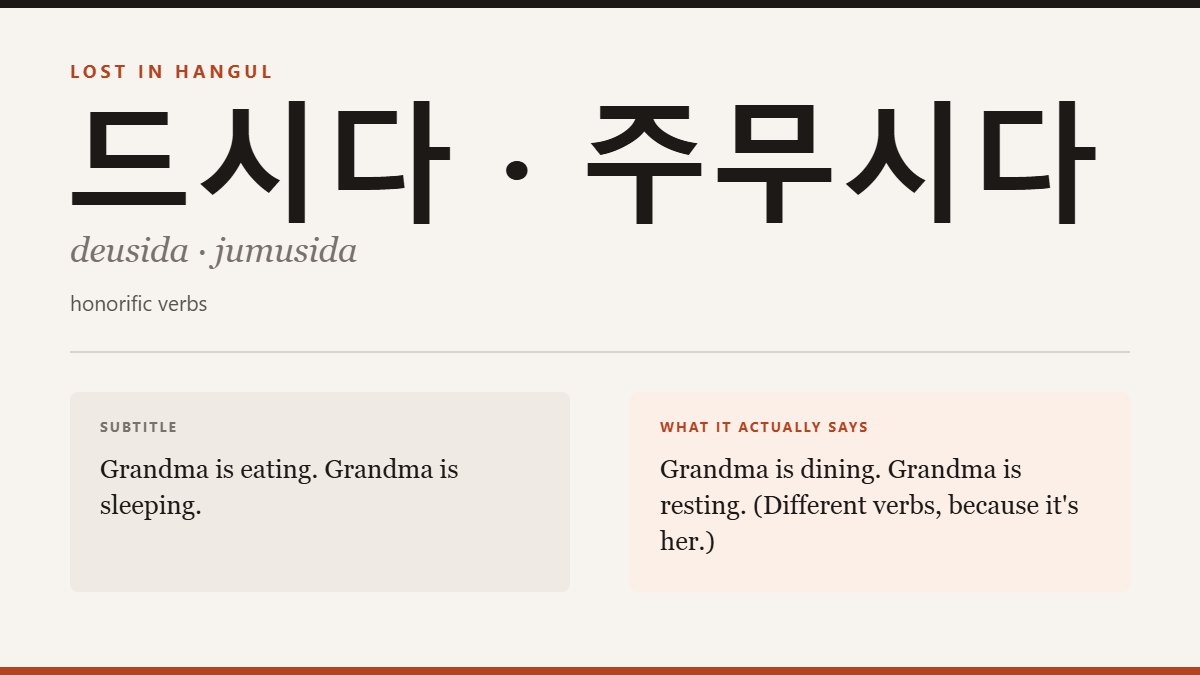
드시다 · 주무시다 (deusida · jumusida) word card

Korean doesn’t only add polite endings. Some verbs and nouns swap out entirely when the subject is someone you respect. English has no equivalent, so subtitles can’t show it.

Categories Subtitle Notes Leave a comment

“Annyeong” (안녕) — hello and goodbye, and the two goodbyes subtitles merge

September 28, 2026 by mataXinfo
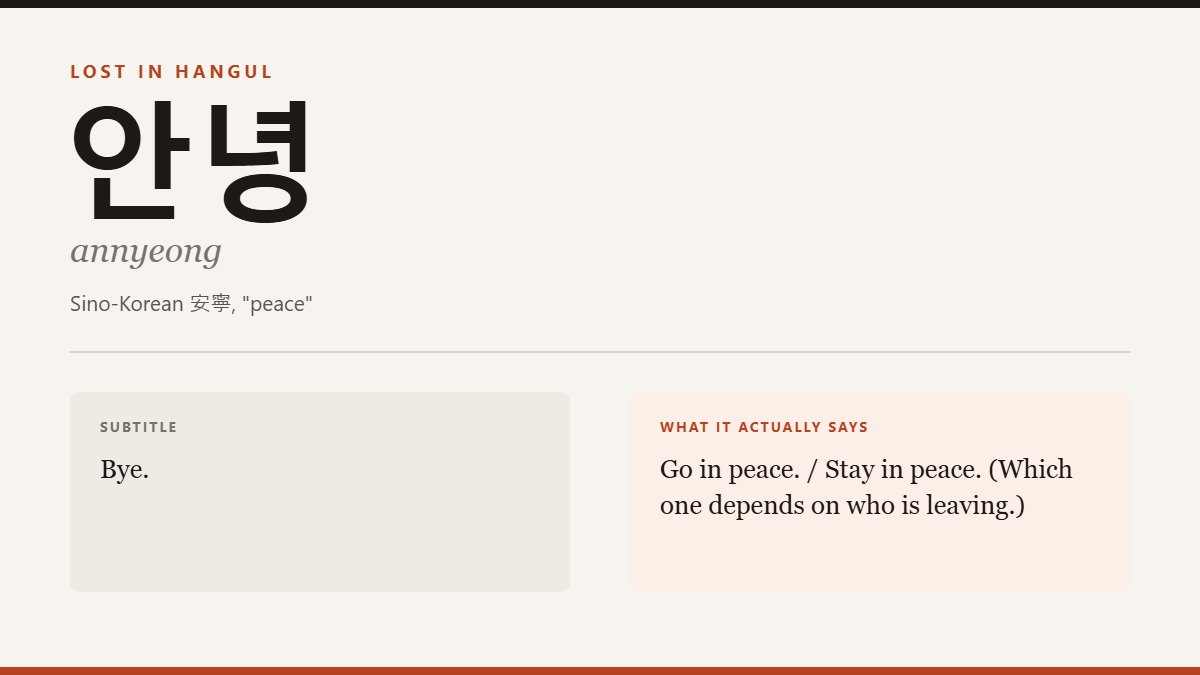
안녕 (annyeong) word card

안녕 means both hello and goodbye. The polite goodbyes split in two depending on who is leaving — and English subtitles collapse both into “Bye.”

Categories Subtitle Notes Leave a comment

The pronouns Korean never said, and English put in anyway

September 26, 2026September 26, 2026 by mataXinfo
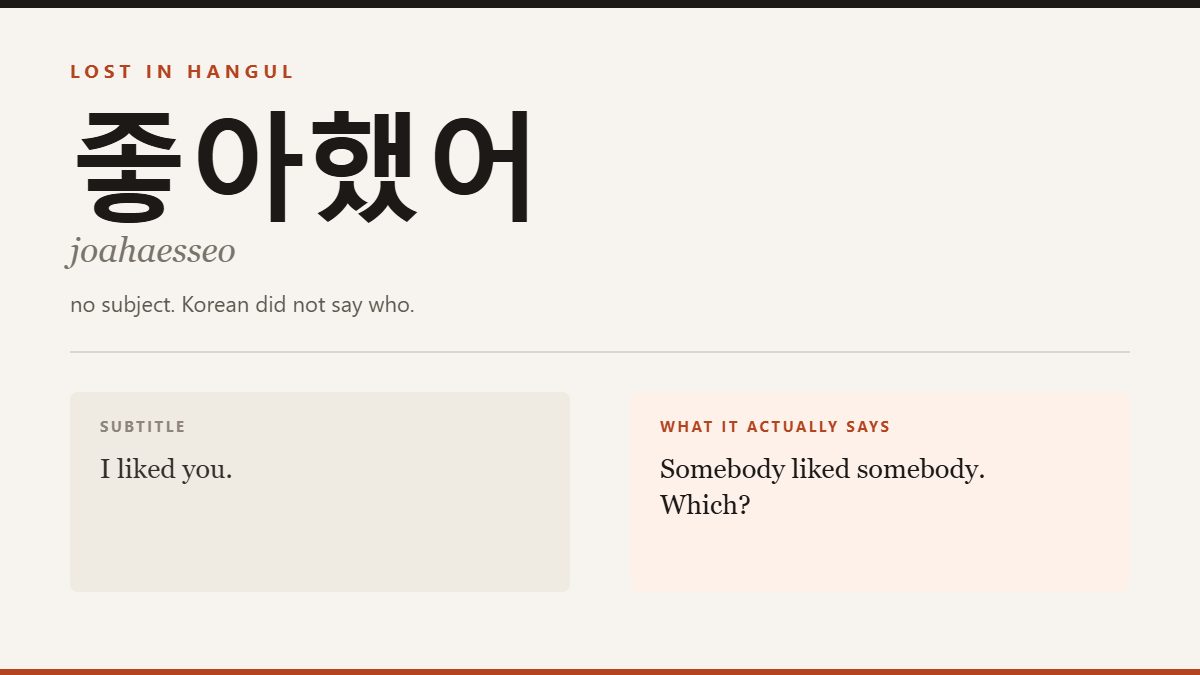
좋아했어 (joahaesseo) word card

Korean leaves the subject out whenever context covers it. English cannot, so every subtitle contains a decision about who the sentence was about — and sometimes the vagueness was the point.

Categories Subtitle Notes Tags pronouns, subject dropping, subtitles, translation Leave a comment

The Korean words that copy sounds and shapes — and vanish in subtitles

September 26, 2026September 25, 2026 by mataXinfo
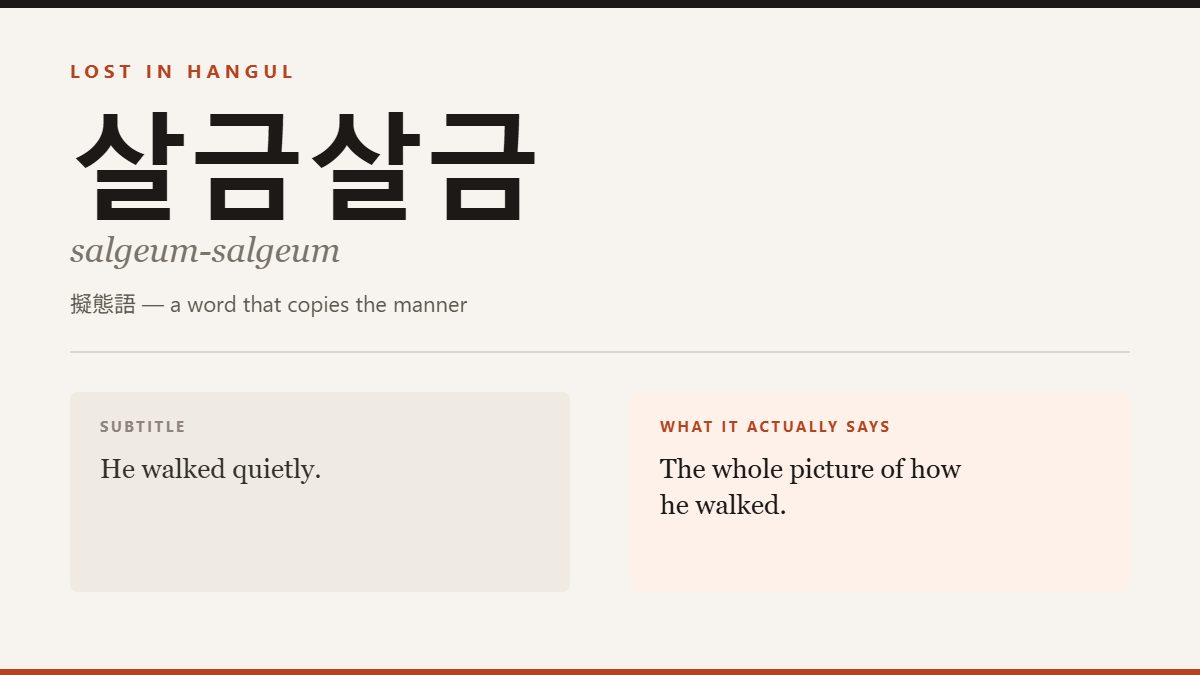
살금살금 (salgeum-salgeum) word card

English has bang and crash. It has nothing for the family of words that describe the way a thing glitters, creeps or chews — which is most of a Korean variety caption.

Categories Subtitle Notes Tags onomatopoeia, subtitles, uiseongeo, uitaeeo, variety show Leave a comment
Older posts
Page1 Page2 Next →

What this is

Korean words, honorifics and lines that subtitles cannot carry across. One word per article: what it means, what the subtitle says, and what got dropped.

How these are written →

Start here

  • Gosaenghaesseo — not "good job"
  • Jeong — attachment you did not choose
  • Why she calls him Oppa
  • Ani — the word that is not "no"

Categories

  • Honorifics & Titles (18)
  • Slang & Internet Korean (18)
  • Subtitle Notes (16)
  • Things They Say (20)
  • Untranslatable Words (19)

Search

© 2026 Lost in Hangul • Built with GeneratePress