“Eogulhada” (억울하다) — wronged, and unable to prove it
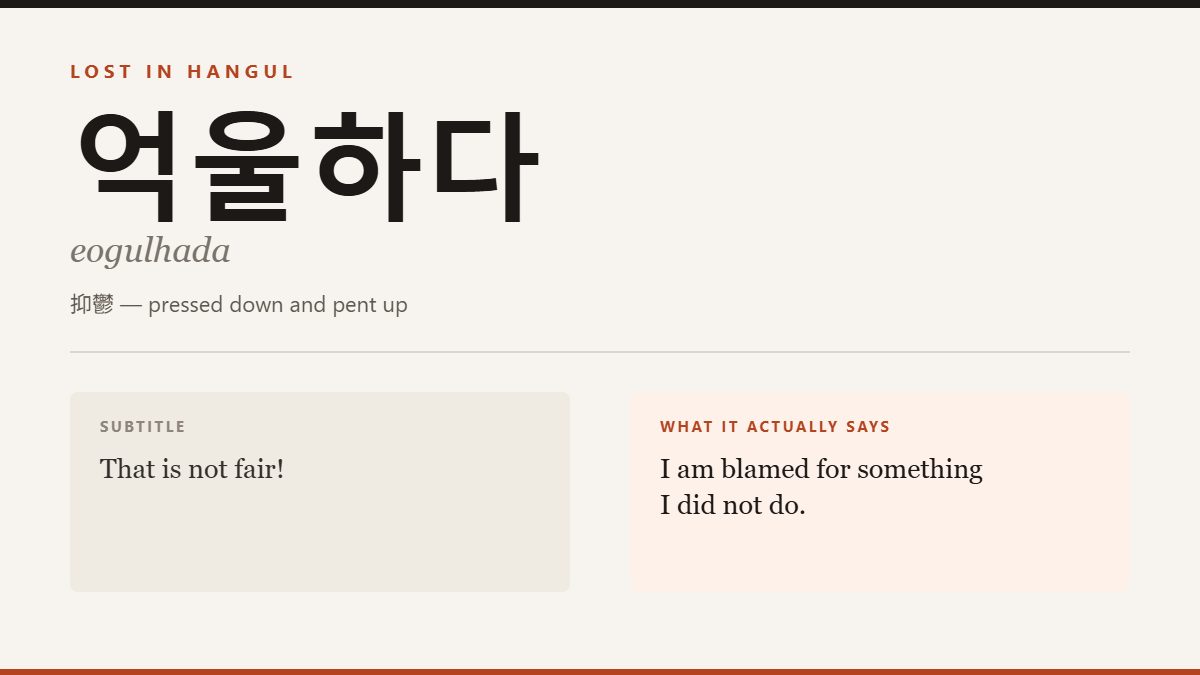
The same two hanja mean “depression” in Chinese and Japanese. Korean sent them somewhere else: the pressure of being blamed for something you did not do, in front of people who believe otherwise.
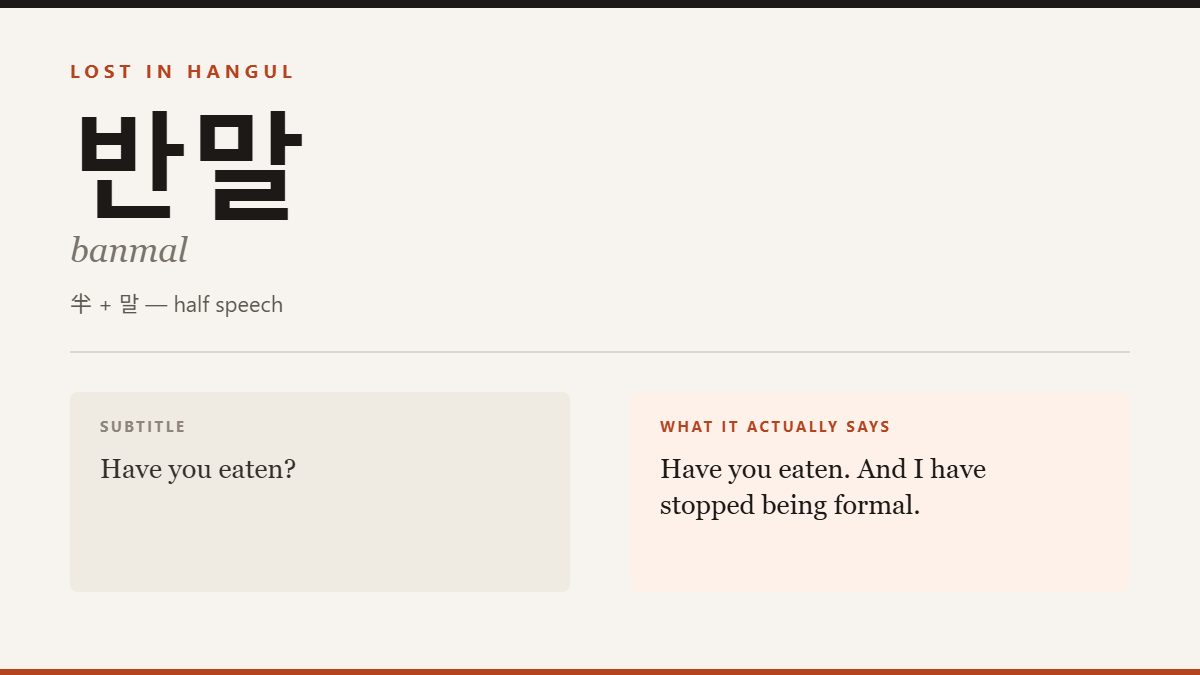
Korean grammar forces a choice about the listener in every sentence. Dropping the polite ending either lets someone in or insults them, and English subtitles show neither.
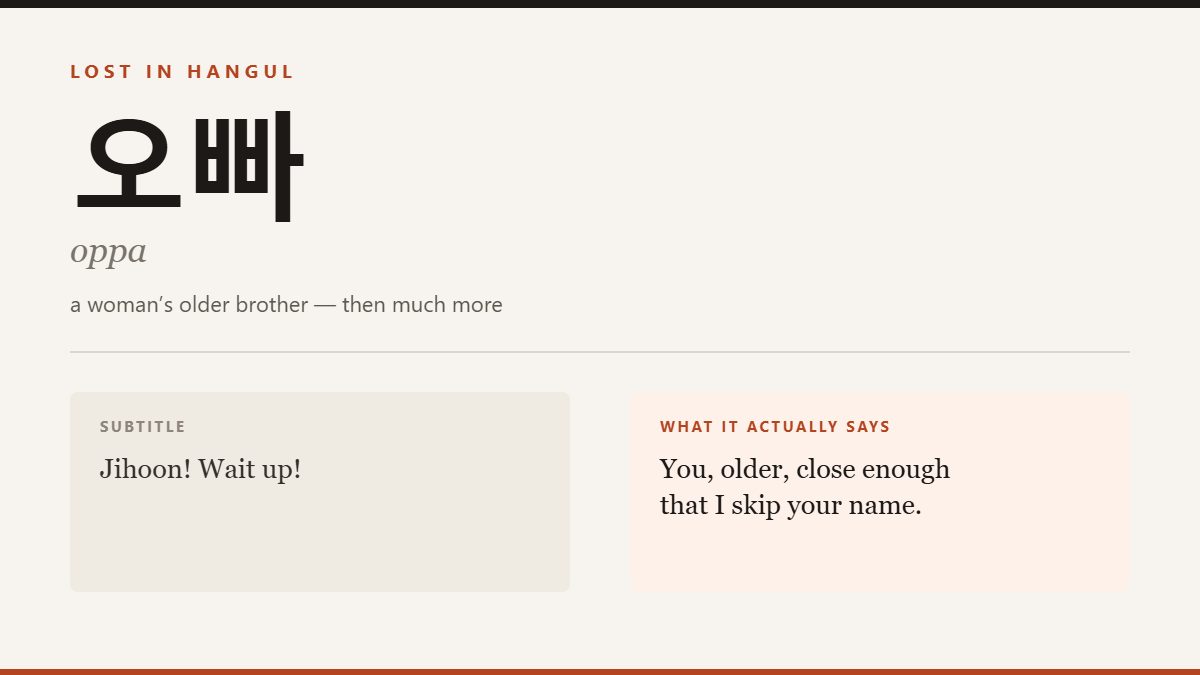
One word tells you the speaker is a woman, the listener is an older man, and they are close. English has nothing that carries any of it, so subtitles print his name and three facts disappear.
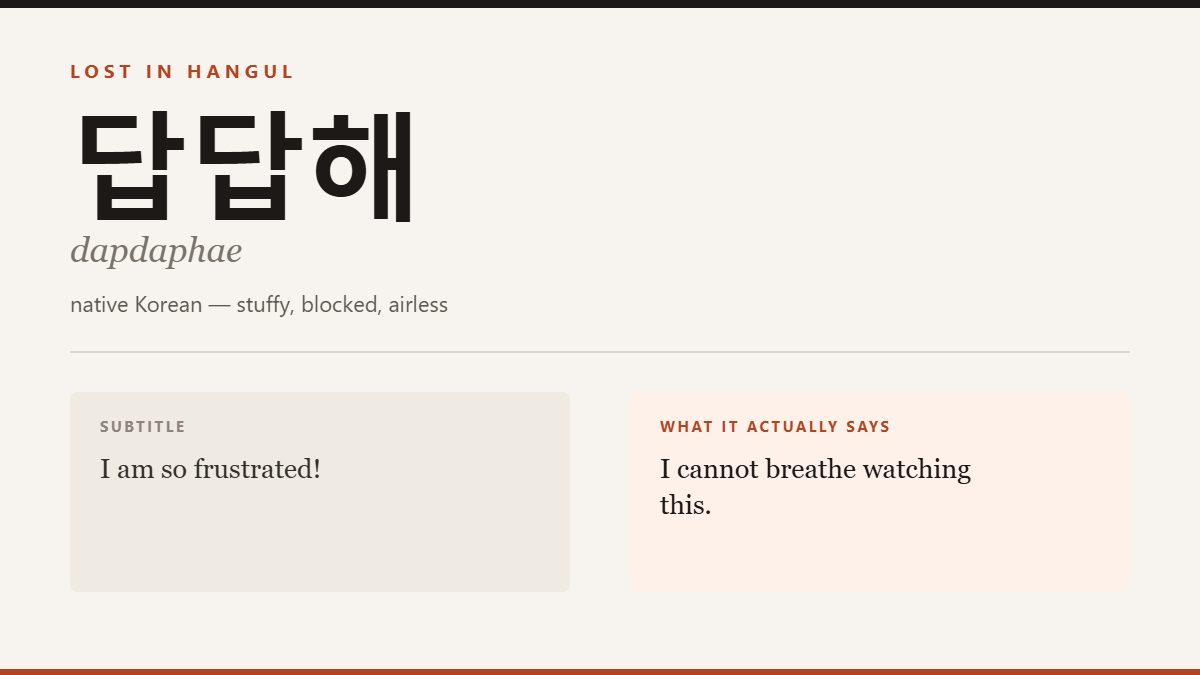
The word starts in the chest, not the mind. It means blocked, airless, unable to breathe — which is also why K-drama fandom talks about sweet potatoes and fizzy drinks.