“Sajangnim” (사장님) — boss, shop owner, and anyone behind a counter
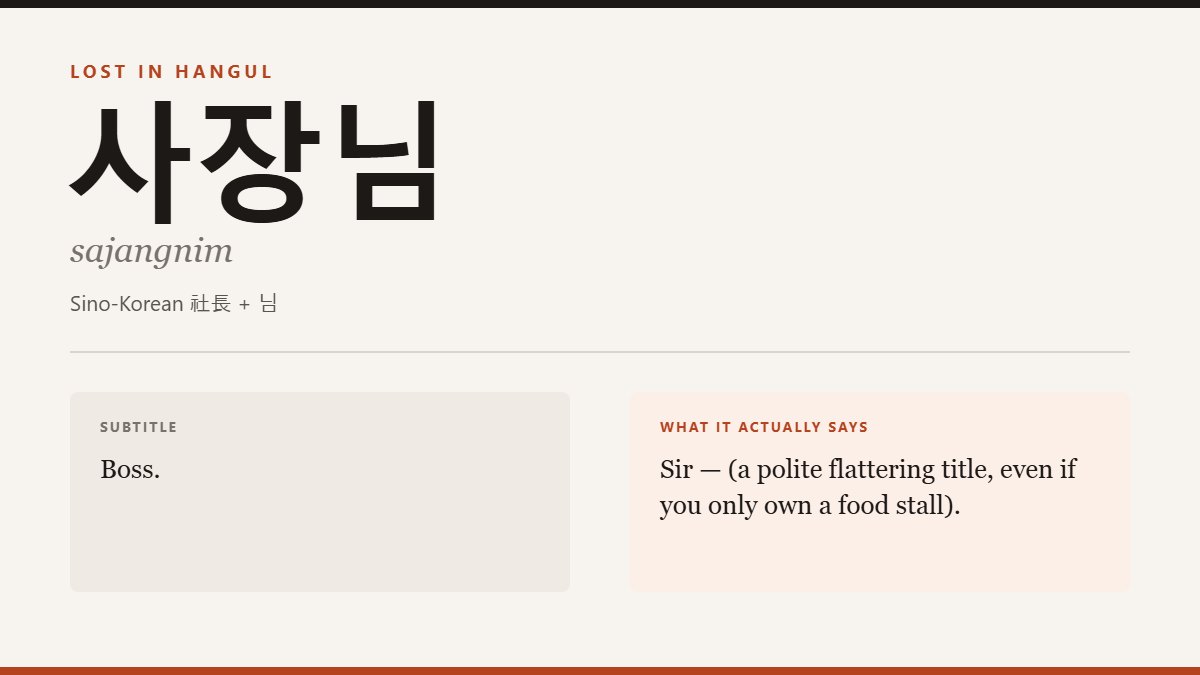
사장님 means company president. It also means the owner of the corner shop, the taxi driver, and, in a market, you — because sellers call their customers 사장님 too.
사장님 means company president. It also means the owner of the corner shop, the taxi driver, and, in a market, you — because sellers call their customers 사장님 too.
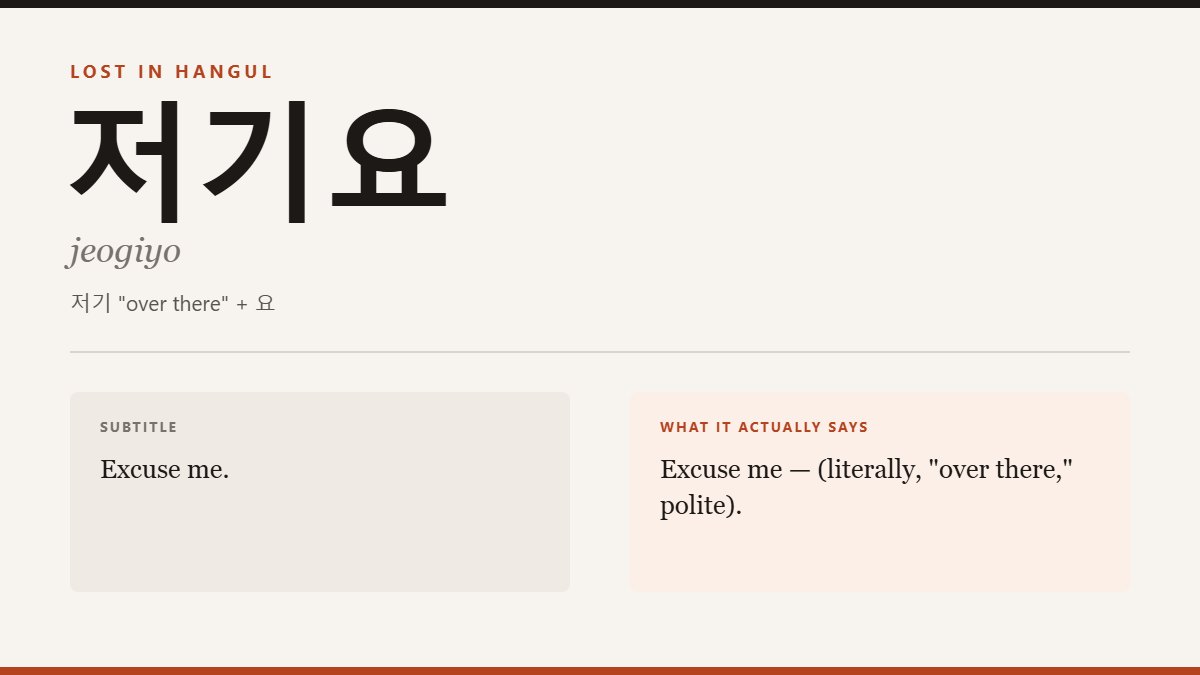
저기요 is how you get a stranger’s or a waiter’s attention in Korea. Literally it means “over there.” Said softly, 저기… also means “um, so…” — the start of something hard to say.
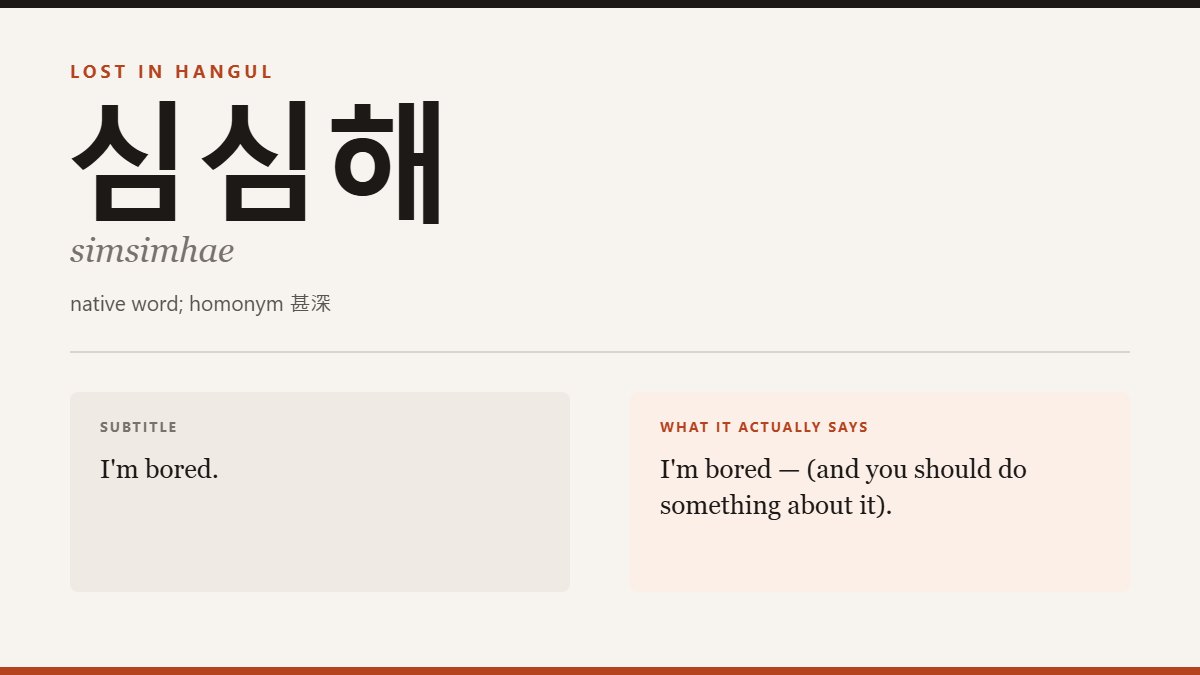
심심해 means “I’m bored.” It also means food is lightly seasoned. And a different, formal 심심하다 means “profound” — which caused a very public misunderstanding.
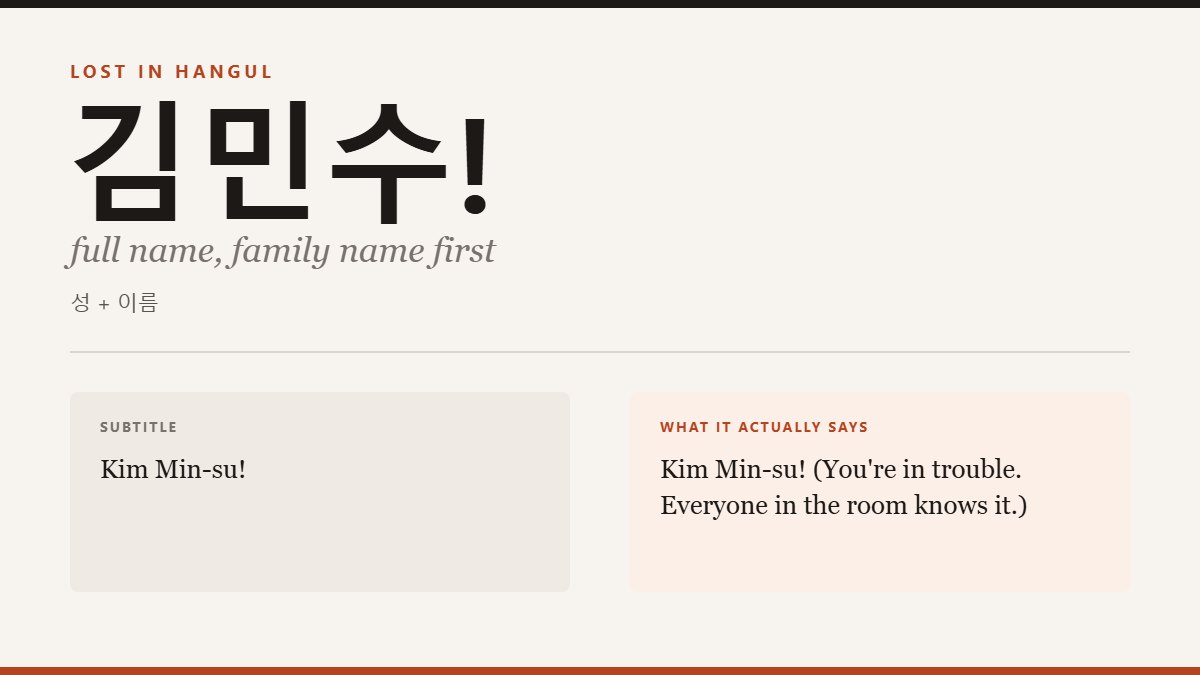
Close Koreans call each other by given name plus 아/야. When a parent or partner switches to your full name, something is wrong. Subtitles print the same name and lose the alarm.
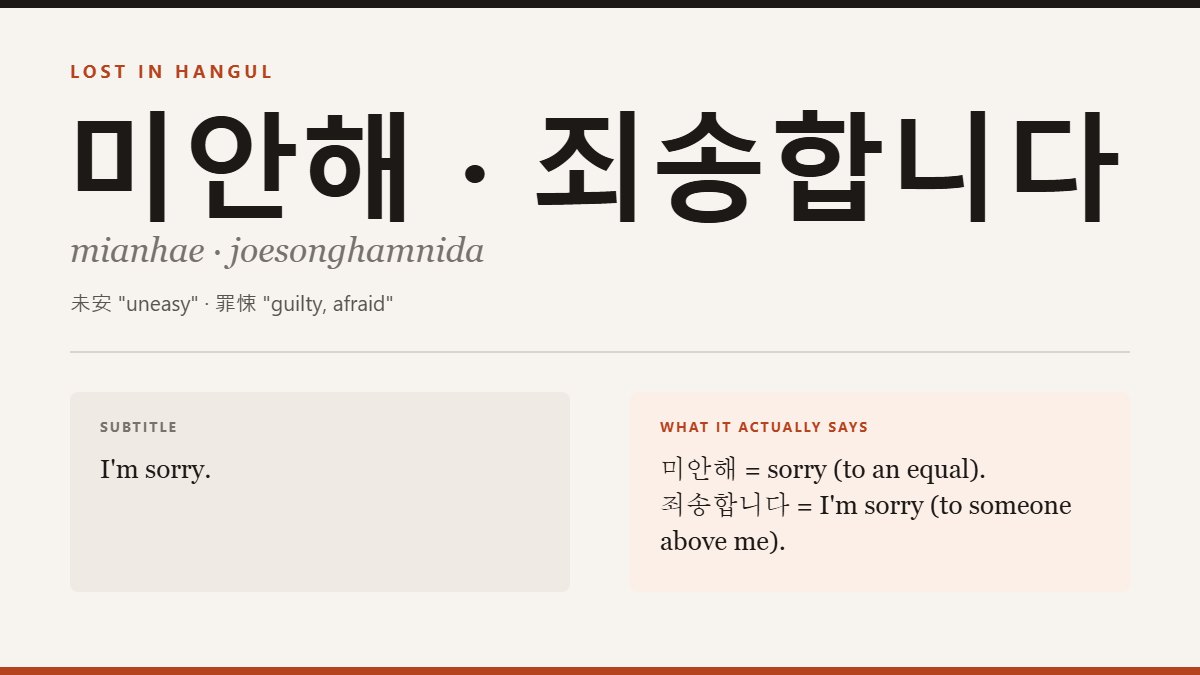
Korean has two main apologies. 미안해 is between equals or downward; 죄송합니다 is upward and heavier. Using the wrong one is noticeable — and 미안한데 often isn’t an apology at all.
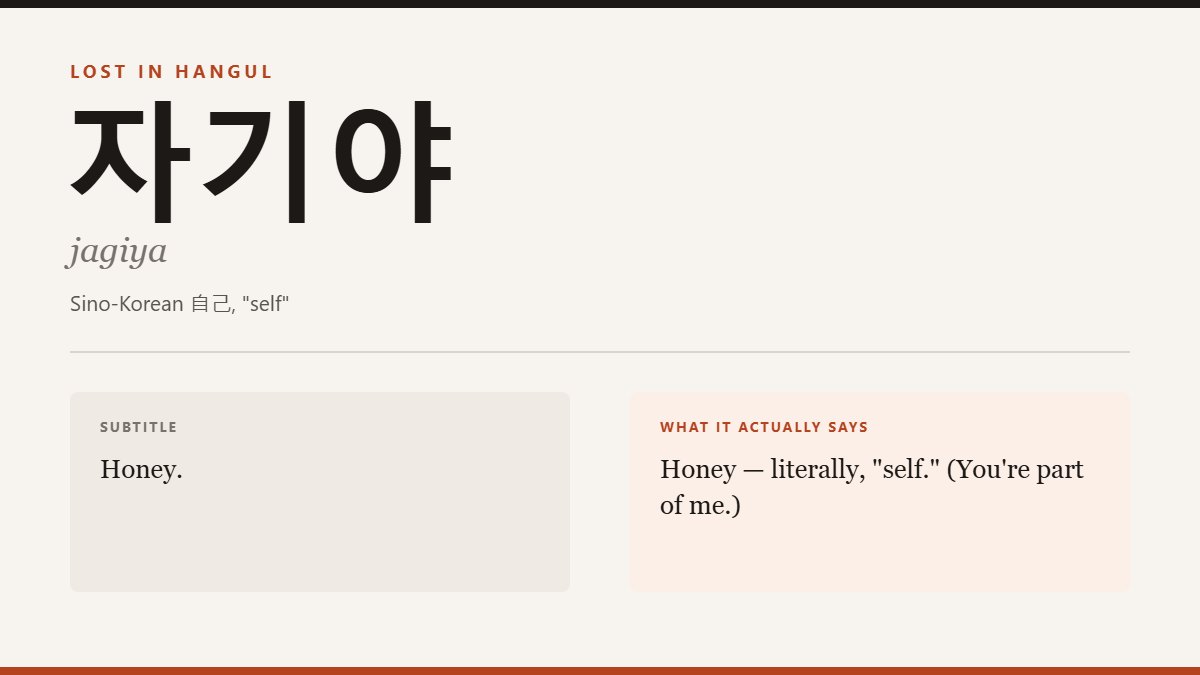
자기 means “oneself,” yet 자기야 is one of the most common things Korean couples call each other. Here is how it’s used, who else uses it, and how it compares with 여보.
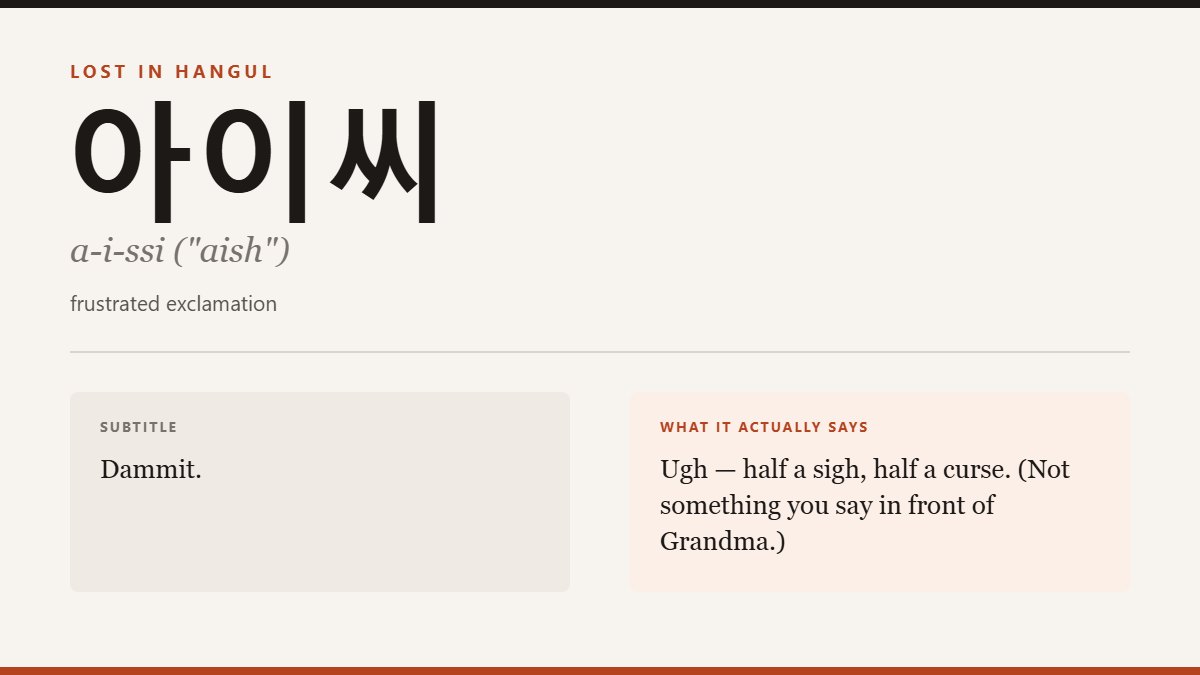
The sound fans spell “aish” is 아이씨 or 아씨: a frustrated mutter somewhere between a sigh and a curse. Whether it counts as swearing depends on who hears it.
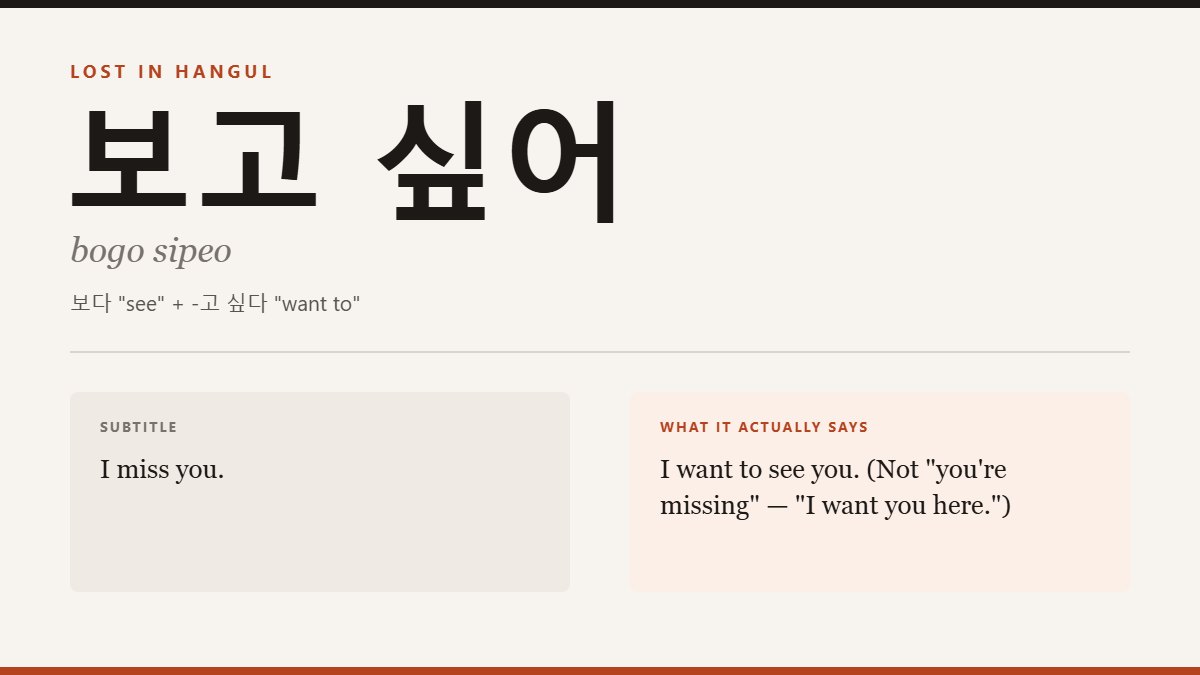
보고 싶어 is how Korean says “I miss you,” but it literally means “I want to see you.” That makes the feeling active rather than a lack — and it’s why it also works for movies.
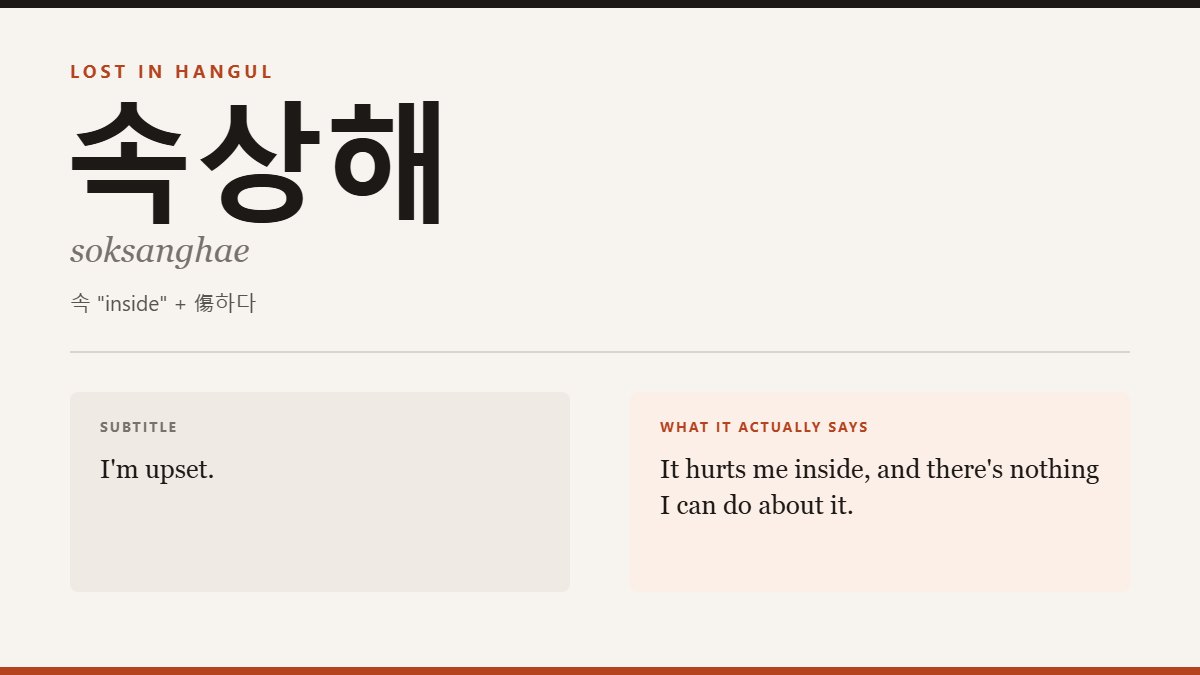
속상해 is being upset in a specific, inward way — hurt and frustrated by something you can’t fix. Parents say it about their children constantly. Here is how it differs from anger and 서운해.
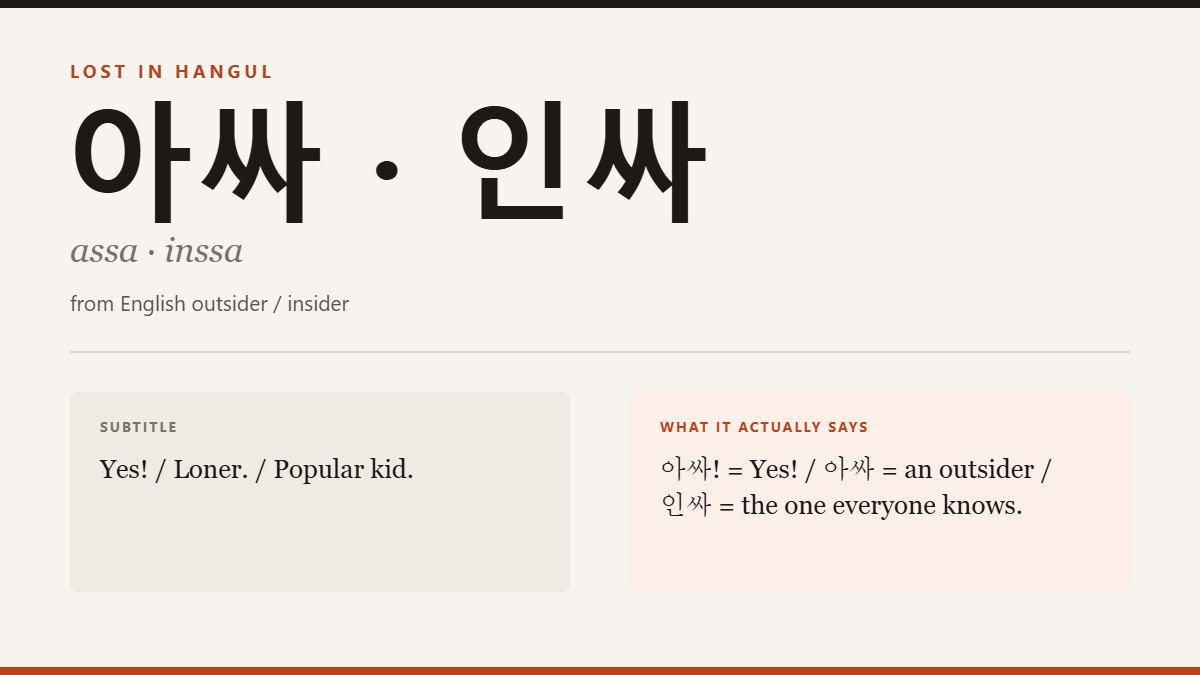
아싸 can be a victory cheer or short for “outsider,” and 인싸 is its opposite, the insider. Here is how Korean slang turned an English loanword into a social map.
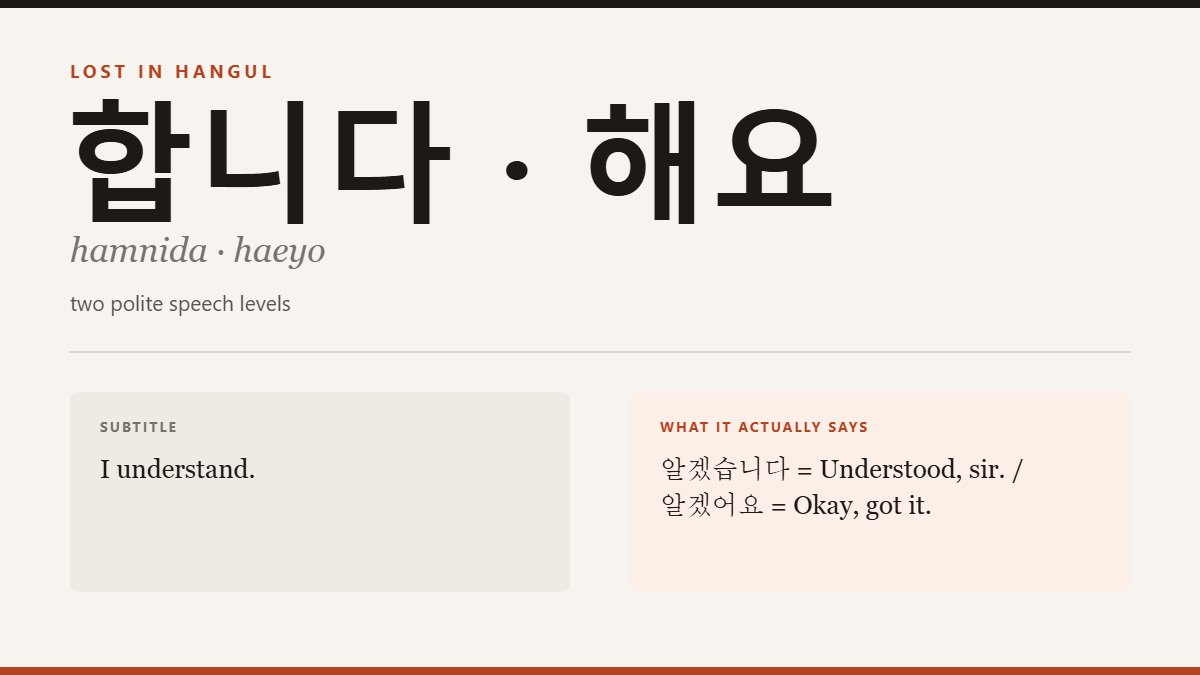
Korean has two everyday polite styles: the crisp, formal -습니다 and the warm, polite -요. A character switching between them tells you a lot. Subtitles show neither.
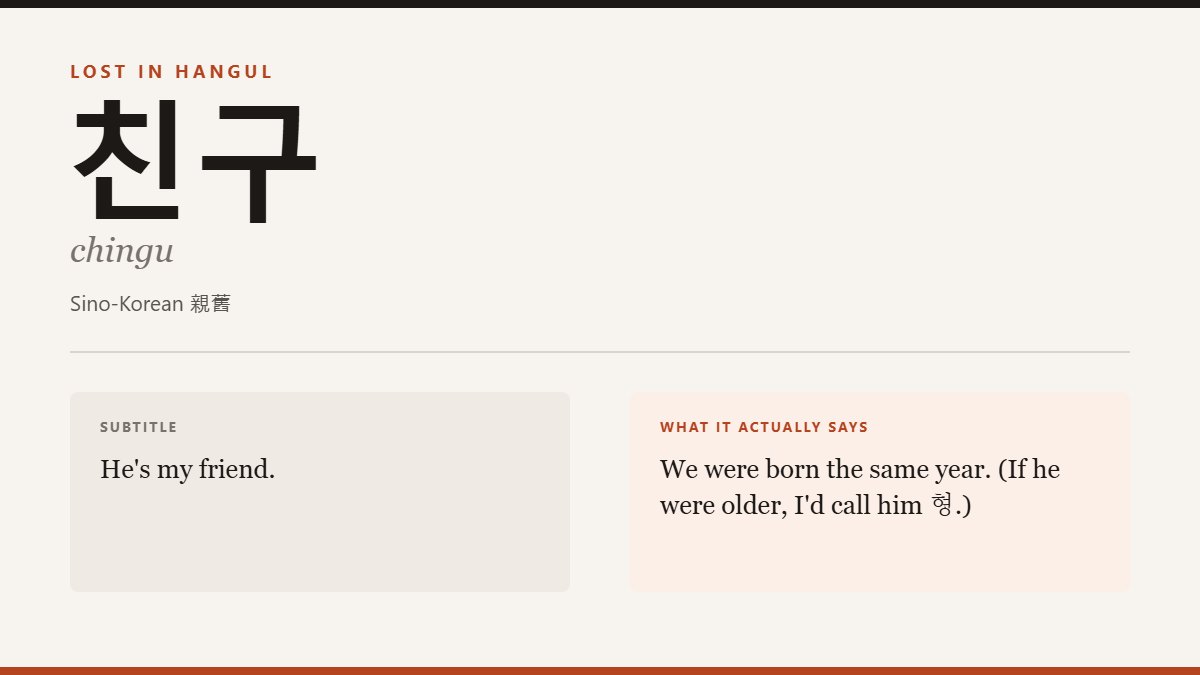
In Korean, 친구 usually means someone born in the same year as you. An older friend is 형, 누나, 오빠 or 언니; a younger one is 동생. That changes how friendship is talked about.