Skip to content

Lost in Hangul

  • Home
  • Untranslatable Words
  • Honorifics & Titles
  • Things They Say
  • Slang & Internet Korean
  • Subtitle Notes
  • About
  • Contact
  • Privacy Policy

“Gapjil” (갑질) — abusing the upper hand
October 1, 2026 by mataXinfo
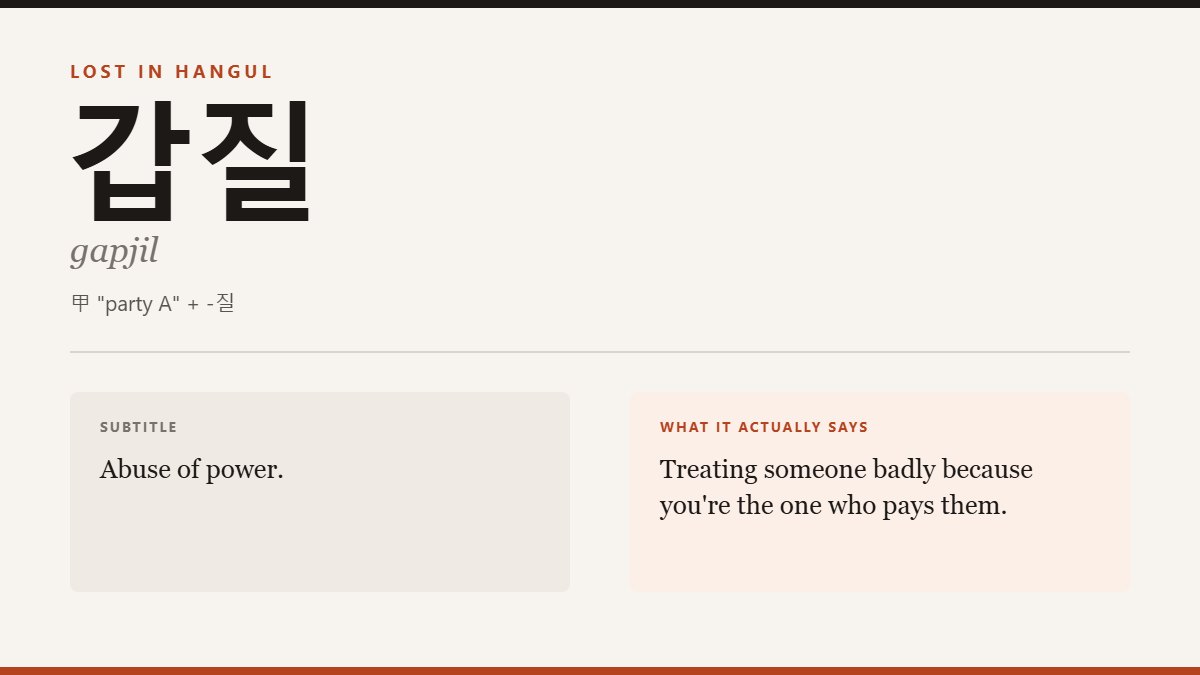
갑질 (gapjil) word card

갑질 is what happens when someone with power over you — a boss, a client, a customer — uses it to humiliate you. The word comes from contract language and became a national topic.
Categories Slang & Internet Korean Leave a comment

“Saranghae” (사랑해) — “I love you,” and how rarely it used to be said

October 1, 2026 by mataXinfo
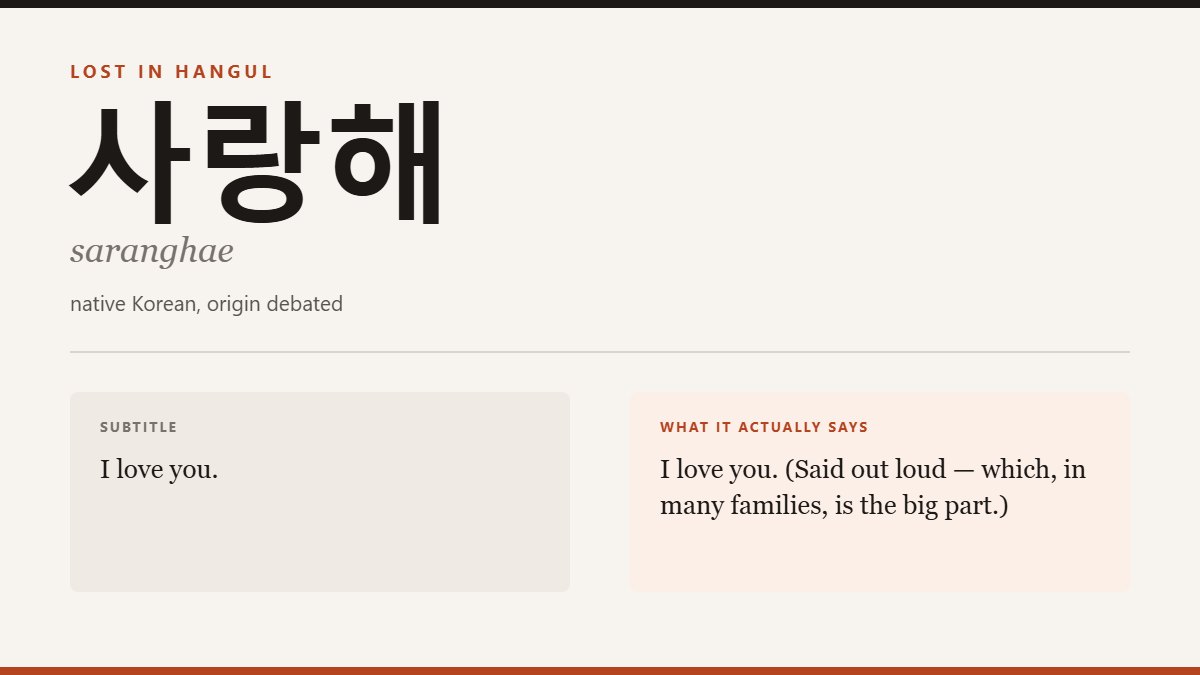
사랑해 (saranghae) word card

사랑해 means “I love you,” but for a long time many Korean families rarely said it out loud. The word’s history, its levels of politeness, and what gets said instead.
Categories Things They Say Leave a comment

“Aegyo” (애교) — acting cute on purpose

October 1, 2026 by mataXinfo
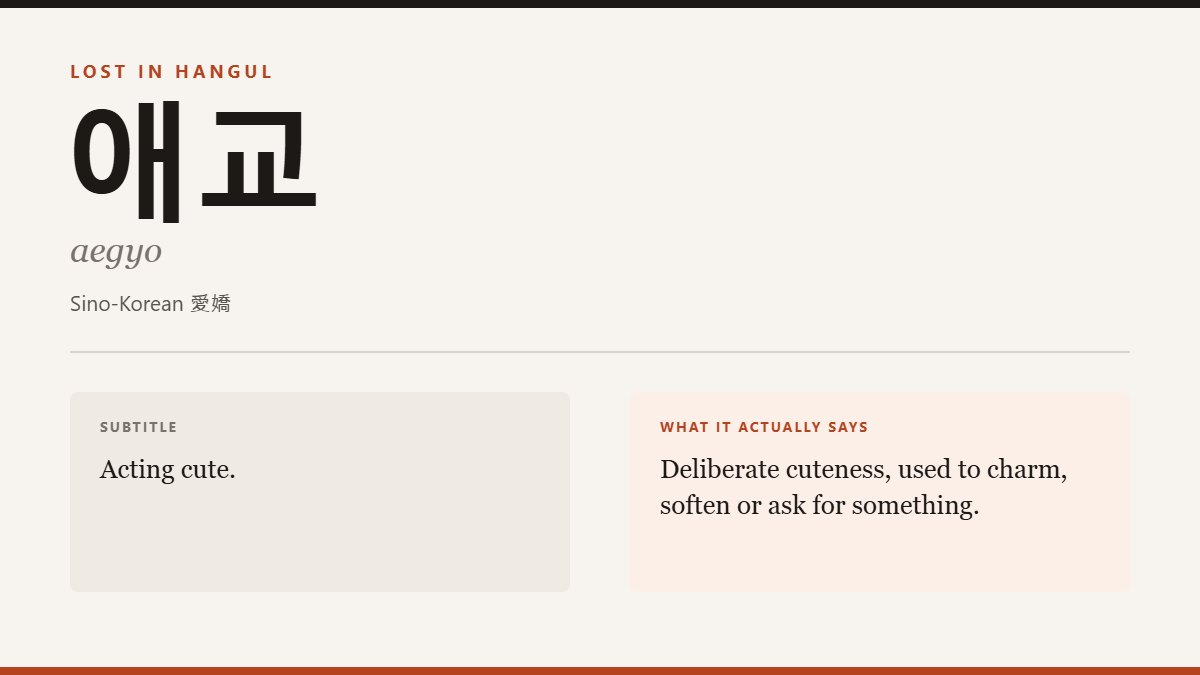
애교 (aegyo) word card

애교 is deliberately cute behaviour: the baby voice, the pout, the drawn-out “oppa~.” It is a social tool as much as a personality trait, and it is not only for women.
Categories Untranslatable Words Leave a comment

ㅋㅋㅋ vs ㅎㅎ — how Koreans laugh in text, and which one is cold

September 30, 2026 by mataXinfo
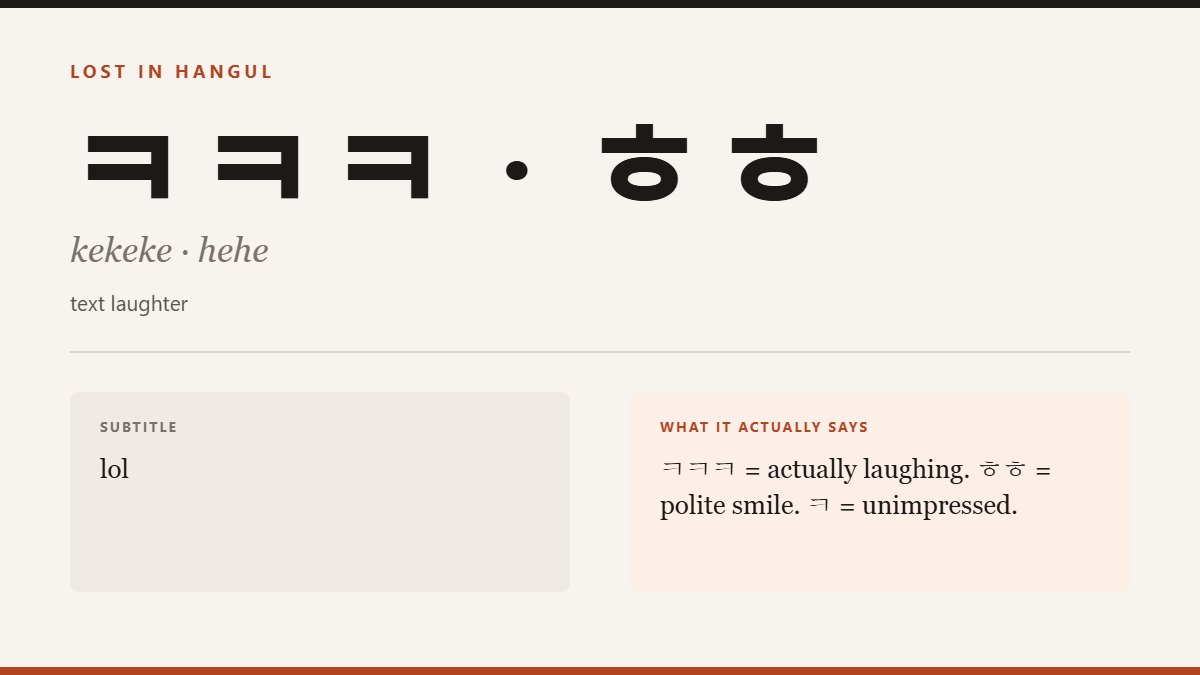
ㅋㅋㅋ · ㅎㅎ (kekeke · hehe) word card

ㅋㅋㅋ and ㅎㅎ both mean laughter in Korean texting, but they don’t feel the same. One is real laughter, one is a polite smile — and a single ㅋ can read as ice.
Categories Slang & Internet Korean Leave a comment

The verbs that change for your grandmother — and why subtitles can’t show it

September 30, 2026 by mataXinfo
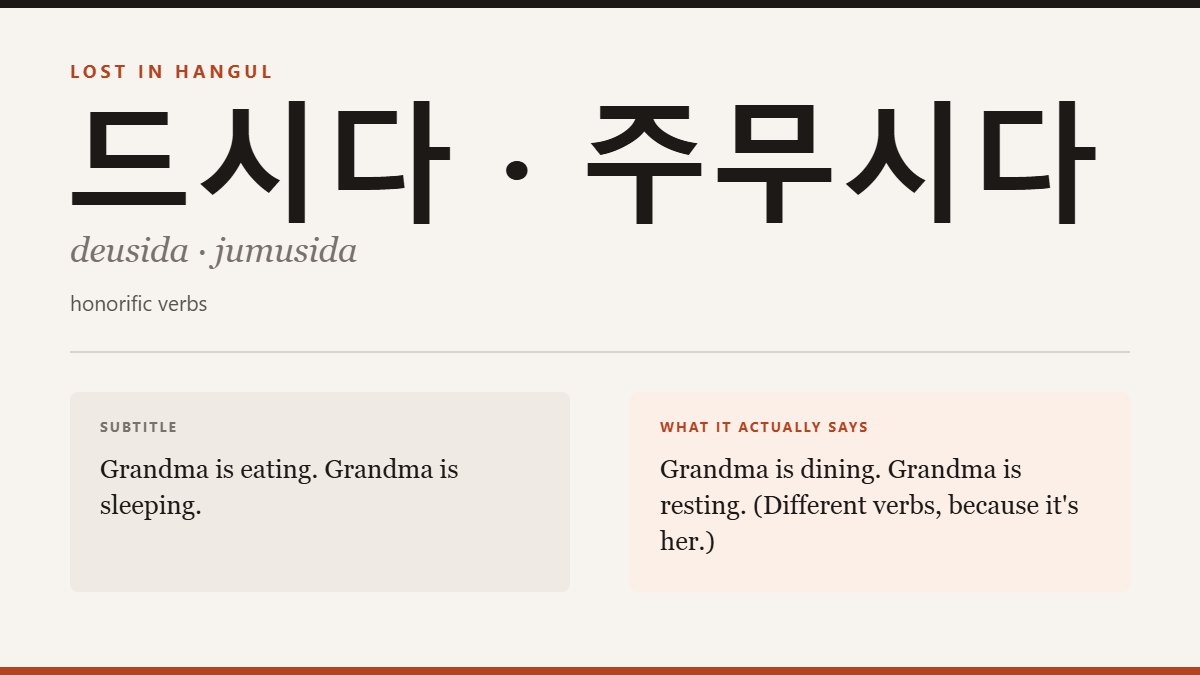
드시다 · 주무시다 (deusida · jumusida) word card

Korean doesn’t only add polite endings. Some verbs and nouns swap out entirely when the subject is someone you respect. English has no equivalent, so subtitles can’t show it.
Categories Subtitle Notes Leave a comment

“Ajumma” and “Ajusshi” (아줌마·아저씨) — the words for everyone’s aunt and uncle

September 30, 2026 by mataXinfo
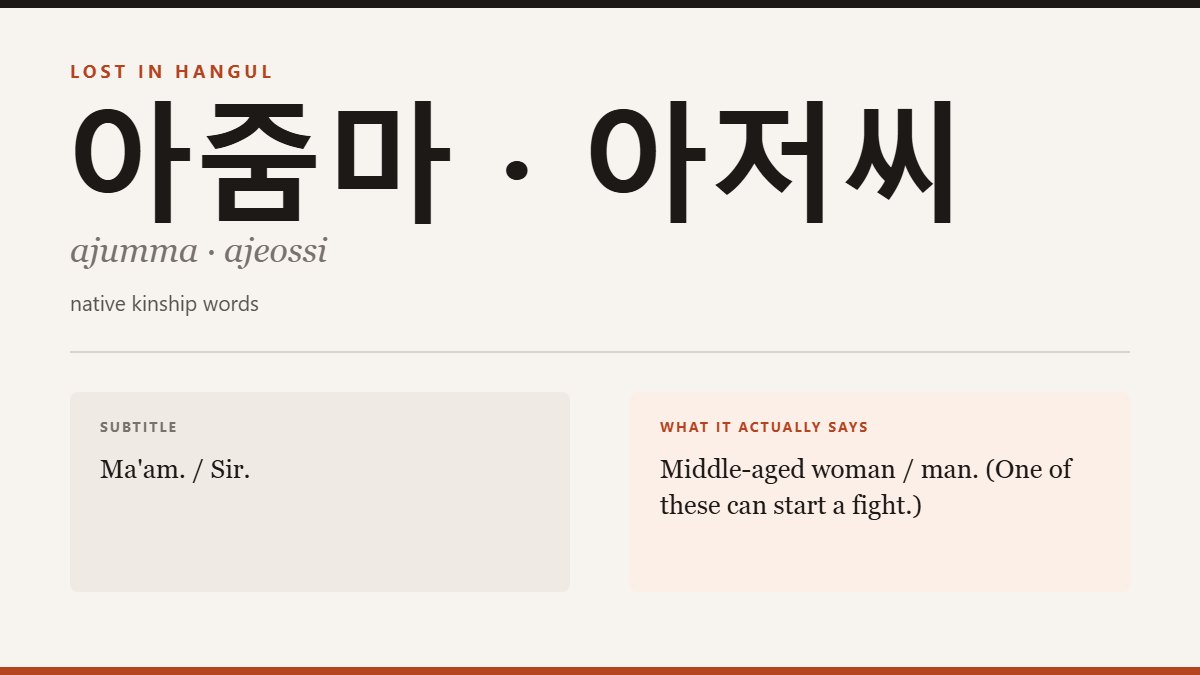
아줌마 · 아저씨 (ajumma · ajeossi) word card

아줌마 and 아저씨 are what you call a middle-aged woman or man you don’t know. One of them is far riskier to use than the other, and Korean speakers have workarounds.
Categories Honorifics & Titles Leave a comment

“Sseom” (썸) — the “something” before dating

September 29, 2026 by mataXinfo
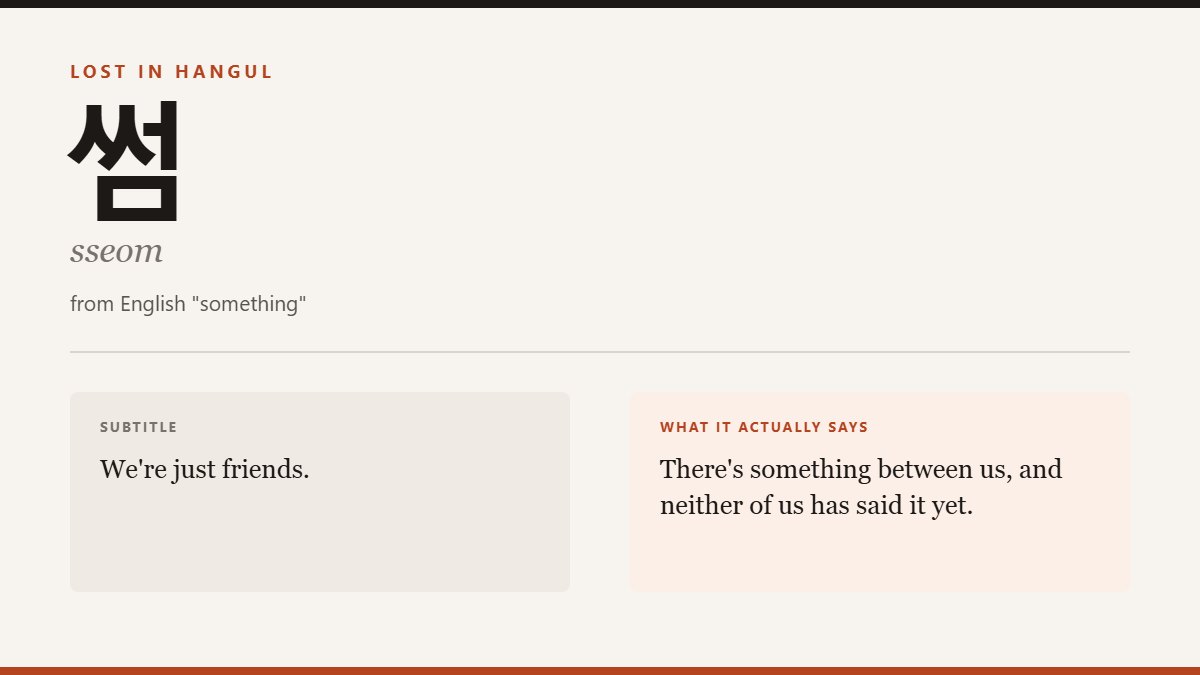
썸 (sseom) word card

썸 is the stage before a relationship, when both people are clearly interested and nobody has said so. Korean has a word for it; English mostly says “we’re talking.”
Categories Slang & Internet Korean Leave a comment

“Jinjja” (진짜) — “really,” “real,” and “seriously?”

September 29, 2026 by mataXinfo
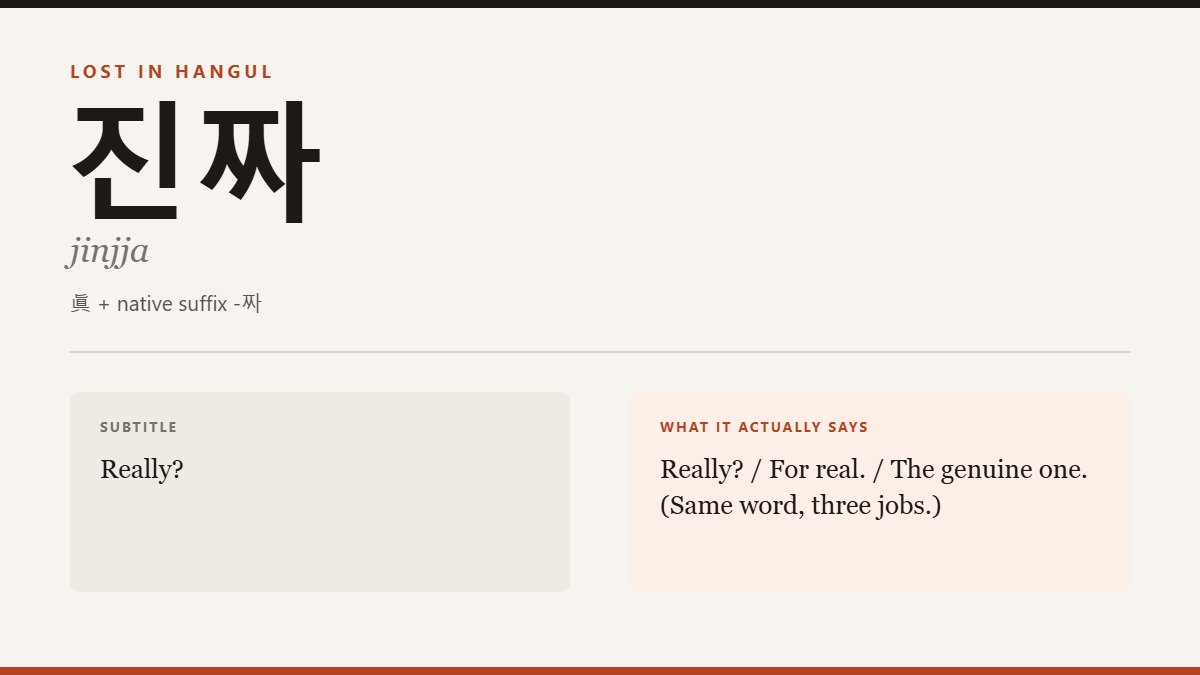
진짜 (jinjja) word card

진짜 means real, really, and “are you serious?” It is one of the most frequent words in spoken Korean. Here is how it differs from 정말, and what 레알 is doing next to it.
Categories Things They Say Leave a comment

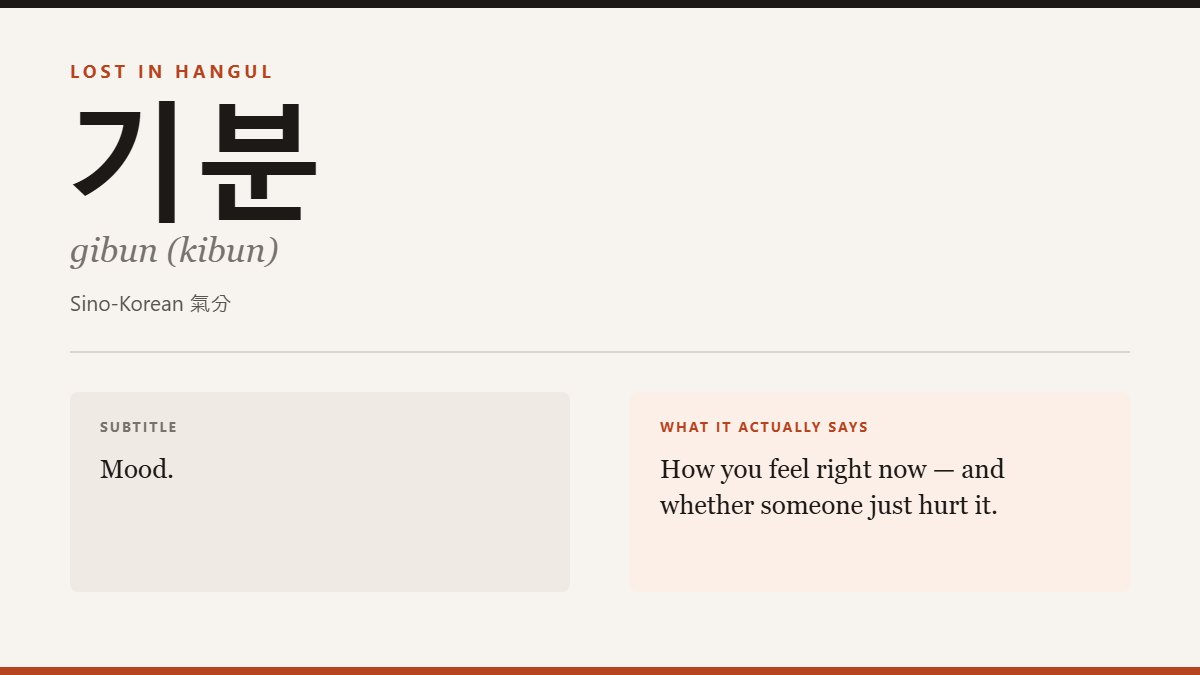
“Kibun” (기분) — mood, feelings, and the business-book myth

September 29, 2026 by mataXinfo
기분 (gibun (kibun)) word card

기분 means mood or how you feel right now. Older business guides turned it into a mysterious Korean concept of “face.” The everyday word is simpler and more useful than that.
Categories Untranslatable Words Leave a comment

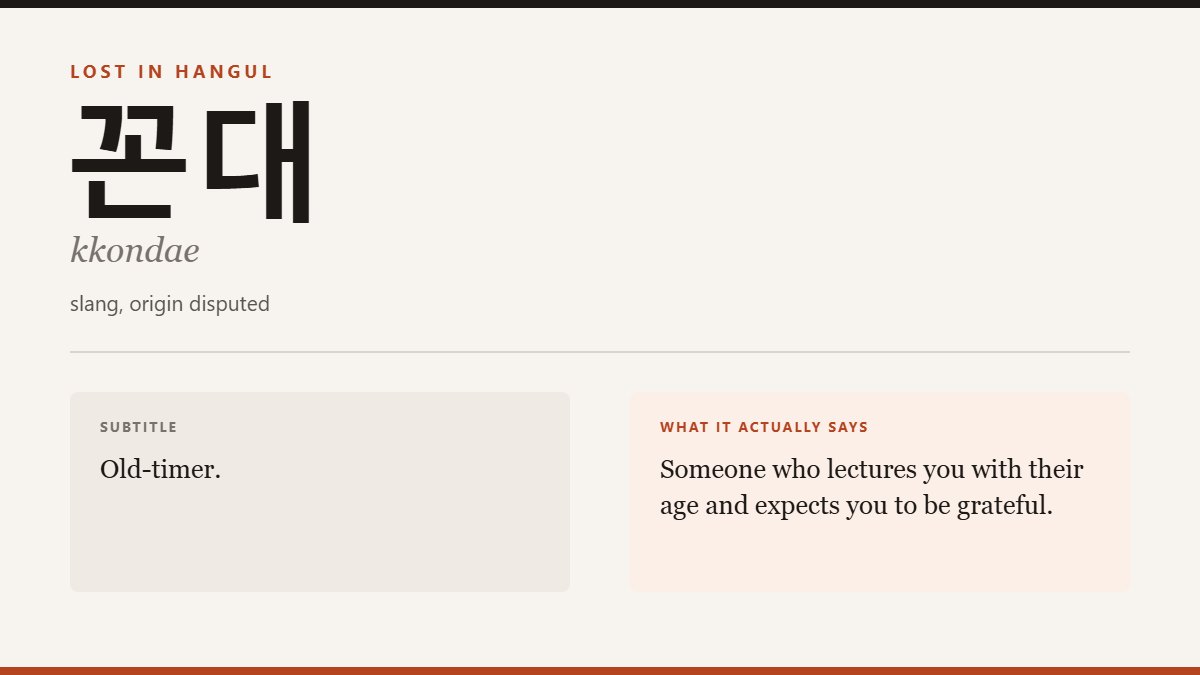
“Kkondae” (꼰대) — the person who starts with “back in my day”

September 28, 2026 by mataXinfo
꼰대 (kkondae) word card

꼰대 is the older person — or the young one who acts old — who lectures, assumes they’re right, and expects deference for it. Here is what the word covers and why it caught on.
Categories Slang & Internet Korean Leave a comment

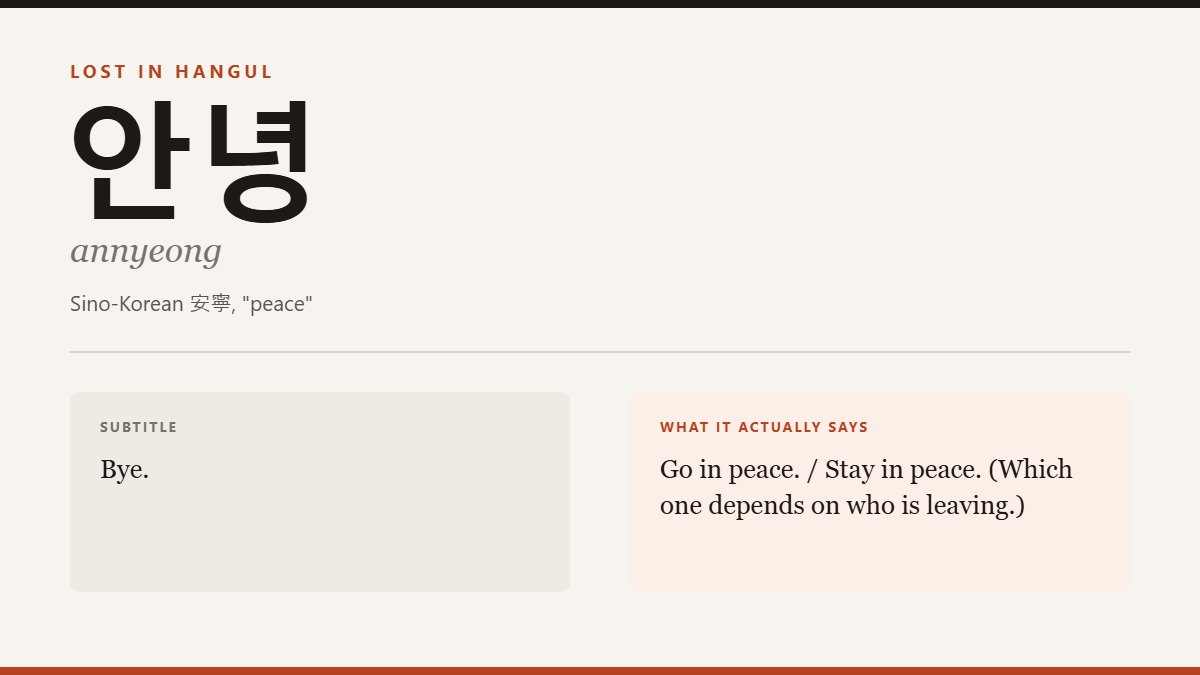
“Annyeong” (안녕) — hello and goodbye, and the two goodbyes subtitles merge

September 28, 2026 by mataXinfo
안녕 (annyeong) word card

안녕 means both hello and goodbye. The polite goodbyes split in two depending on who is leaving — and English subtitles collapse both into “Bye.”
Categories Subtitle Notes Leave a comment

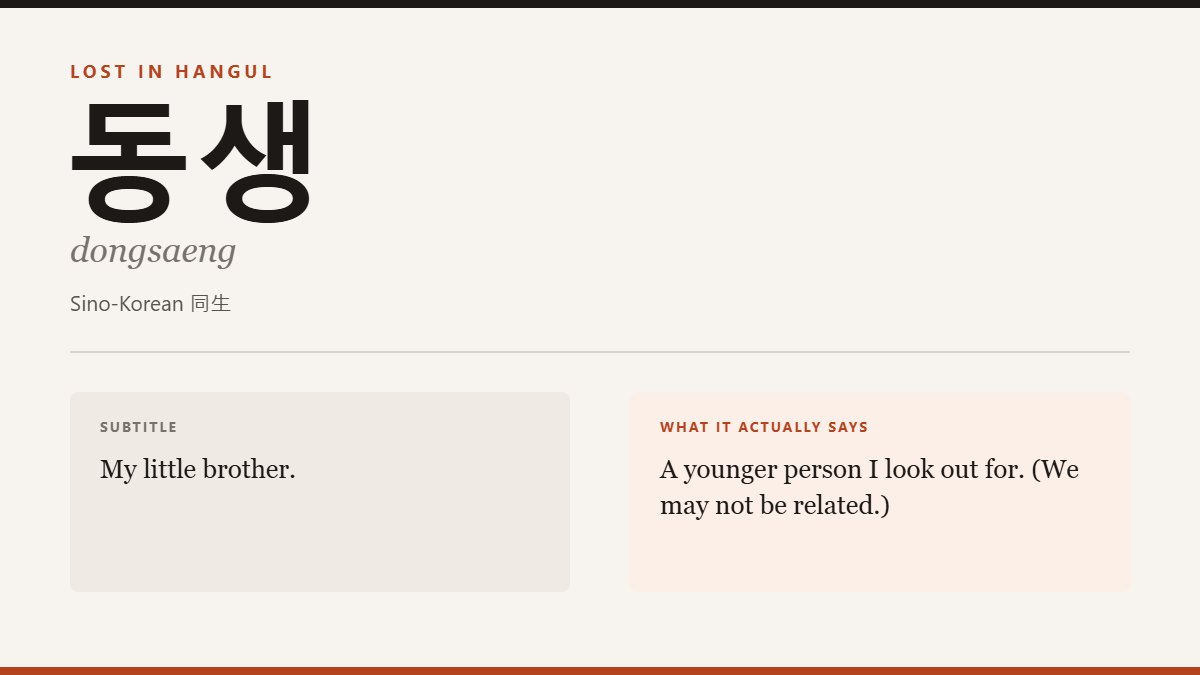
“Dongsaeng” (동생) — younger sibling, and anyone you’ve adopted as one

September 28, 2026 by mataXinfo
동생 (dongsaeng) word card

동생 means younger sibling. It also means the younger friend, coworker or neighbour you look out for — and that second meaning is the one subtitles usually miss.

Categories Honorifics & Titles Leave a comment
Older posts
Newer posts
← Previous Page1 … Page3 Page4 Page5 … Page8 Next →

What this is

Korean words, honorifics and lines that subtitles cannot carry across. One word per article: what it means, what the subtitle says, and what got dropped.

How these are written →

Start here

  • Gosaenghaesseo — not "good job"
  • Jeong — attachment you did not choose
  • Why she calls him Oppa
  • Ani — the word that is not "no"

Categories

  • Honorifics & Titles (18)
  • Slang & Internet Korean (18)
  • Subtitle Notes (16)
  • Things They Say (20)
  • Untranslatable Words (19)

Search

© 2026 Lost in Hangul • Built with GeneratePress