The moment they switch to 반말 — what just happened between them
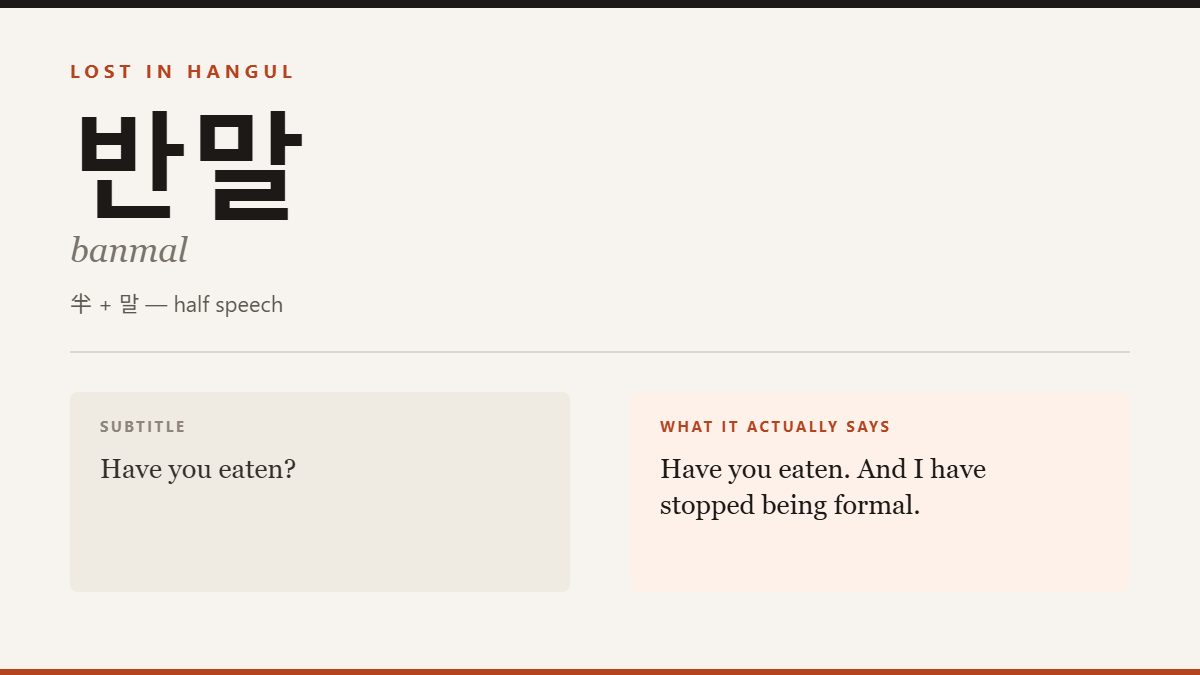
Korean grammar forces a choice about the listener in every sentence. Dropping the polite ending either lets someone in or insults them, and English subtitles show neither.
Korean grammar forces a choice about the listener in every sentence. Dropping the polite ending either lets someone in or insults them, and English subtitles show neither.
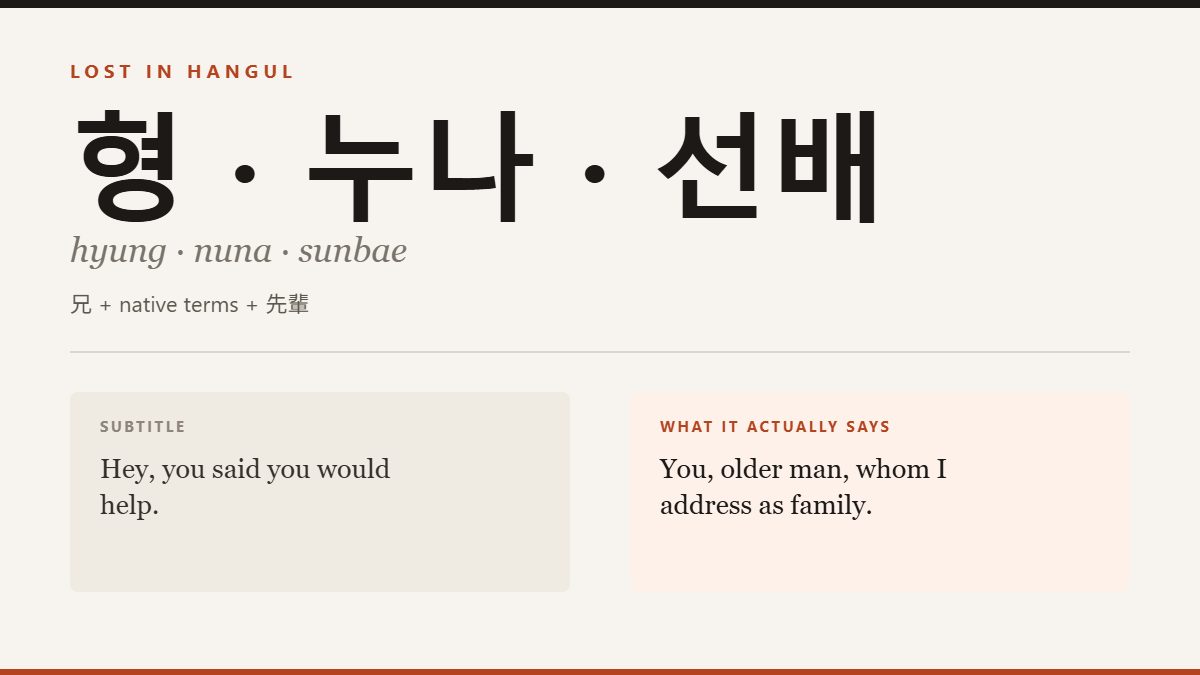
Korean mostly does not say “you”. It says what you are to the speaker, and which word gets used depends on the speaker’s gender too. English subtitles flatten four words into one pronoun.
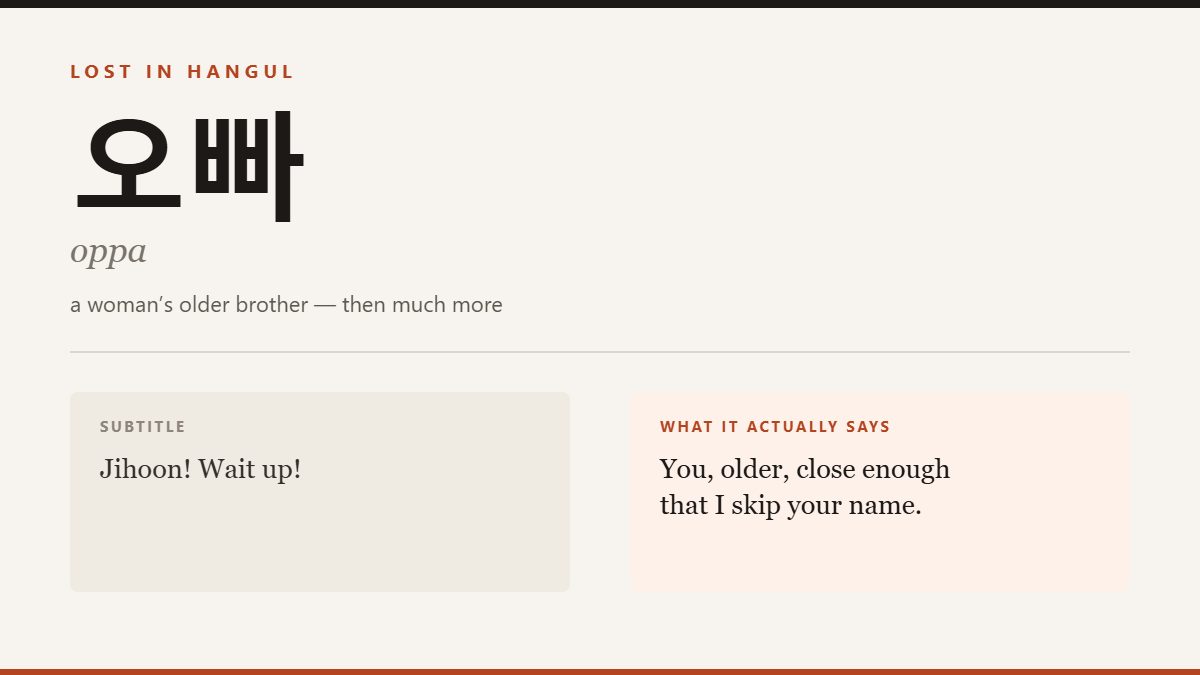
One word tells you the speaker is a woman, the listener is an older man, and they are close. English has nothing that carries any of it, so subtitles print his name and three facts disappear.
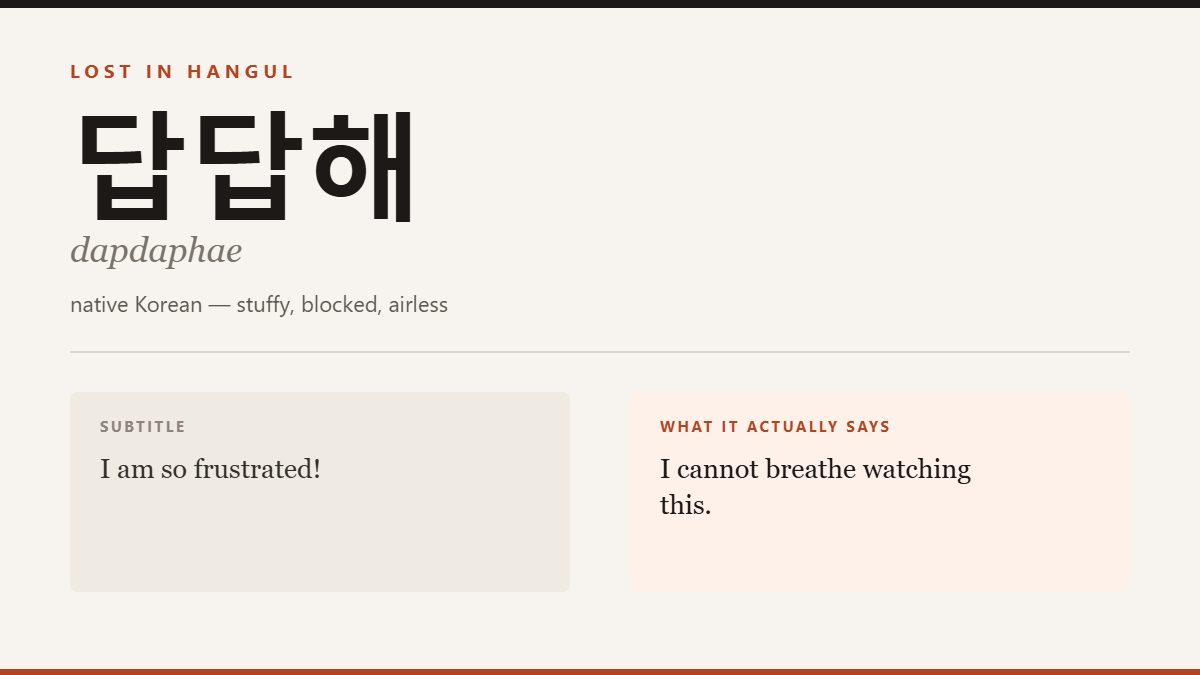
The word starts in the chest, not the mind. It means blocked, airless, unable to breathe — which is also why K-drama fandom talks about sweet potatoes and fizzy drinks.
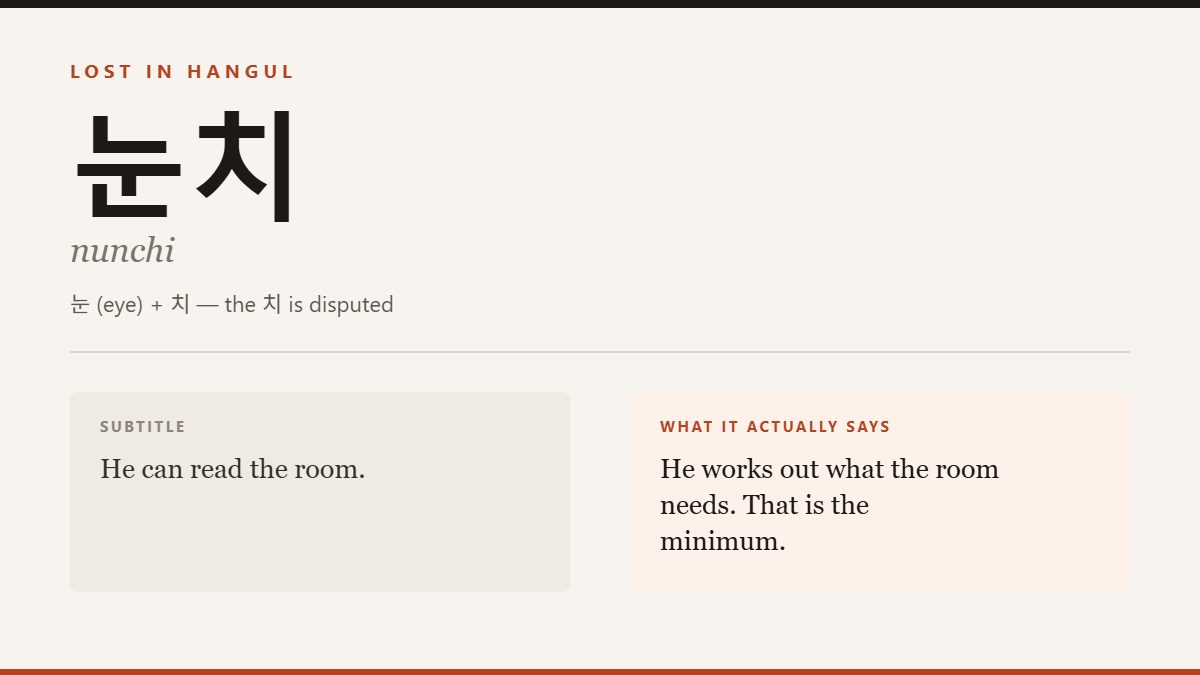
Reading the room is a talent in English. In Korean it is a duty, lacking it is an insult, and the same word also describes the exhaustion of monitoring someone more powerful than you.
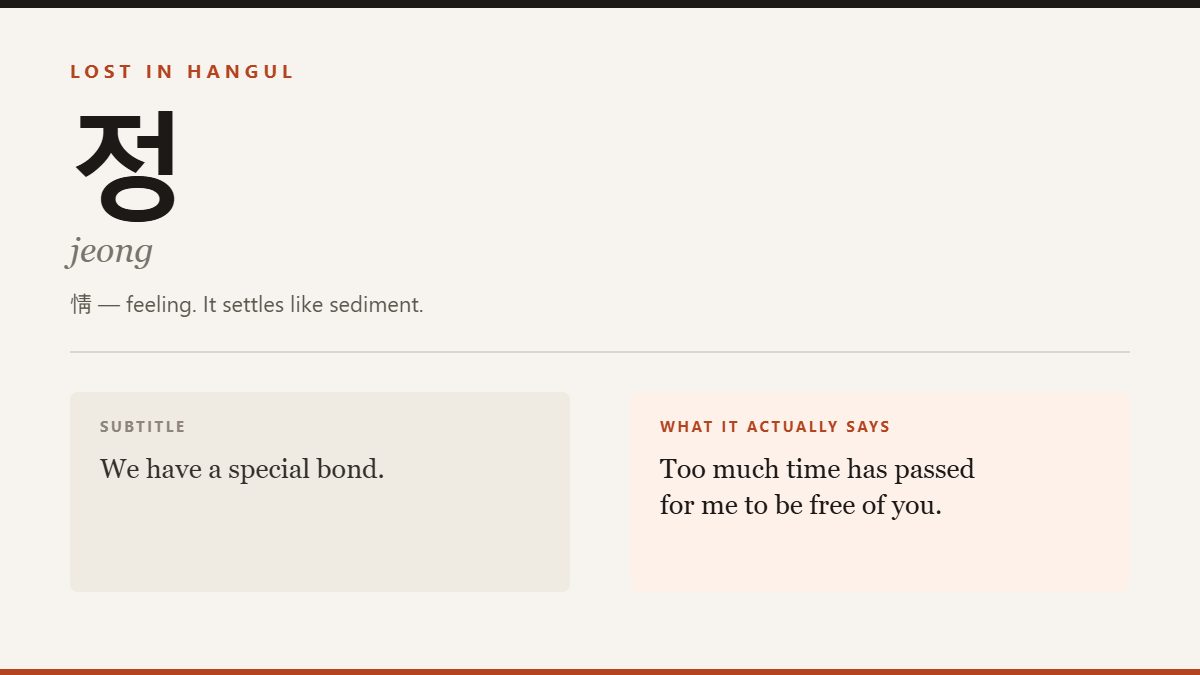
Subtitles call it affection or a special bond. Both add something the Korean word refuses to say: that you like the person. The stock phrase about “ugly jeong” proves it does not.
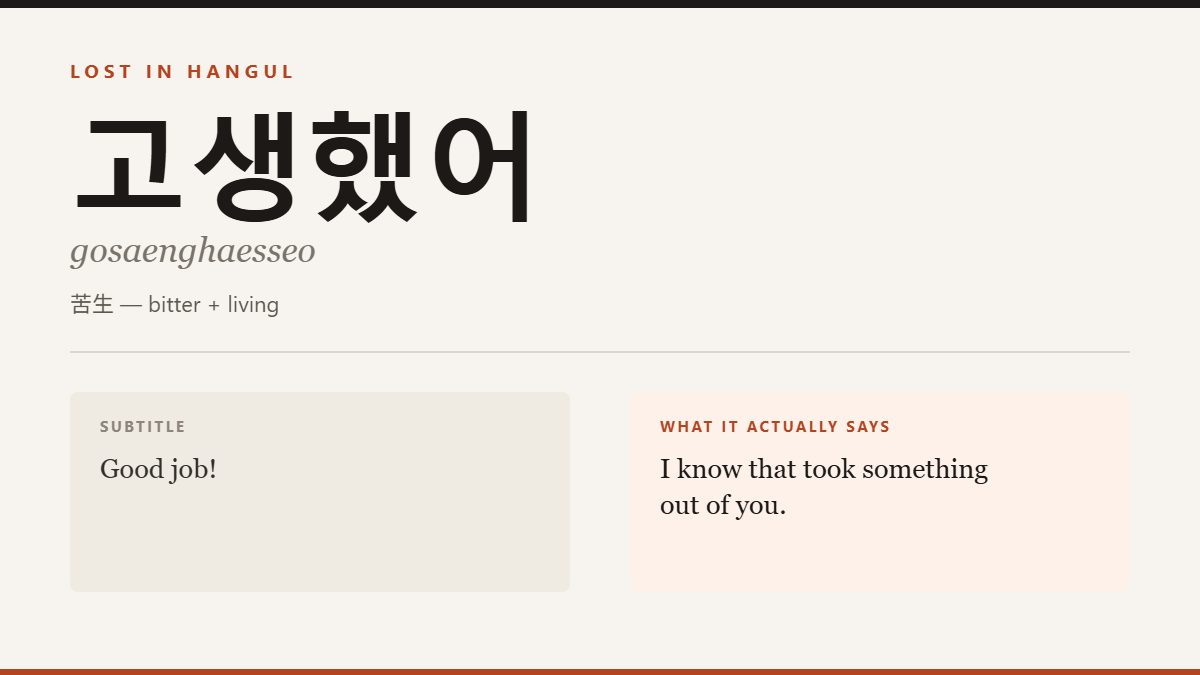
The subtitle says “Good job.” The word literally means “you did bitter living,” and it says nothing at all about whether you succeeded. That gap explains a lot of crying scenes.