“Heol” (헐) — the one-syllable jaw drop
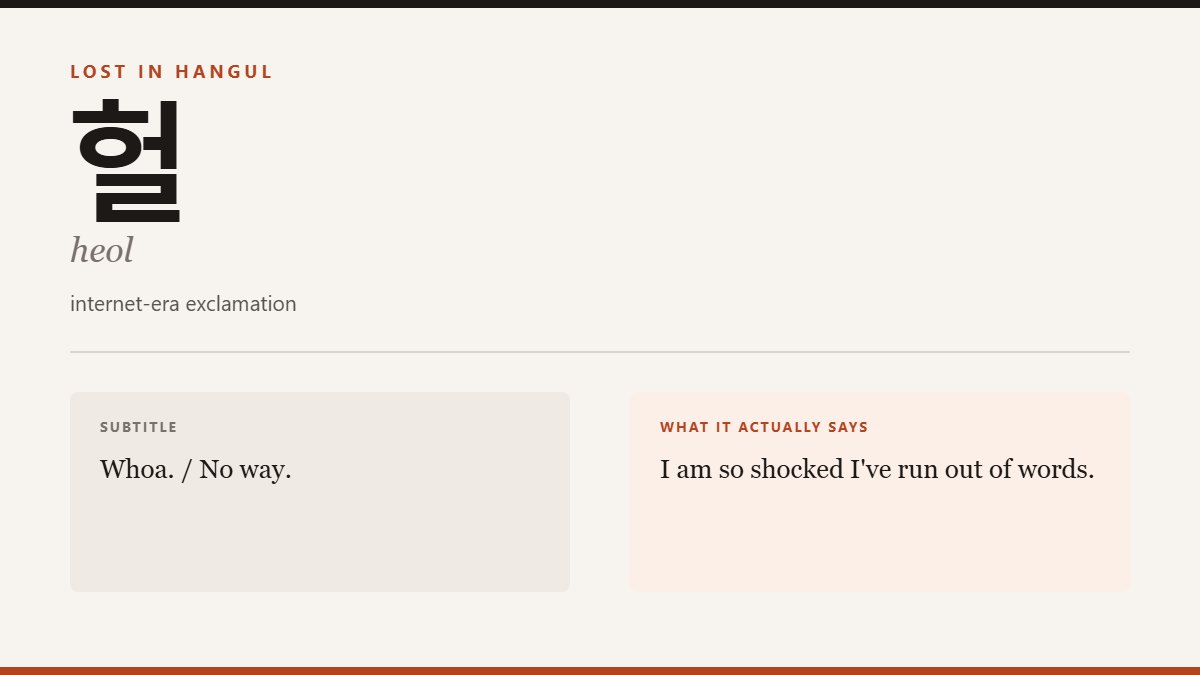
헐 is what Korean speakers say when they cannot believe what they just heard. It is casual, a little dramatic, and nobody is quite sure where it came from.
 mataXinfo
헐 is what Korean speakers say when they cannot believe what they just heard. It is casual, a little dramatic, and nobody is quite sure where it came from.
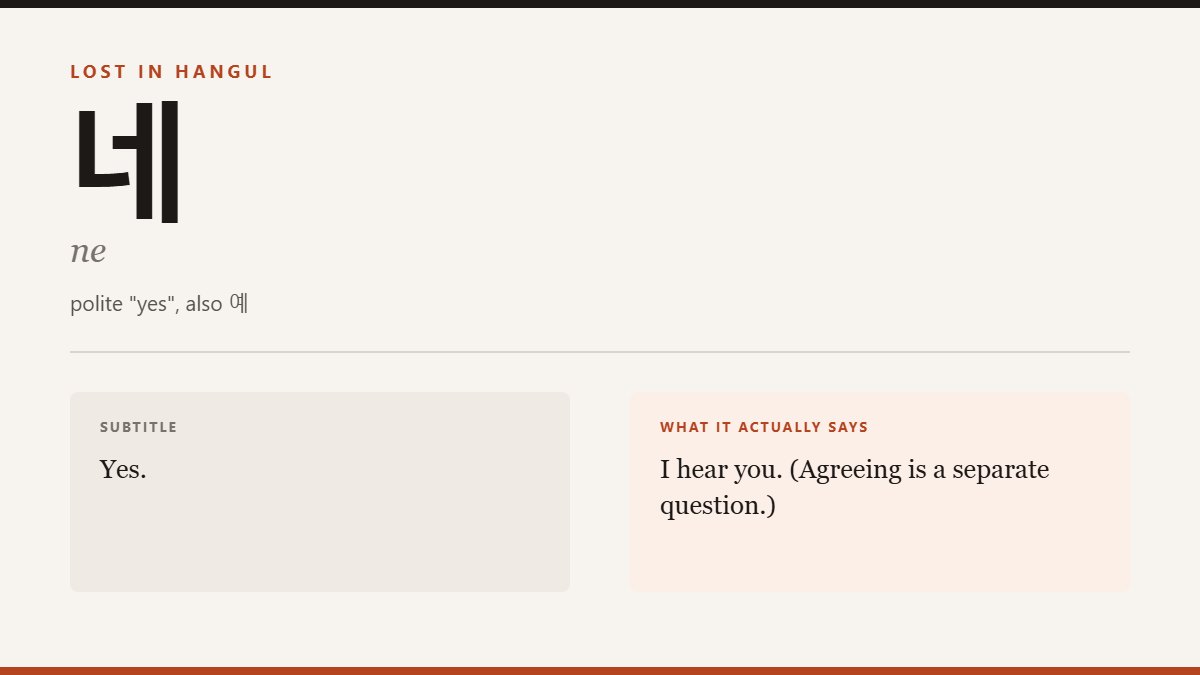
네 means yes, but it also means “I’m listening,” “pardon?”, “I’m here,” and — in answer to a negative question — “right, I didn’t.” Here is how to tell which.
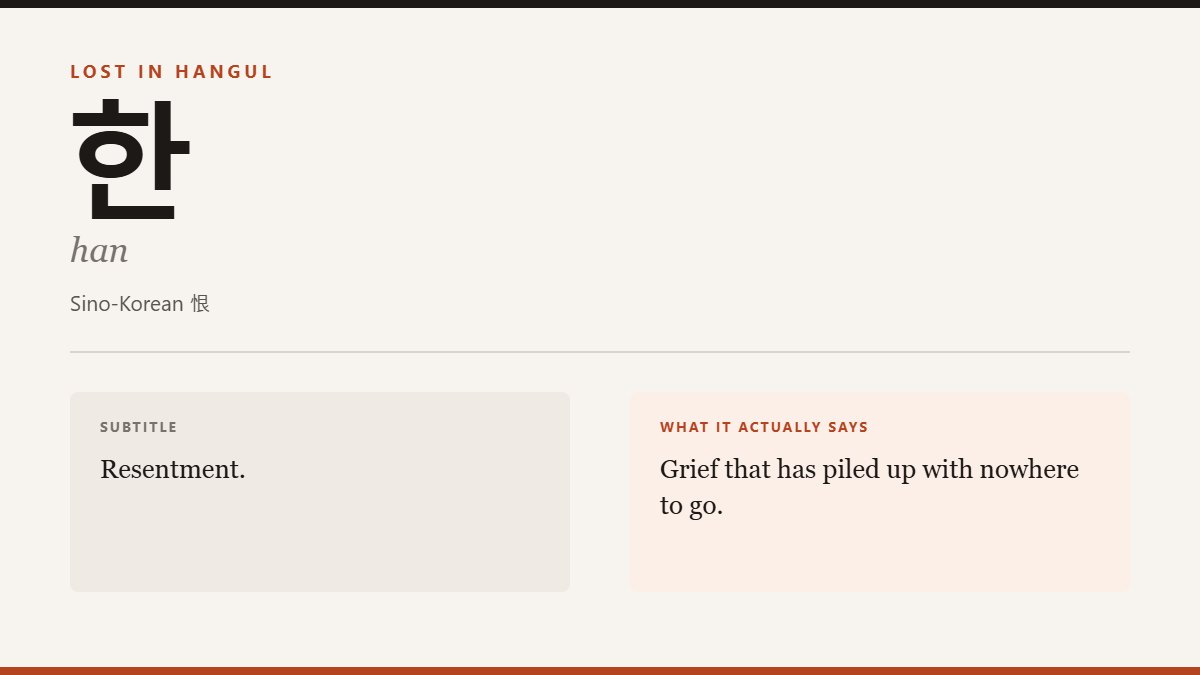
Han is the grief or resentment that builds when a wrong can’t be answered. It is also, in everyday Korean, something you “release” by finally eating the thing you always wanted.
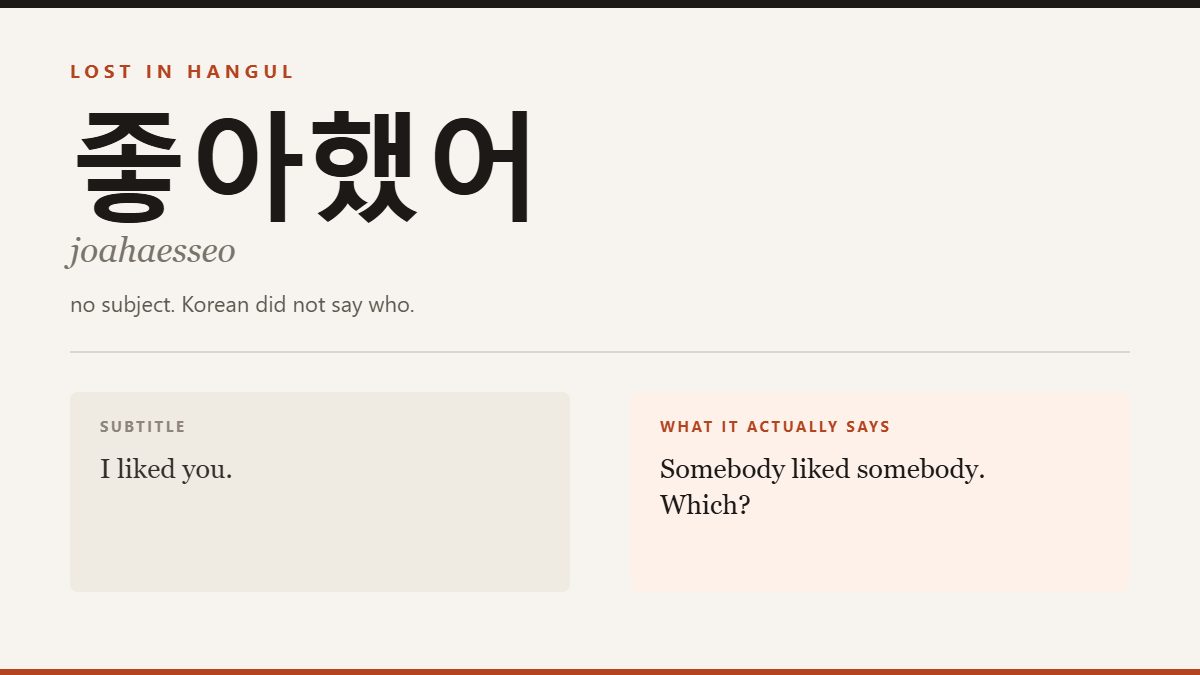
Korean leaves the subject out whenever context covers it. English cannot, so every subtitle contains a decision about who the sentence was about — and sometimes the vagueness was the point.
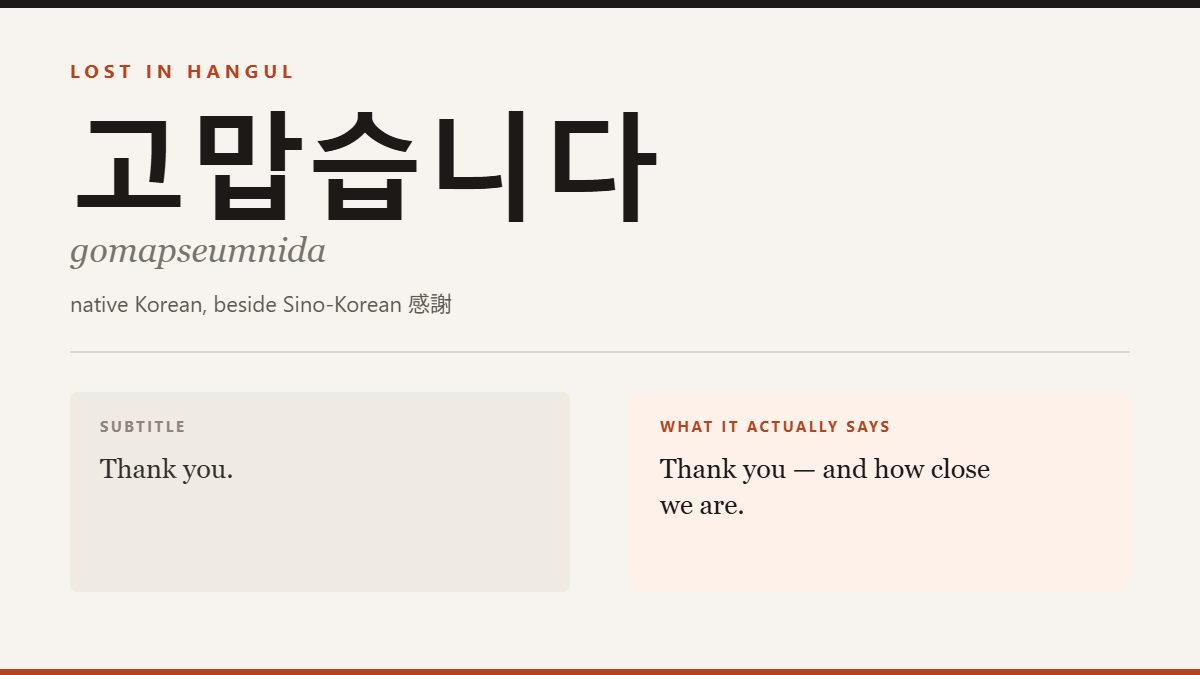
One is native Korean, one is Sino-Korean, and the choice is a small signal about distance. Neither is wrong, and most speakers say they do not think about it.
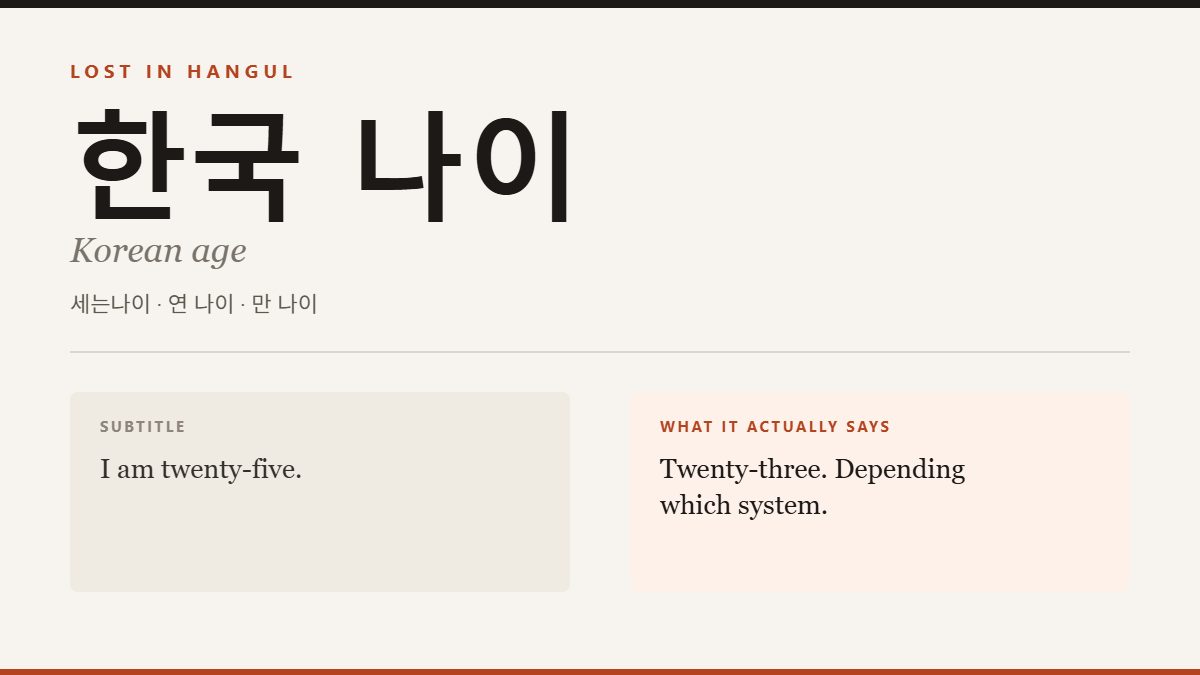
Born at one, everyone ageing together on New Year’s Day, and a legal change in 2023 that everyday speech has not finished catching up with.
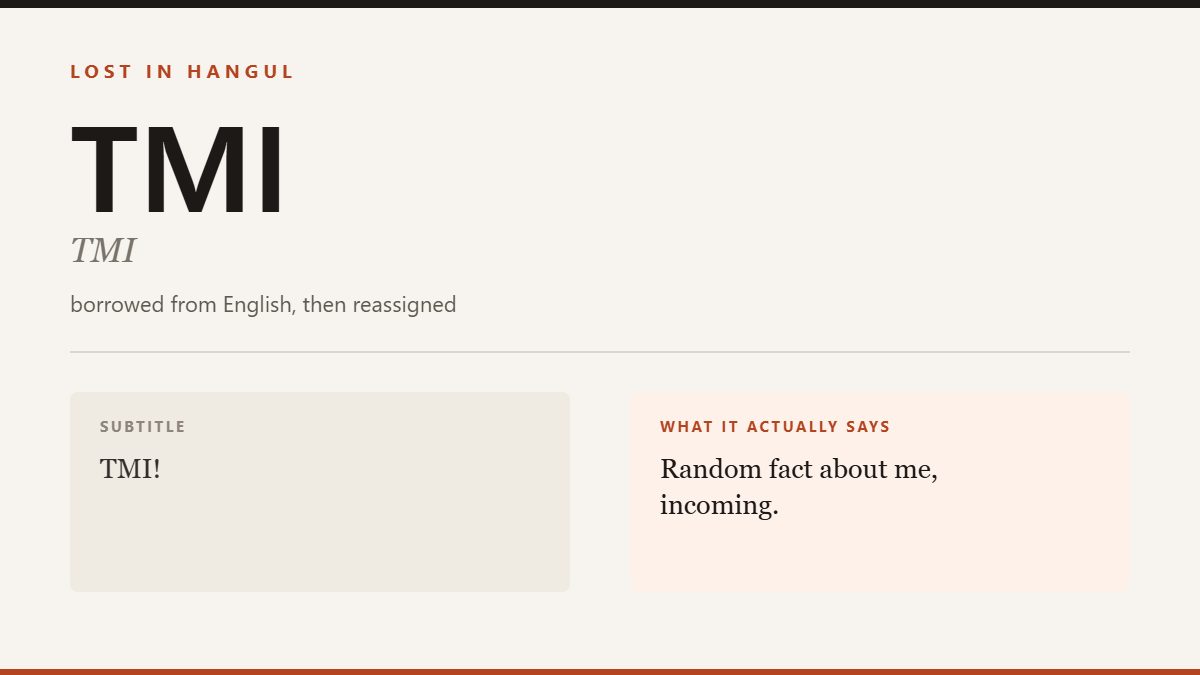
Borrowed from English, reassigned within a few years. In Korean it introduces a small personal fact you are volunteering, which is why leaving it untranslated makes the subtitle less accurate.
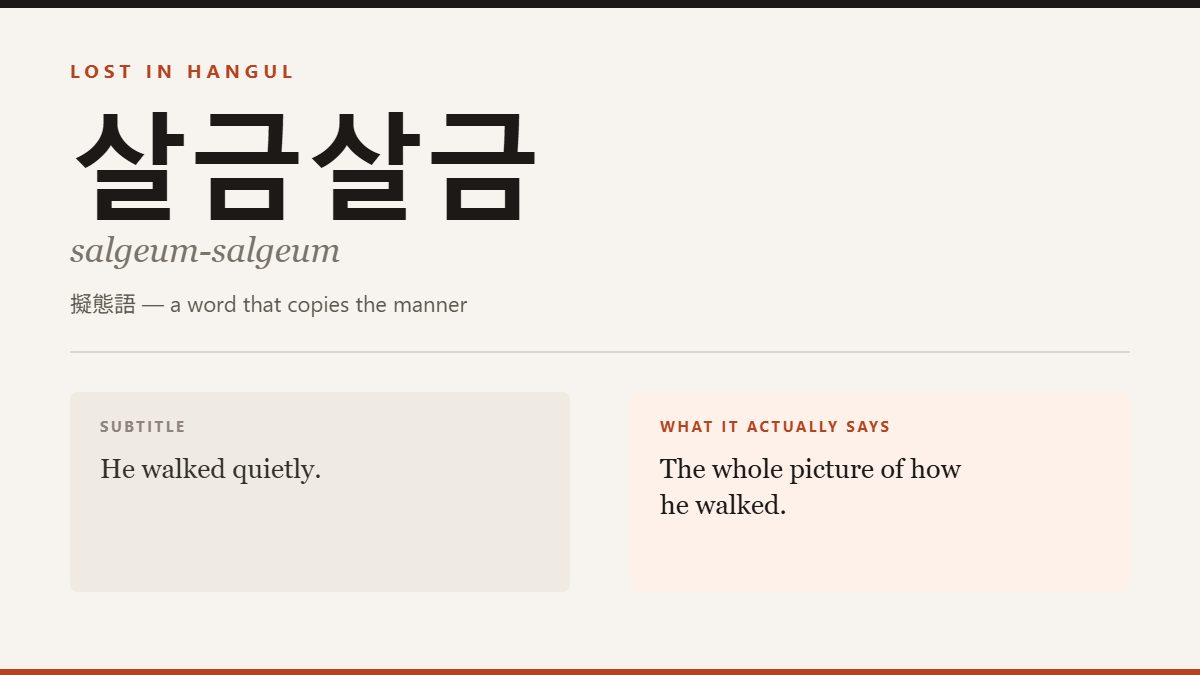
English has bang and crash. It has nothing for the family of words that describe the way a thing glitters, creeps or chews — which is most of a Korean variety caption.
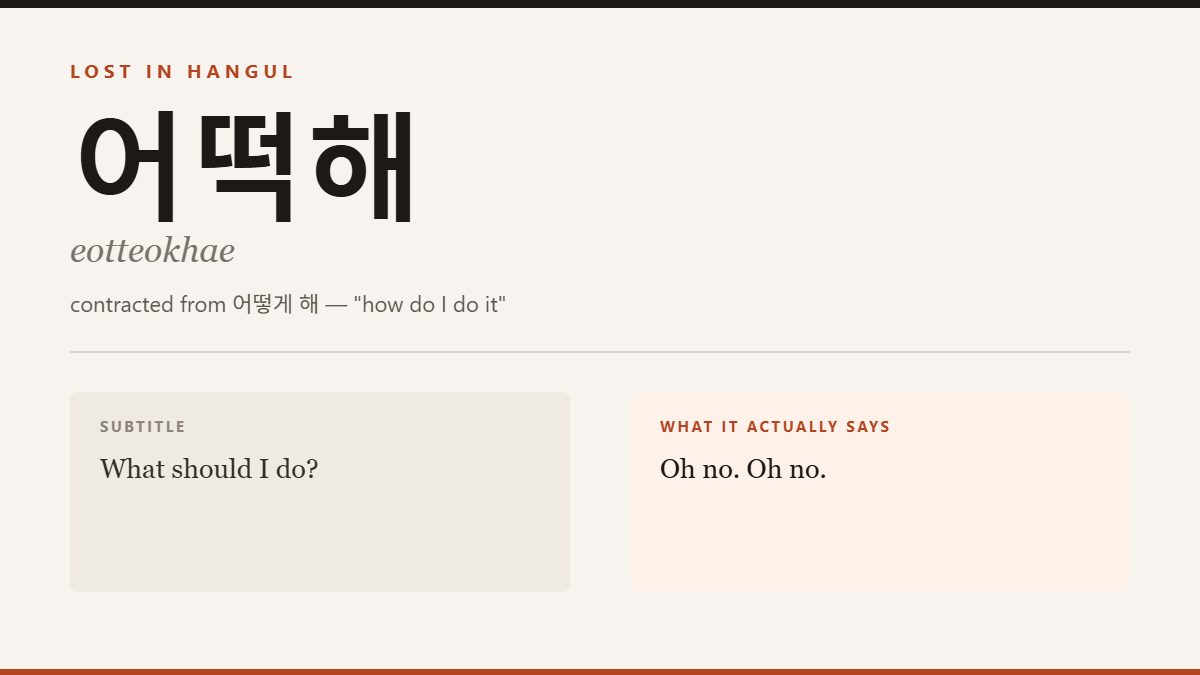
Subtitles write “what should I do?” and turn a wail into a request for advice. It also doubles as a squeal at something too cute to handle.
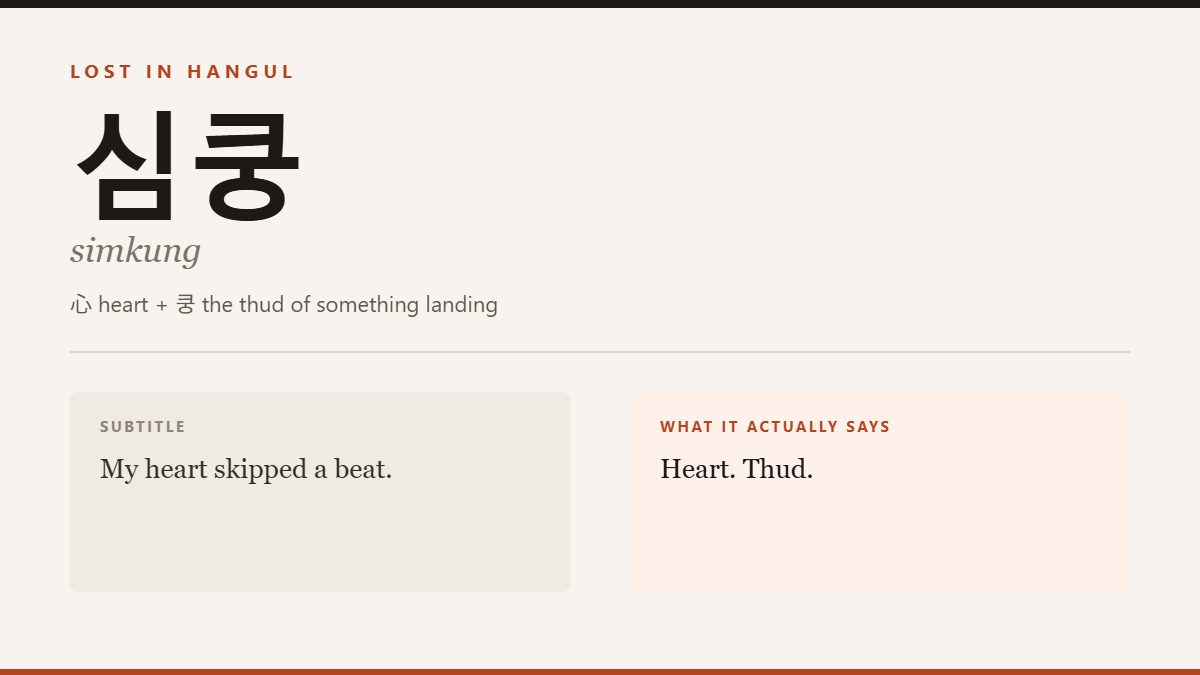
The Sino-Korean word for heart bolted to the native sound of something heavy landing. One hit, always positive, and completely untranslatable in four characters.
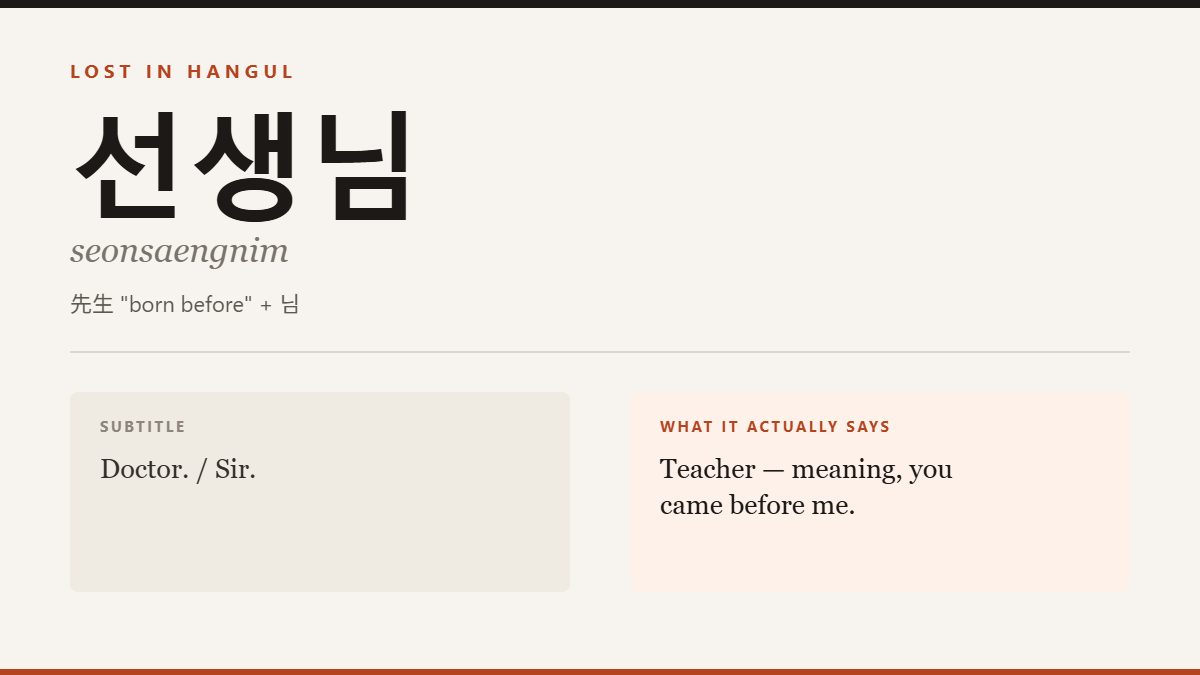
The hanja read as “born before”, which is why the word travels so far outside classrooms. If you do not know what to call someone older, this is the answer.
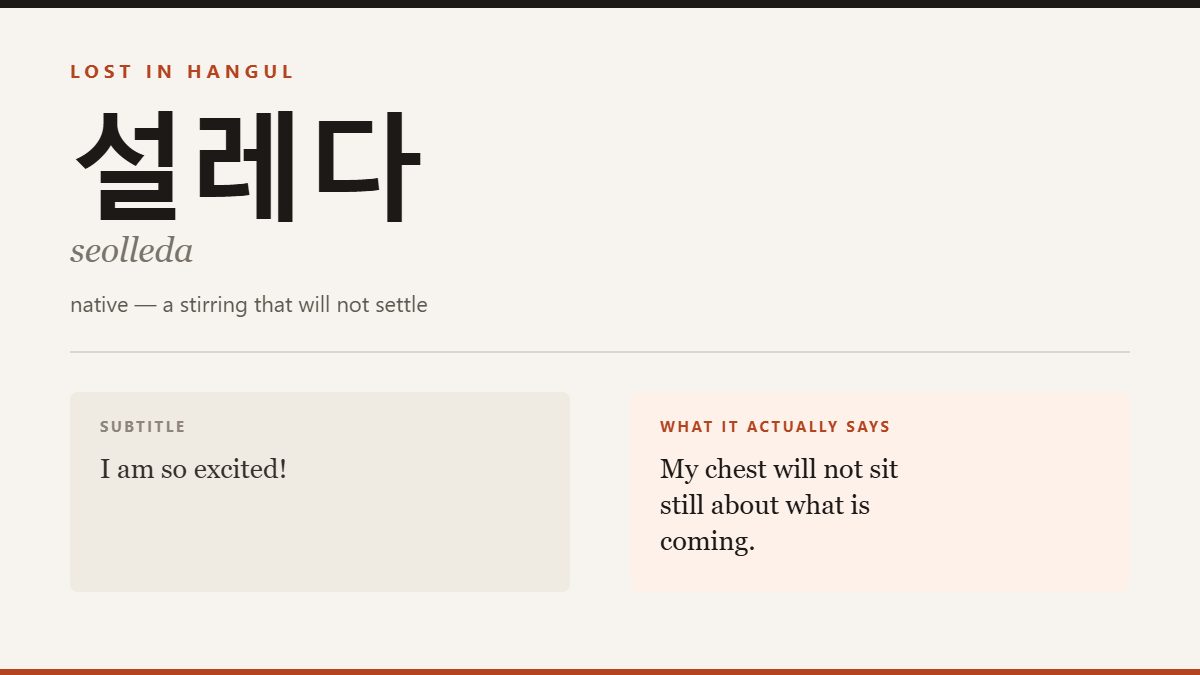
It points forward, always. Once the thing is happening the word stops applying — which is why “I don’t feel it any more” is a complete reason to end a relationship in Korean.